
Ga onbeperkt met Magzter GOLD
Krijg onbeperkte toegang tot meer dan 9000 tijdschriften, kranten en Premium-verhalen voor slechts
Poging GOUD - Vrij
Familiar discourse
Down To Earth
|April 16, 2023
The world met to discuss the burgeoning water crisis after nearly half a century; but commitments on action were largely a reiteration of ongoing work

THE 1970s was arguably an epochal decade for the UN. The multilateral body held nine major global meetings during these years, each one focused on an emerging threat or opportunity that needed planetary response. It was as if the world was getting ready for a multi-front war on the crises. Nearly all countries participated in these conferences, marking them as global milestones.
The conferences were on the environment (the Stockholm Conference in 1971), on population and on food (both in 1974); on women (1975); on human settlement (1976); on water and on desertification (both in 1977); on science and technology for development (1979); and on new and renewable energy sources (1981). Over the next four decades, each of these conferences resulted in worldwide changes, often through landmark conventions and global treaties. Most of them were followed up by meetings that provided updates on action taken and reiterated commitments from countries.
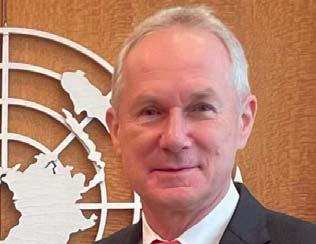
But the UN Conference on Water, held in Mar del Plata, Argentina on March 14-25, 1977, stood out as more of an anomaly than a landmark. Unlike other conferences, it was not initiated by any government and no country took ownership of it, even though 105 governments ultimately participated in the meet. UN records show that three senior officials from the body’s now-defunct Centre for National Resources, Energy and Transport initiated the conference and pursued countries to propose it for approval by the UN General Assembly in 1975. Then, the world waited 46 years for a follow-up to this meet, which came as the UN’s “water conference” held in New York on March 22-24 this year.

Dit verhaal komt uit de April 16, 2023-editie van Down To Earth.
Abonneer u op Magzter GOLD voor toegang tot duizenden zorgvuldig samengestelde premiumverhalen en meer dan 9000 tijdschriften en kranten.
Bent u al abonnee? Aanmelden
MEER VERHALEN VAN Down To Earth

Down To Earth
THINK TWICE BEFORE FELLING SAL TREES
Many trees considered to be affected by sal borer in the 1990s are still alive today

1 mins
February 16, 2026

Down To Earth
EDGE OF SURVIVAL
Caste divides deny marginalised communities land, resources and essential aid, leaving them more vulnerable to climate disasters
6 mins
February 16, 2026

Down To Earth
A WISH LIST?
Union Budget for 2026-27 conveys the impression of a roll-call of intentions and ambitious proposals, with little detail on their formulation
6 mins
February 16, 2026
Down To Earth
Break down the gender wall
THE RULING National Democratic Alliance (NDA) government has been heavily invested in the goal to make India a developed economy by 2047.
2 mins
February 16, 2026

Down To Earth
MENSTRUAL HEALTH, NOW A FUNDAMENTAL RIGHT
In a landmark judgement, the Supreme Court has recognised menstrual health and hygiene as a fundamental right under Article 21 of the Constitution of India, which guarantees the right to life and dignity.
8 mins
February 16, 2026

Down To Earth
Of devolution and new disasters
The 16th Finance Commission pushes for changes in view of new fiscal and climatic conditions
11 mins
February 16, 2026
Down To Earth
Rising risks of plastics
NEGATIVE IMPACTS on human health due to emissions linked to the plastic lifecycle could double by 2040, according to a study published in The Lancet Planetary Health in January.
1 min
February 16, 2026

Down To Earth
GAP BETWEEN EPIDEMICS NARROWING
A watershed-based and landscape-level approach is needed to address forest degradation
2 mins
February 16, 2026
Down To Earth
WAITING TO STRIKE
Sal heartwood borer is considered the biggest threat to forestry in India, especially to the sal tree, where it lives and breeds.
11 mins
February 16, 2026
Down To Earth
A SPRING DELIGHT
Mustard flowers are not meant only for the eyes. Invite them to your plate once in a while
3 mins
February 16, 2026
Translate
Change font size