
Ga onbeperkt met Magzter GOLD
Krijg onbeperkte toegang tot meer dan 9000 tijdschriften, kranten en Premium-verhalen voor slechts
Capturing Siang
Down To Earth
|January 31, 2025
As India pushes for a mega-dam on the Siang river to counter China's upstream projects, the Adi tribal community of Arunachal Pradesh fears losing ancestral land
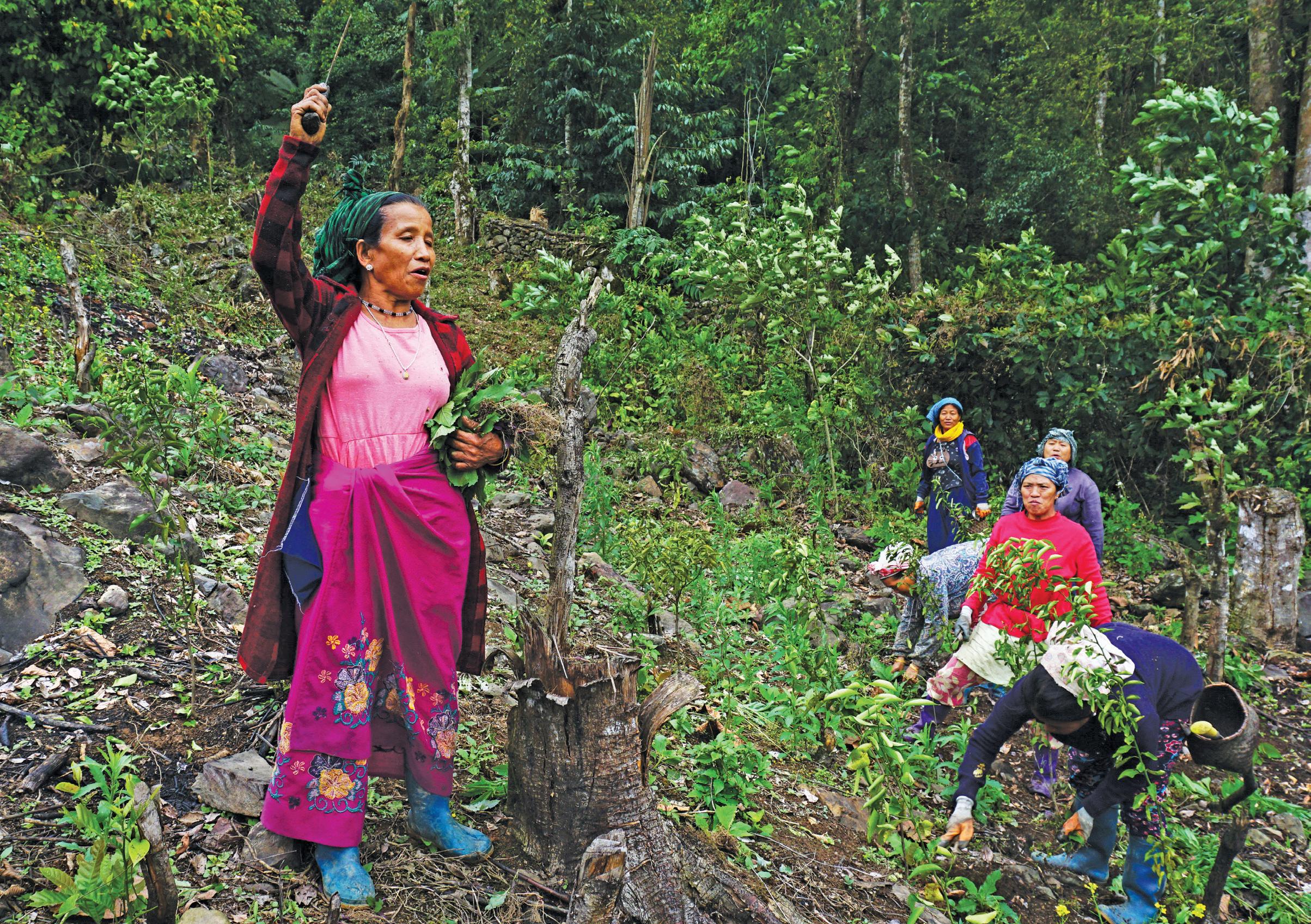
ANTHONY PABIN sits by the Siang river, peeling an orange with practiced ease. “We sell a dozen oranges for ₹20 and make a hefty profit,” he says. “But we have to think about our children. We do not want them to grow up as refugees, separated from their land.” Pabin, a farmer from Parong village in the Siang district of Arunachal Pradesh, echoes the anxiety felt by the residents of several villages along the Siang river, where a proposed mega-dam has stirred a complex web of geopolitics, development and human rights concerns.
The river, known as Yarlung Tsangpo in Tibet, flows from China into Arunachal Pradesh before joining the Brah-maputra in Assam. For centuries, it has been the lifeline for the region’s Adi tribal community, providing water for their farms and enabling a cultural connection to their ancestors. But now, the river has become the centre of a contentious tug-of-war between two powerful neighbours—India and China.
The 11.2-gigawatt (GW) Siang Upper Multipurpose Pro- The project (SUMP) is planned near Geku village in Upper Siang district. The project has faced opposition ever since it was proposed by government think tank NITI Aayog in 2017. In April 2022, the Centre directed the National Hydroelectric Power Corporation (NHPC) to carry out a pre-feasibility survey to understand the technical, economic, social and environmental feasibility of the project. Such surveys are done in phases and involve several tasks such as drilling of the area's rocks to check for strength and ear-marking villages for relocation. A September 2024 report from NHPC estimated the cost of the dam at US $13.2 billion. Across the McMahon Line, China has unveiled plans to build an even more massive 66-GW hydropower project on the Yarlung Tsangpo river, the upper course of the Siang. It will cost $137 billion.

Dit verhaal komt uit de January 31, 2025-editie van Down To Earth.
Abonneer u op Magzter GOLD voor toegang tot duizenden zorgvuldig samengestelde premiumverhalen en meer dan 9000 tijdschriften en kranten.
Bent u al abonnee? Aanmelden
MEER VERHALEN VAN Down To Earth

Down To Earth
KING OF BIRDS
Revered for centuries, western tragopan now needs protection as its forests shrink, human pressures mount

3 mins
December 16, 2025

Down To Earth
WHISKERS ALL AQUIVER
Climate change threatens creatures that have weathered extreme environments for thousands of years
2 mins
December 16, 2025

Down To Earth
GOLDEN SPIRIT
Survival of the shy primate is closely tied to the health of Western Ghats
3 mins
December 16, 2025

Down To Earth
RINGED EYES IN THE CANOPY
Rapid habitat destruction forces arboreal langur to alter habits
2 mins
December 16, 2025

Down To Earth
HANGING BY THE CLIFF
The Himalaya's rarest wild goat is on the brink of local extinction
2 mins
December 16, 2025

Down To Earth
ANGEL OF THE BEAS
Conservation reserves, citizen science, and habitat protection give the Indus River dolphin a fighting chance in India
2 mins
December 16, 2025

Down To Earth
UNDER MOONLIT SCRUB
Survival of this hidden guardian tells us whether our scrublands still breathe
2 mins
December 16, 2025

Down To Earth
SYMBOL OF SILENT VALLEY
Lion-tailed macaque remains vulnerable despite past victories
2 mins
December 16, 2025

Down To Earth
THE APE IN OUR STORIES
India's only non-human ape species is a cultural icon threatened by forest fragmentation
2 mins
December 16, 2025

Down To Earth
SENTINEL OF THE HIGH COLD DESERT
The bird's evocative call may not continue to roll across the cold desert valley for long
3 mins
December 16, 2025
Listen
Translate
Change font size