
Ga onbeperkt met Magzter GOLD
Krijg onbeperkte toegang tot meer dan 9000 tijdschriften, kranten en Premium-verhalen voor slechts
Poging GOUD - Vrij
Noctilucent clouds on the rise
BBC Sky at Night Magazine
|June 2023
Night-shining clouds have fascinated skywatchers for almost 140 years. Rob Banino finds out what they tell us about our changing atmosphere

The Krakatoa eruption of 1883 was one of the deadliest in recorded history. The volcano, which lies on an island in Indonesia's Sunda Strait, had been threatening to blow for months. It had been sending plumes of ash and steam into the sky since May of that year, but at 1pm on 26 August the pressure beneath its rocky cones finally became too much.
Four increasingly violent explosions over the next 24 hours all but destroyed the island. They killed over 36,000 people and could be heard 3,500 kilometres away in Australia. Twenty-one cubic kilometres of rock and ash was blasted across 800,000 square kilometres and over 80 kilometres up into the air.
So much ash was released into the atmosphere, the region was plunged into darkness for two and a half days. As the ash diffused and drifted around the world, its chemicals absorbed different wavelengths of light, causing spectacular red and orange sunsets and making the Moon glow blue for months.
There was enough ash lingering in the atmosphere a year later to cause summer temperatures in the Northern Hemisphere to drop by an average of 0.4°C.
Then, on a clear summer's night in 1885, amateur astronomers in the German town of Bad Kissingen spotted some new, mysterious-looking clouds. It wasn't so much that they were thinner and wispier than regular clouds, but they were visible after dark.
They actually appeared to be shining.
Those mysterious clouds would become known as noctilucent, or night-shining, clouds (NLCs). They can be seen every year between May and August and have become a favourite target for many observers. And since that first sighting, we've gradually learned more about them.


Dit verhaal komt uit de June 2023-editie van BBC Sky at Night Magazine.
Abonneer u op Magzter GOLD voor toegang tot duizenden zorgvuldig samengestelde premiumverhalen en meer dan 9000 tijdschriften en kranten.
Bent u al abonnee? Aanmelden
MEER VERHALEN VAN BBC Sky at Night Magazine
BBC Sky at Night Magazine
The Giant Leap: Why Space is the Next Frontier in the Evolution of Life
“Earth is the cradle of humanity, but one cannot live in the cradle forever,” wrote Konstantin Tsiolkovsky in 1911.

1 mins
February 2026
BBC Sky at Night Magazine
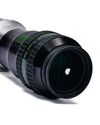
Tele Vue Nagler Type-7 series eyepieces
These premium optics were inspired by Apollo - and deliver a giant leap to your views
4 mins
February 2026
BBC Sky at Night Magazine
Once Upon a Time in Space
While the Space Race of the Cold War years was ultimately a geopolitical contest between the USA and the Soviet Union, the rivalry sparked rapid innovation and inspired multiple generations to look skyward.
1 mins
February 2026
BBC Sky at Night Magazine
The Multiverse: When One Universe Isn't Enough
The concept of a 'multiverse' – the idea that our Universe may be just one of many – is widespread in science fiction and a common thread of online discussions.
1 mins
February 2026
BBC Sky at Night Magazine
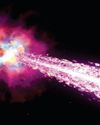
Q&A WITH A GAMMA RAY SPECIALIST
In 2025, astronomers detected a blast from space that lasted seven hours. Now they're uncovering the strange processes behind the exceptional outburst
3 mins
February 2026
BBC Sky at Night Magazine
Astronomy Photographer of the Year
The world-leading astrophotography competition returns. Could your image take the top prize of £10,000?
2 mins
February 2026
BBC Sky at Night Magazine
MOONWATCH
February's top lunar feature to observe
2 mins
February 2026
BBC Sky at Night Magazine
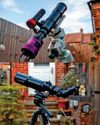
NOVAStar Scarlet A62Q 62mm f/8.4 quadruplet achromatic refractor
Well-built and capable, this beginner scope punches well above its bargain price
4 mins
February 2026
BBC Sky at Night Magazine
STAR OF THE MONTH
Rasalas, Leo the Lion's metal-rich crown
1 min
February 2026
BBC Sky at Night Magazine
Comet 24P/Schaumasse
Having reached perihelion on 8 January, comet 24P/ Schaumasse is now fading. Starting the month at a small-telescope-friendly mag. +10.5, it dims throughout February to below 12th magnitude.
1 min
February 2026
Translate
Change font size