
Ga onbeperkt met Magzter GOLD
Krijg onbeperkte toegang tot meer dan 9000 tijdschriften, kranten en Premium-verhalen voor slechts
Poging GOUD - Vrij
HOW INDIAN MISSILES DEVASTATED PAKISTAN
Geopolitics
|June 2025
Unlike the 2019 Balakot airstrikes, this time the Pakistanis had nothing to hide, including their widespread global embarrassment.
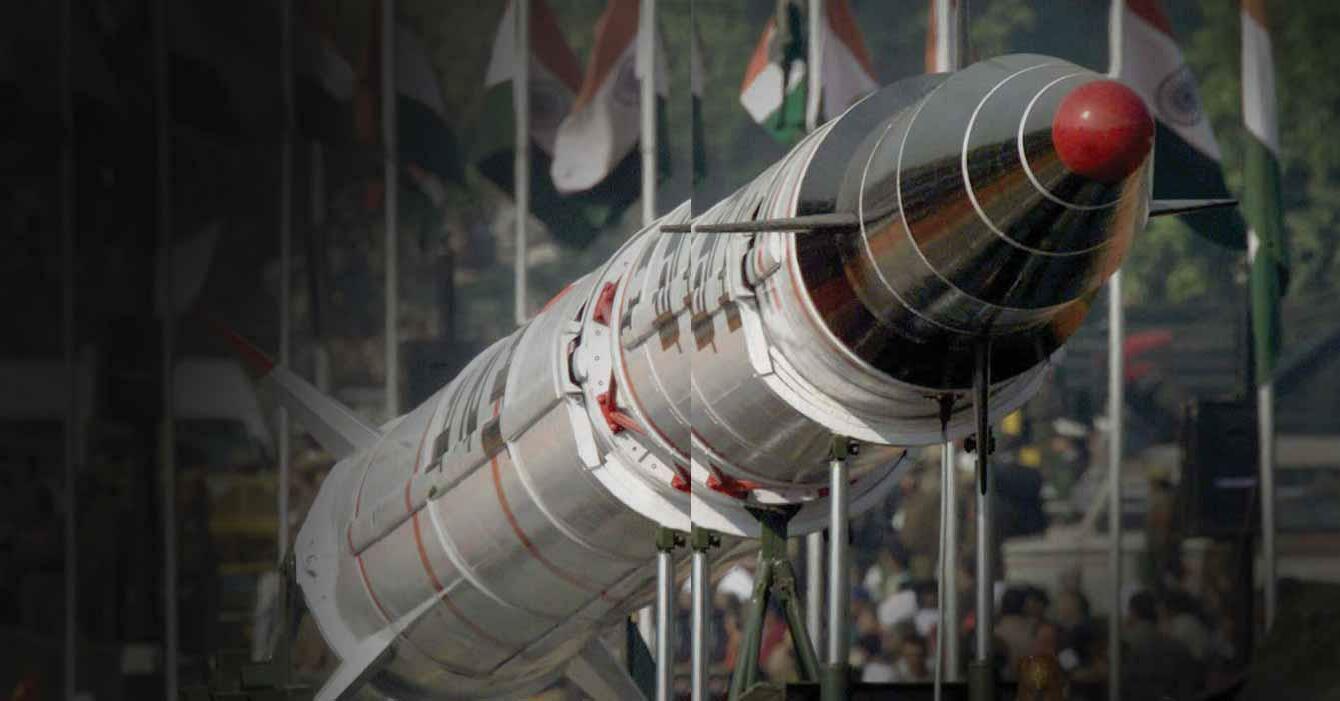
In the wee hours of May 7, 2025, India started an ambitious military campaign under the leadership of Prime Minister Narendra Modi and Defence Minister Rajnath Singh. The Indian Air Force with the help of Dassault Rafale fighter jets armed with Scalp missiles and Hammer bombs launched airstrikes on nine targets consisting of terrorist training camps, Islamic seminaries and madrasas located deep inside Pakistan and PoK (Pakistan Occupied Kashmir) leading to the death of more than 100 Islamic jihadi terrorists (possibly around 170).
The military campaign christened Operation Sindoor also witnessed the Indian military launching kamikaze drone strikes and cruise missile strikes on Pakistan's air defence units using Israeli-made IAI Harop loitering munitions and Indo-Russian BrahMos supersonic cruise missiles from Sukhoi-30 combat aircraft the next day after Pakistan escalated the conflict by launching missiles and Turkish drones targeting civilian areas in Jammu and Punjab.
Hostilities reached a temporary pause on May 10, 2025, after a US-backed ceasefire proposal was sent by the Pakistani DGMO (Director General of Military Operations) to the Indian DGMO and it was accepted by New Delhi.
However, by the time the ceasefire came into effect (5 PM IST on May 10, 2025), India had already extracted a heavy price from Pakistan by destroying at least 20 per cent of Pakistan's air defence assets and badly crippling its offensive aerial capabilities. The damage done to Pakistani military infrastructure was tremendous and Pakistan was left exposed naked and bare under the glare of international surveillance and reconnaissance satellites, leaving everyone to see and verify the proofs themselves. Unlike the 2019 Balakot airstrikes, this time the Pakistanis had nothing to hide, including their widespread global embarrassment.
A brief timeline of events


Dit verhaal komt uit de June 2025-editie van Geopolitics.
Abonneer u op Magzter GOLD voor toegang tot duizenden zorgvuldig samengestelde premiumverhalen en meer dan 9000 tijdschriften en kranten.
Bent u al abonnee? Aanmelden
MEER VERHALEN VAN Geopolitics

Geopolitics
BUYING THE IRGC TO END THE WAR IN IRAN
One is writing this after Iran launched missiles at Kuwait and Bahrain, as the US conducted new strikes on Qeshm Island.

4 mins
June 2026
Geopolitics
Maheshwarastra Seeks Deep-Strike Role
Solar Industries India Limited remains confident that confident that the Indian Army will eventually approve its proposed Maheshwarastra long-range precision rocket programme, which is being pursued under the Ministry of Defence's Make-II framework.
1 min
June 2026

Geopolitics
Zen Unveils AI Border Shield
Zen Technologies has launched India’s first Integrated Smart Border Suite (ISBS), an artificial intelligence-enabled security ecosystem designed to support the country’s transition towards technology-driven border management.
1 mins
June 2026

Geopolitics
KC-390 Pitch Targets Indian Deal
Brazilian aerospace manufacturer Embraer is mounting an aggressive campaign for the Indian Air Force’s Medium Transport Aircraft (MTA) programme, positioning its KC-390 Millennium as a cost-effective and versatile replacement for ageing transport fleets.
1 mins
June 2026
Geopolitics
IdeaForge Pursues Air-Launched Drone Swarms
IdeaForge is exploring a new concept in aerial warfare through Project ALE (Air-Launched Effects), an indigenous initiative focused on UAV-to-UAV deployment.
1 min
June 2026
Geopolitics
RusBeam Powers Aerospace Manufacturing Leap
Oussia's Rosatom has delivered Ruhe RusBeam 2800, India's largest vacuum-based electron-beam wire deposition 3D printer, providing a significant boost to advanced aerospace manufacturing capabilities.
1 min
June 2026

Geopolitics
Mountain Drone Solves Supply Gaps
Bharat Electronics Limited (BEL) has unveiled the Vahaan-50, an indigenous logistics drone designed to tackle one of the Indian military's most persistent operational challenges—sustaining troops deployed in remote, high-altitude terrain.
1 mins
June 2026
Geopolitics
Punjab Police Gets Indigenous SMGs
SSS Defence has completed another delivery of its indigenous G72 submachine guns to the Punjab Police, reinforcing the growing adoption of domestically developed small arms by Indian law-enforcement agencies.
1 mins
June 2026

Geopolitics
BluJ Advances Cargo eVTOL Programme
Hyderabad-based BluJ Aerospace has unveiled its Gen 2 electric vertical takeoff and landing aircraft, marking the first commercial-grade platform developed from its VANTIS architecture after four years of in-house research and development.
1 min
June 2026

Geopolitics
REWIRING THE NECK!
How India is rewiring its most dangerous frontier — and what it costs.
6 mins
June 2026
Listen
Translate
Change font size