Versuchen GOLD - Frei
HOW INDIAN MISSILES DEVASTATED PAKISTAN
Geopolitics
|June 2025
Unlike the 2019 Balakot airstrikes, this time the Pakistanis had nothing to hide, including their widespread global embarrassment.
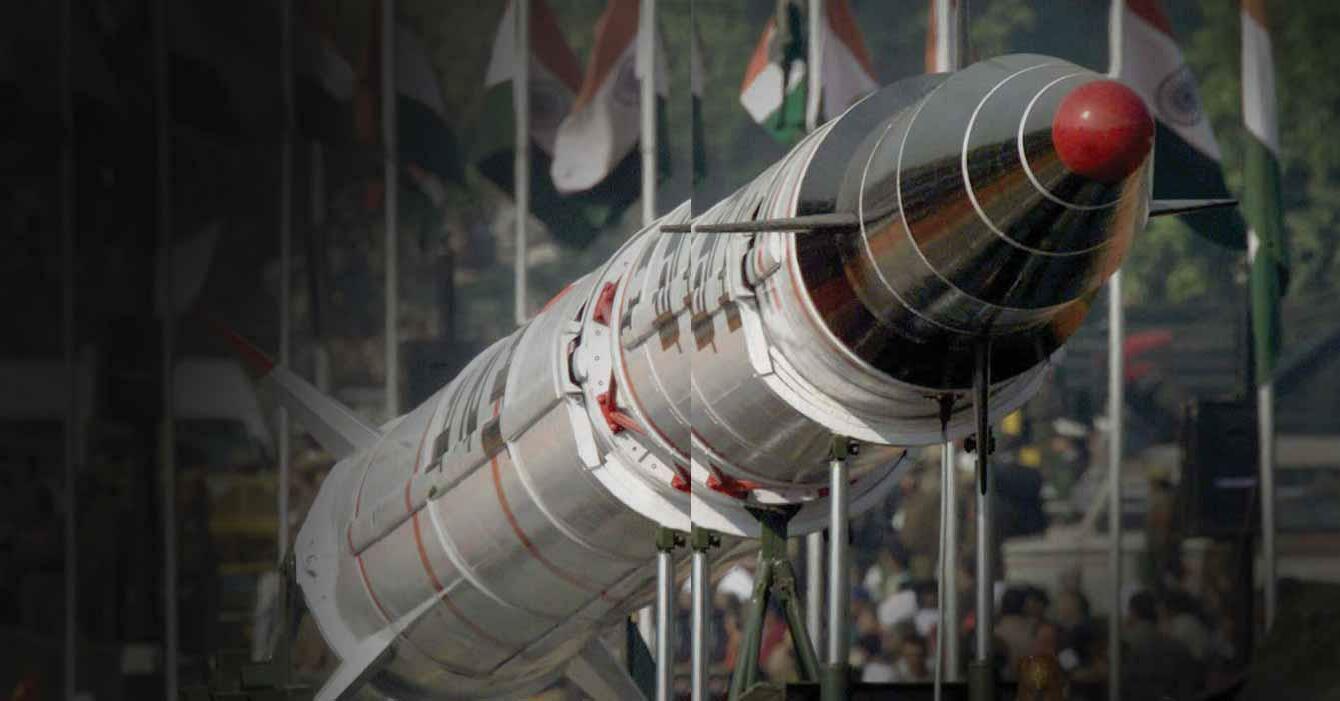
In the wee hours of May 7, 2025, India started an ambitious military campaign under the leadership of Prime Minister Narendra Modi and Defence Minister Rajnath Singh. The Indian Air Force with the help of Dassault Rafale fighter jets armed with Scalp missiles and Hammer bombs launched airstrikes on nine targets consisting of terrorist training camps, Islamic seminaries and madrasas located deep inside Pakistan and PoK (Pakistan Occupied Kashmir) leading to the death of more than 100 Islamic jihadi terrorists (possibly around 170).
The military campaign christened Operation Sindoor also witnessed the Indian military launching kamikaze drone strikes and cruise missile strikes on Pakistan's air defence units using Israeli-made IAI Harop loitering munitions and Indo-Russian BrahMos supersonic cruise missiles from Sukhoi-30 combat aircraft the next day after Pakistan escalated the conflict by launching missiles and Turkish drones targeting civilian areas in Jammu and Punjab.
Hostilities reached a temporary pause on May 10, 2025, after a US-backed ceasefire proposal was sent by the Pakistani DGMO (Director General of Military Operations) to the Indian DGMO and it was accepted by New Delhi.
However, by the time the ceasefire came into effect (5 PM IST on May 10, 2025), India had already extracted a heavy price from Pakistan by destroying at least 20 per cent of Pakistan's air defence assets and badly crippling its offensive aerial capabilities. The damage done to Pakistani military infrastructure was tremendous and Pakistan was left exposed naked and bare under the glare of international surveillance and reconnaissance satellites, leaving everyone to see and verify the proofs themselves. Unlike the 2019 Balakot airstrikes, this time the Pakistanis had nothing to hide, including their widespread global embarrassment.
A brief timeline of events
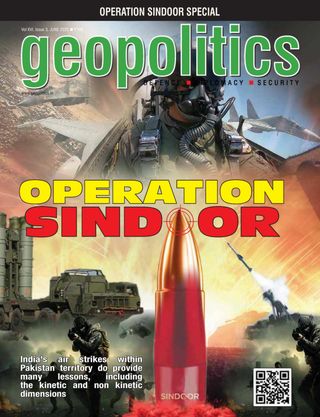

Diese Geschichte stammt aus der June 2025-Ausgabe von Geopolitics.
Abonnieren Sie Magzter GOLD, um auf Tausende kuratierter Premium-Geschichten und über 9.000 Zeitschriften und Zeitungen zuzugreifen.
Sie sind bereits Abonnent? Anmelden
WEITERE GESCHICHTEN VON Geopolitics
Geopolitics
Tata expands Morocco push with LAMV offer
After securing an order for its WhAP 8x8 armoured vehicle from the Royal Moroccan Army, Tata Advanced Systems Limited is now actively promoting its Light Armoured Multipurpose Vehicle in the same market.

1 min
February 2026
Geopolitics
Armenia eyes India's Astra Missile for Su-30SM fleet
Armenia is in advanced discussions with India to acquire the Astra beyond-visual-range air-to-air missile, signalling a deepening of defence ties between the two countries.
1 min
February 2026
Geopolitics
SUVI V1 becomes India's first Type-Certified UAV
In India's unmanned aviation sector has reached a significant regulatory milestone with Okulo Aerospace announcing that its SUVI V1 platform has received Type Certification from the Directorate General of Civil Aviation.
1 min
February 2026

Geopolitics
Swan Defence wins Oman naval training ship contract
Swan Defence and Heavy Industries has secured a defence export contract from the Government of the Sultanate of Oman for the construction and supply of an advanced naval training ship for the Royal Navy of Oman.
1 min
February 2026

Geopolitics
HAL'S 'DHRUV' BET
Hindustan Aeronautics Limited (HAL) is attempting a careful reset of the Dhruv helicopter narrative, positioning the platform simultaneously as a cornerstone of India's future civil helicopter market and as a rehabilitated workhorse returning to frontline maritime service.
2 mins
February 2026
Geopolitics
India Offers Su-30MKM Upgrade to Malaysia
India has offered a midlife modernisation package for Malaysia's fleet of 18 Sukhoi Su-30MKM fighters, marking a significant step in bilateral defence-industrial cooperation.
1 min
February 2026
Geopolitics
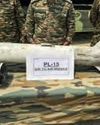
Astra upgrade rooted in indigenous R and D
Recent reports linking the Indian Air Force's Astra missile upgrades to Chinese PL-15 technology have been firmly dismissed by defence officials and scientists.
1 min
February 2026

Geopolitics
COMMAND OR COMPLIANCE? RECLAIMING THE SPIRIT OF MILITARY INITIATIVE
What does it truly mean to be a military leader in a democracy? It is a question sparked by the recent controversy surrounding General Manoj Naravane's memoir. While the government always has the final say, a great general shouldn't just wait for instructions; they must lead with confidence, give honest advice, and take decisive action on the battlefield. KARAN KHARAB highlights why India needs a military culture that rewards bold Initiative over hesitation and \"seeking orders.\"
8 mins
February 2026
Geopolitics
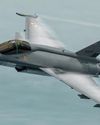
India's integrated air combat plan from Mk1A to MkIII
India's combat aviation landscape is entering a defining phase, marked by parallel developments in aircraft production and missile technology that together reflect a broader push toward operational self-reliance.
3 mins
February 2026

Geopolitics
DEFENCE BUDGET 2026-27: FOCUS ON CAPITAL ACQUISITIONS
While there is an overall increase in the latest defence budget, the statistics only tell half of the story, explains AMIT COWSHISH
11 mins
February 2026
Listen
Translate
Change font size