Poging GOUD - Vrij
Brain waves
The Guardian Weekly
|February 24, 2023
Orthodox theories around the causes of dementia have focused on toxic plaques. But some scientists have doggedly pursued the idea that viruses and bacteria could play a role
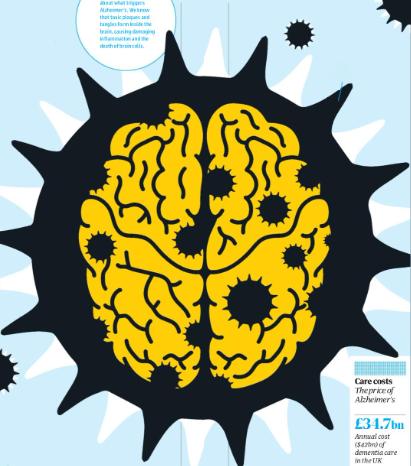
As Davangere Devanand, a neurologist at Columbia University Medical Center, combed through the reams of scientific data on Alzheimer's, he stumbled across a surprising idea - could an infection be involved in driving the disease?
"I was looking for an Alzheimer's treatment approach that had a reasonable shot of working," he says. "I found this old theory, going back 35 years, which linked herpes viruses to the disease, and there were all these indirect lines of evidence."
The further Devanand looked, the more he found. Since the mid-80s, a handful of scientists around the world had doggedly pursued the idea that either a virus or a bacterium could play a role in Alzheimer's, despite almost complete antipathy from those studying more accepted theories about the disease. Colleagues snubbed them, leading scientific journals and conferences rejected their work and funding had been threadbare, but slowly and surely, they built an increasingly compelling case.
In particular, evidence pointed towards herpes simplex virus 1 (HSV-1) - a pathogen found in 70% of the UK population, and the cause of oral herpes as a prominent suspect. Studies in the UK, France and Scandinavia suggested that people who had been infected with herpes were more likely to get Alzheimer's. When Prof Ruth Itzhaki from Oxford University's Institute of Population Ageing - who has done more than any other scientist to advance the HSV-1 theory of Alzheimer's - examined postmortem brain samples from patients, she found greater amounts of the virus's DNA than in people who had not died of the disease.
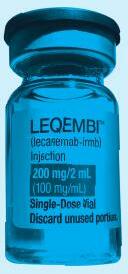
"Then there was this 2018 study from Taiwan, which was quite dramatic," says Devanand. "When people with herpes were treated with a standard antiviral drug, it decreased their risk of dementia nine-fold."

Dit verhaal komt uit de February 24, 2023-editie van The Guardian Weekly.
Abonneer u op Magzter GOLD voor toegang tot duizenden zorgvuldig samengestelde premiumverhalen en meer dan 9000 tijdschriften en kranten.
Bent u al abonnee? Aanmelden
MEER VERHALEN VAN The Guardian Weekly
The Guardian Weekly
A witness to the war
A striking interrogation of language in an age of mechanical mass destruction

3 mins
February 06, 2026

The Guardian Weekly
'It's not just surviving' Life goes on in cellars of frontline city
Galyna Lutsenko, a crisis psychologist, is moving busily among a group of children in a basement in Kherson, unique in being Ukraine's only leading city almost directly on the frontline with Russian forces - and where people live with the daily threat of attack.
4 mins
February 06, 2026

The Guardian Weekly
Feeling the heat: small towns at risk of burning
As the temperatures break records in the dry, flat Mallee region, concerned residents take refuge in air-conditioned rooms
4 mins
February 06, 2026
The Guardian Weekly
What does Melania the film tell us of Mrs Trump?
Brett Ratner's $40m film, which had a 'black-carpet' premiere at the Kennedy Center, has been marketed with the gusto of a Hollywood blockbuster
3 mins
February 06, 2026
The Guardian Weekly
The dog's training now has me hiding behind trees
It is rare for my wife and I to do a midweek dog walk together, but on this particular afternoon I find myself at a loose end, and volunteer to come along.
2 mins
February 06, 2026

The Guardian Weekly
Young voters are drawn to our conservative PM. What's her appeal?
Japan has rarely seen a prime minister as bold or as social media-savvy as Sanae Takaichi, the country's first female leader.
3 mins
February 06, 2026
The Guardian Weekly
EU response to Washington bullying is to build bridges with India and Vietnam
For the European Commission president, Ursula von der Leyen, the EU's trade pact with India was the \"mother of all deals\".
2 mins
February 06, 2026

The Guardian Weekly
Trump's post-truth agenda hit as ICE lies fail to land
\"Our press secretary, Sean Spicer, gave alternative facts.\"
3 mins
February 06, 2026
The Guardian Weekly
Miso mystery: red, white or yellow paste, what's the difference?
What miso paste should I use for what dish?
2 mins
February 06, 2026
The Guardian Weekly
Musk, Mandelson and 'The Duke' What we learned from latest release of the Epstein files
The US justice department last week released millions of files related to the late child sex offender Jeffrey Epstein, the largest disclosure by the government since a law passed last year said the documents should be published.
5 mins
February 06, 2026
Translate
Change font size