
Ga onbeperkt met Magzter GOLD
Krijg onbeperkte toegang tot meer dan 9000 tijdschriften, kranten en Premium-verhalen voor slechts
Poging GOUD - Vrij
Authentic Memory
Outlook
|September 11, 2025
The growing silence between father and son becomes almost a theme in its own right in Jey Sushil's Dukh Ki Duniya Bhitar Hai
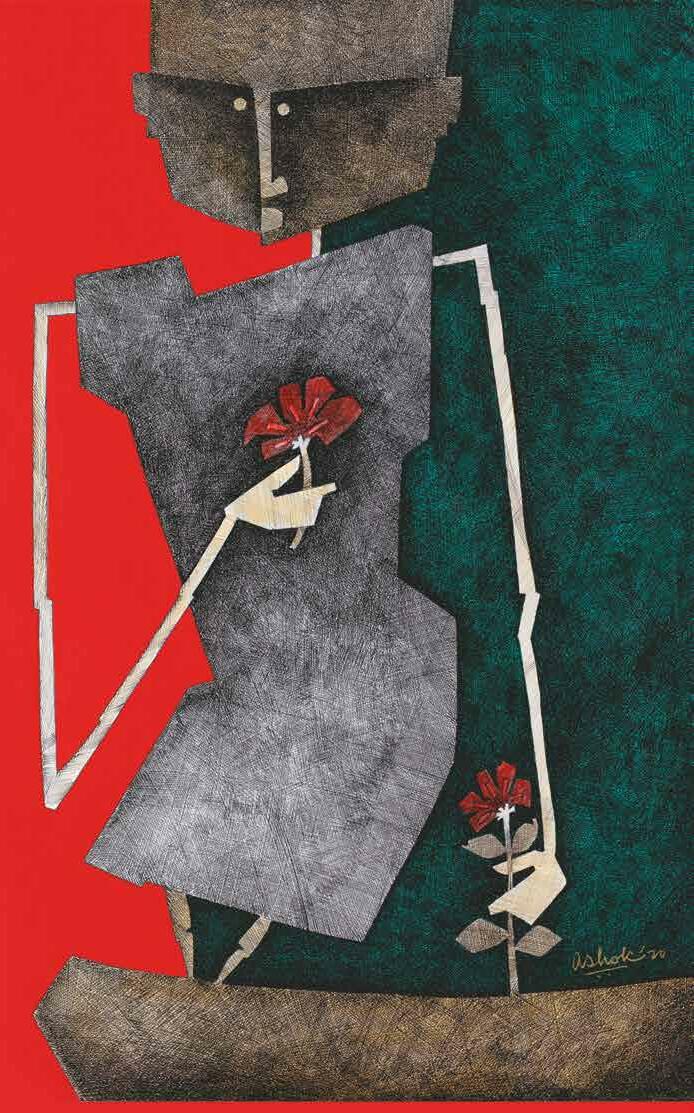
JEY Sushil’s Dukh Ki Duniya Bhitar Hai is a profoundly moving memoir that begins as a son’s attempt to grapple with the grief and memories that follow the death of his father and gradually expands into a rich social portrait of postcolonial India. It is about remembrance—of a father’s presence and absence, of sweetness and bitterness, closeness and distance—and about a son’s effort to draw, through his own family’s story, a larger sketch of a newly independent nation, its dreams, aspirations, and transformations.
At its core, the memoir is the story of Sushil’s father, a man born in a small village in Bihar, who spent his life working in the uranium mines of Jadugoda, Jharkhand. His was a life shaped by the ideals of industrial India—the “temples of modern India”— where one could hope to build a secure livelihood and a better future for one’s children. But by the end of his life, those hopes had given way to the quiet despair that has touched so many workers in liberalised India. Written from the son’s perspective, the memoir opens with the shock of loss and slowly threads together fragments of memory to recount the life of his father and the larger family journey.
The book begins with the father’s return to his ancestral village after retirement, carrying the hope that he would spend the latter years of his life in the place where he was born. But the village refused to accept a man who had, in many ways, become an outsider. Petty self-interest, property disputes, family quarrels, and the relentless financial demands of relatives created a climate of alienation. The same village the father had left in his youth in search of work now offered only estrangement in his old age.

Dit verhaal komt uit de September 11, 2025-editie van Outlook.
Abonneer u op Magzter GOLD voor toegang tot duizenden zorgvuldig samengestelde premiumverhalen en meer dan 9000 tijdschriften en kranten.
Bent u al abonnee? Aanmelden
MEER VERHALEN VAN Outlook

Outlook
Joy Words Club
Lit fests are defined by their audience. Organisers, speakers, curators are all replaceable but not the readers, not the audience

4 mins
February 01, 2026

Outlook
The Sting of the Bar
India today has more than 4.3 lakh undertrial prisoners. A significant number of them are linked to political cases
8 mins
February 01, 2026
Outlook
The Dispossessed
The systematic creation of criminal and security legislations view Adivasis as an inherently suspect class of criminals and terrorists
8 mins
February 01, 2026

Outlook
The Hypocrisy of Liberals
Favour of the self-proclaimed 'liberals' is lost the minute religion intervenes
5 mins
February 01, 2026
Outlook
Inside the Phansi Yard
Death row intensifies the structured brutalities of the penal system and reminds us why the struggle against the death penalty must also include the fact of prison violence
9 mins
February 01, 2026
Outlook
The Detention Legacy
Since Independence, a number of laws have been enacted that allow preventive detention which have been widely used by all regimes against their political opponents
7 mins
February 01, 2026
Outlook
“This Could Happen to You
The Bhima Koregaon case is not only about those who were imprisoned. It is also about the fate of democracy itself
8 mins
February 01, 2026

Outlook
"I Remember Swinging Between Hope and Despair"
HOPE and despair are basic human emotions and I believe that all human beings, now and then, swing between these two ends of the spectrum in life.
2 mins
February 01, 2026

Outlook
Think Ink
In 2026-the 'year of analog'-how will our relationship with literary festivals evolve?
6 mins
February 01, 2026

Outlook
Who Stole My Youth?
A Delhi district court granted Mohammad Iqbal bail in the riots case within three months. On March 18, 2025, he was discharged in the Babbu murder case, even as the riots trial continues
6 mins
February 01, 2026
Listen
Translate
Change font size