Poging GOUD - Vrij
The Material Creation of Freedom
Philosophy Now
|February/March 2024
Stephen Martin Fritz & Denise Morel contemplate what creates democracy.
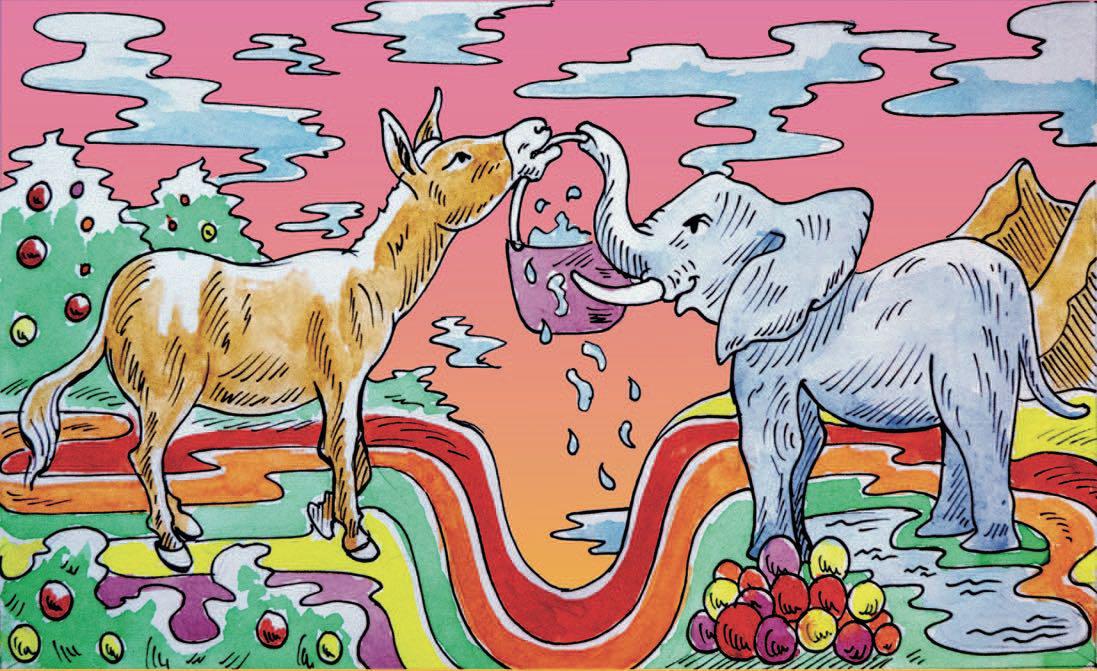
When Biden was President he warned that his political opponents were a threat to democracy itself. Similar accusations were levelled against former Brazilian President Jair Bolsonaro. Indeed, many journalists and pundits claim that a threat to democracy is a global phenomenon. Conservatives have long criticized adversaries for being soft on crime, and liberals have slammed rivals for not caring about the poor; but to accuse the opposition of being 'a threat to democracy' seems to be a new low. But is it? Warnings like "Democracy will come to an end if you don't listen to me!" are almost as old as the idea that the rich are getting richer while the poor are getting poorer.
Since the formation of the earliest democratic republic, in Athens, pundits have been warning citizens of its imminent demise. For instance, in Book VIII of Plato's Republic (c.380 BC), Socrates warns of democracy's soft-on-crime tendencies, infatuation with youth, and excesses of equality extremism: "Have you not observed how, in a democracy, many persons, although sentenced to exile, just stay where they are and walk about the world?... old men condescend to the young ... nor must I forget the equality of the two sexes... the excess of liberty passes to an excess of slavery... and so tyranny naturally arises out of democracy." And in Rome, the demise of the Republic seemed immanent when, after Marcus Livius Drusus was elected tribune in 121 BC, the friends of his rival Caius Gracchus cried foul. They accused Drusus of ballot tampering. In response, the supporters of Drusus chased down Caius and murdered him.
Democracy still had centuries of life in Greece and Rome, and the death predicted for democracy itself has never materialized. Yet democracies are born, and do die. How can we know if our own democracy is threatened?
The Emergence of Democracy

Dit verhaal komt uit de February/March 2024-editie van Philosophy Now.
Abonneer u op Magzter GOLD voor toegang tot duizenden zorgvuldig samengestelde premiumverhalen en meer dan 9000 tijdschriften en kranten.
Bent u al abonnee? Aanmelden
MEER VERHALEN VAN Philosophy Now

Philosophy Now
Nosferatu
Stefan Bolea considers two very different artistic approaches to love and death.

6 mins
April/May 2025

Philosophy Now
Heidegger's Ghost
Raymond Tallis wonders where Heidegger's body went when he was philosophising.
7 mins
April/May 2025

Philosophy Now
Is Comedy Good For Us?
Damaris Stock has a laugh with Plato and friends.
10 mins
April/May 2025
Philosophy Now
In Defense of Idleness
Wendell O'Brien says, 'Just Don't Do It'.
10 mins
April/May 2025
Philosophy Now
Leaving Nothing to Chance by Carl Knight
LEAVING NOTHING TO Chance (2025) by Carl Knight, is an informed, proficient and lucid defence of luck egalitarianism.
3 mins
April/May 2025

Philosophy Now
Star Maker by Olaf Stapledon
THE 1937 SCIENCE FICTION novel Star Maker was written by philosophy professor Olaf Stapledon in the dark days as Europe awaited the onslaught of Nazi Germany. This casts a shadow over the whole book.
6 mins
April/May 2025
Philosophy Now
Love & Emptiness in the Sufi Tradition
Medha Ninad Tambe meditates on Rumi, love and self-negation.
7 mins
April/May 2025

Philosophy Now
The Hedgehog's Dilemma: A Metaphor About the Challenges of Human Intimacy
Krishna Chaubey explains Arthur Schopenhauer's poignant thought experiment.
4 mins
April/May 2025
Philosophy Now
The Mirror & the Flame
Rebwar Fatah imagines Attar's & Hegel's shared path.
4 mins
April/May 2025
Philosophy Now
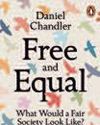
Free and Equal by Daniel Chandler
DANIEL CHANDLER, AN economist and philosopher based at the London School of Economics, begins Free and Equal: What Would a Fair Society Look Like? (2023) by asking an intriguing question. How is it, he wonders, that the most influential political philosopher of the last century has had almost no practical impact on politics or policy? The philosopher in question is John Rawls, whose magnum opus was A Theory of Justice (1971).
5 mins
April/May 2025
Listen
Translate
Change font size