Poging GOUD - Vrij
GUILT
Philosophy Now
|April/May 2025
Michael Breslin considers the place of guilt in a healthy personality.
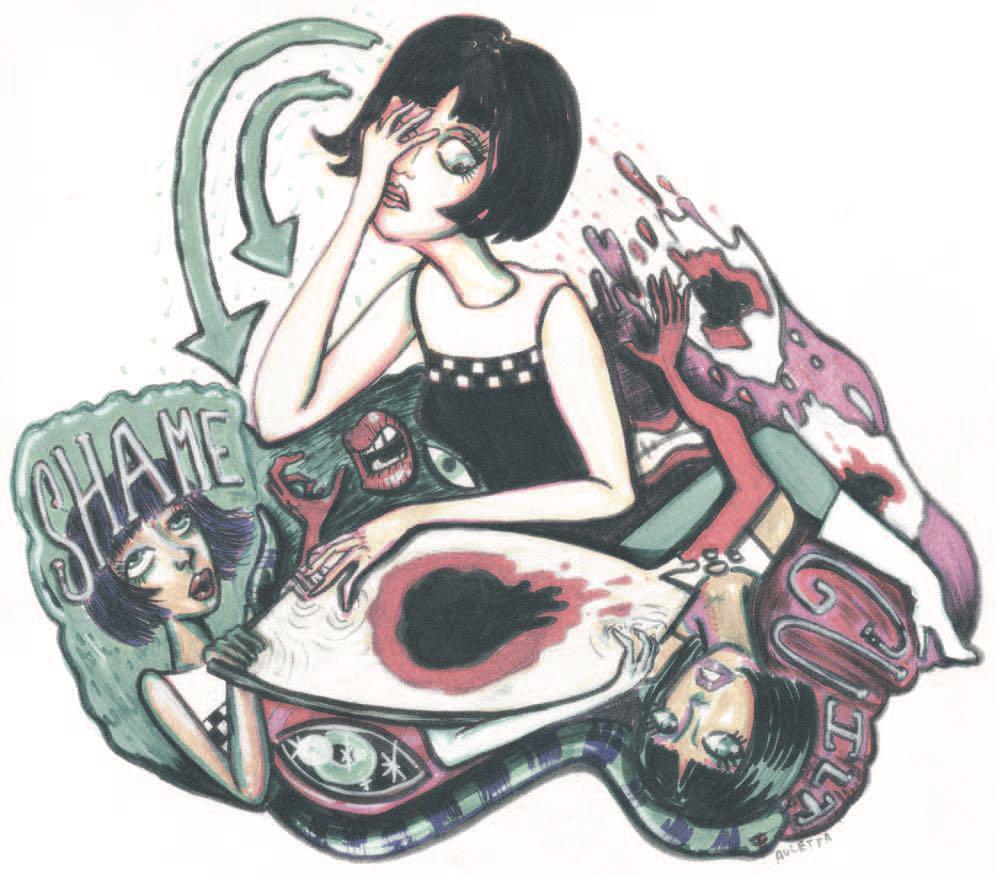
The goal of this article is to demonstrate the place of guilt in a healthy personality. First what do we mean by a 'healthy personality' and 'guilt'. According to Sydney M. Jourard and Ted Landsman in Healthy Personality (1980), "the term healthy personality is used to describe those ways of being that surpass the average in actualization of self and in compassionate relationships with others." I would add that a healthy personality requires being responsible enough to make decisions about the direction of one's life, and having the courage to live with the consequences of one's choices and actions. Guilt, meanwhile, is "the experience of self-loathing that arises when a person transgresses [their] own moral principles" (Ibid, p.130).
By this definition, the feeling of guilt is unique to human beings, as animals do not have moral principles that they might loath themselves for transgressing. It is an important, if not vital, emotion, and is essential in the formation of ourselves. Willard Gaylin, MD, expresses the importance of guilt in his book, Feelings: Our Vital Signs (1979): He says that guilt "is the emotion that shapes so much of our goodness and generosity. It signals us when we have transgressed from codes of behavior which we personally want to sustain. Feeling guilty informs us that we have failed our own ideals... Guilt is a form of self-disappoint-ment. It is the sense of anguish that we did not achieve our standards of what we could be ” (p.52).
So one experiences the feeling of guilt when one fails to live up to one’s own ideal expectations. In this sense, guilt serves as an indicator of how someone can become more: it helps determine what needs to be corrected in the self so that the person might continue in the process of attaining a healthy personality.
Guilt & Shame

Dit verhaal komt uit de April/May 2025-editie van Philosophy Now.
Abonneer u op Magzter GOLD voor toegang tot duizenden zorgvuldig samengestelde premiumverhalen en meer dan 9000 tijdschriften en kranten.
Bent u al abonnee? Aanmelden
MEER VERHALEN VAN Philosophy Now

Philosophy Now
Bilbo Theorizes About Wellbeing
Eric Comerford overhears Bilbo and Gandalf discussing happiness.

9 mins
December 2025 / January 2026

Philosophy Now
What Women?
Marcia Yudkin remembers almost choking at Cornell
11 mins
December 2025 / January 2026

Philosophy Now
Islamic Philosophers On Tyranny
Amir Ali Maleki looks at tyranny from an Islamic perspective.
4 mins
December 2025 / January 2026

Philosophy Now
Peter Singer
The controversial Australian philosopher defends the right to choose to die on utilitarian grounds
5 mins
December 2025 / January 2026

Philosophy Now
Another Conversation with Martin Heidegger?
Raymond Tallis talks about communication problems.
7 mins
December 2025 / January 2026

Philosophy Now
Letters
When inspiration strikes, don't bottle it up. Email me at rick.lewis@philosophynow.org Keep them short and keep them coming!
17 mins
December 2025 / January 2026

Philosophy Now
The Philosophy of William Blake
Mark Vernon looks at the imaginative thinking of an imaginative artist.
9 mins
December 2025 / January 2026

Philosophy Now
Philosophical Haiku
Peering through life’s lens God in nature is deduced: The joy of being.
1 mins
December 2025 / January 2026

Philosophy Now
Philosophy Shorts
More songs about Buildings and Food' was the title of a 1978 album by the rock band Talking Heads. It was about all the things rock stars normally don't sing about. Pop songs are usually about variations on the theme of love; tracks like Rose Royce's 1976 hit 'Car Wash' are the exception. Philosophers, likewise, tend to have a narrow focus on epistemology, metaphysics and trifles like the meaning of life. But occasionally great minds stray from their turf and write about other matters, for example buildings (Martin Heidegger), food (Hobbes), tomato juice (Robert Nozick), and the weather (Lucretius and Aristotle). This series of Shorts is about these unfamiliar themes; about the things philosophers also write about.
2 mins
December 2025 / January 2026

Philosophy Now
Hedonic Treadmills in the Vale of Tears
Michael Gracey looks at how philosophers have pursued happiness.
8 mins
December 2025 / January 2026
Listen
Translate
Change font size