Poging GOUD - Vrij
From Plant to Pants: The Complete Journey of Hemp Denim Workwear Production
Textile Value Chain
|November 2025
When you think of workwear that can take a beating, denim comes to mind. For decades, cotton denim has been the gold standard for industrial clothing. But there’s a more sustainable alternative making waves in the textile world: hemp denim. This isn’t just about being eco-friendly for the sake of it. Hemp denim is genuinely tough, breathable, and could be the answer to some of the fashion industry's biggest environmental challenges.
-
Today, the hemp fibre market is valued at $9.11 billion in 2025 and is expected to reach $37.71 billion by 2032, growing at an annual rate of 22.5% (Source: Coherent Market Insights) [1]. This growth reflects increasing demand from the textile industry and rising awareness of sustainability issues.
Why Hemp Denim? Understanding the Material
Hemp fibre comes from the Cannabis sativa plant, but before you get any ideas, it contains less than 0.3% THC, so you definitely can't smoke your work jacket. What makes hemp special for workwear is its natural strength. The fibre is three times stronger than cotton, which translates to clothing that lasts longer and handles tough conditions better.
The environmental advantages are compelling. Recent studies show that hemp has a 38% lower water requirement, a 60% lower water footprint, an 84% lower irrigation requirement, and a 91% lower irrigated water footprint compared to cotton [2]. Think about those numbers for a moment, especially the irrigation part. In regions facing water scarcity, that difference is massive.
Hemp requires approximately 2,000 litres of water per kilogram of fibre, while cotton needs about 10,000 litres [3]. To put this in perspective, a single cotton t-shirt requires 2,700 litres of water to produce, which is the amount an average person drinks in approx 2.5 years. Hemp also grows faster, taking just 90-110 days to mature compared to cotton's 150-180 days [4].
From an environmental standpoint, a hemp field can absorb 22-44 tonnes of CO2 per hectare with one or two crops per year, which equals 3.7 kg of CO2 per kg of fibre produced, while cotton only absorbs 5 tonnes of CO2 per hectare or 1.7 kg per kg of fibre [5]. Hemp doesn't just use fewer resources; it actively improves the environment by enriching soil and preventing erosion with its deep root system.
The Complete Production Journey

Dit verhaal komt uit de November 2025-editie van Textile Value Chain.
Abonneer u op Magzter GOLD voor toegang tot duizenden zorgvuldig samengestelde premiumverhalen en meer dan 9000 tijdschriften en kranten.
Bent u al abonnee? Aanmelden
MEER VERHALEN VAN Textile Value Chain
Textile Value Chain
EPR in Textiles: Turning Compliance into Opportunity
When the EU Comes to Panipat, It Means One Thing — The World Is Watching

3 mins
November 2025

Textile Value Chain
European Parliament Delegation Visits Panipat Recycling Cluster to Strengthen India-EU Collaboration on Circular Textiles
A high-level delegation from the European Parliament's Committee on International Trade (INTA) visited the Panipat Textile Recycling Cluster — India's largest hub for recycled textiles and circular manufacturing — during their official visit to India.
1 mins
November 2025

Textile Value Chain
Paramount Instruments: Where Innovation Turns Testing into Joy
At Paramount Instruments, innovation isn't just a Pursuit- it's in our DNA.
2 mins
November 2025
Textile Value Chain
Crafting the Future: LMW & Hami Weavelon pioneer Compact Spinning in Polyester
Manmade fibres today form the backbone of the global textile industry, driven by their versatility, performance, and ability to meet the rising demand for both everyday and specialised applications.
3 mins
November 2025

Textile Value Chain
Data is the New Thread: Weaving India's Textile Sector into a Circular Powerhouse
On November 13, 2025, at the 12th Edition of the India and Sustainability Standards (ISS) International Dialogue and Conference held at Bharat Mandapam in New Delhi, representatives from the Home Exporters Welfare Association of India (HEWA) joined industry leaders, policymakers, and international organizations to address a pressing question: How can India's textile sector meet emerging global data requirements while supporting its MSME backbone?
3 mins
November 2025

Textile Value Chain
Rieter Winding Suction Nozzle Upgrade: More Yarn, Less Energy Use
After upgrading the suction nozzles on their 32 winding machines, Sanyang Textile Co., Ltd., China, saw an increase in yarn production of 3% and a reduction of 13% in energy use. The flow-optimised, aerodynamically designed suction nozzle enables efficient upper yarn search and pickup from the package. This results in a 55% reduction in red light percentage and a significant reduction in the operator's workload.
1 mins
November 2025
Textile Value Chain
EU's Extended Producer Responsibility (EPR) Law and Its Implications for India's Textile Industry
The European Union (EU) has approved a new Extended Producer Responsibility (EPR) framework for textiles. This is a major regulatory shift that makes fashion brands and producers accountable for their products' entire lifecycle, from design and production through collection, sorting, recycling and disposal.
9 mins
November 2025

Textile Value Chain
GTE Ahmedabad 2025 Concludes Day 3 with a Huge Footfall
The 38th Garment Technology Expo (GTE) Ahmedabad 2025, co-located with the Lace & Trims Show, wrapped up its third day on an impressive note, recording around 9,700 B2B visitors. The strong industry turnout reaffirmed the expo's role as one of the most influential and business-driven platforms for garment and apparel technology in the western region.
2 mins
November 2025

Textile Value Chain
Reinterpreting Korean Street Fashion through Sustainable Design Practices
A Path through Eco-conscious Urban Fashion
7 mins
November 2025
Textile Value Chain
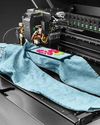
3D Printing in Textiles Manufacturing: A Game-Changer in Design, Sustainability, and Efficiency
The global textile and apparel industry is undergoing a radical transformation due to the convergence of digital design, advanced material technology, and next-generation manufacturing. Of the latter, few have greater potential to change how textiles are made today than additive manufacturing, better known as 3D printing.
5 mins
November 2025
Listen
Translate
Change font size