Poging GOUD - Vrij
When It Was a Scandal if Packers Owned Pigs
Successful Farming
|May - June 2025
The first Pork Powerhouses® editor looks back on the vertical integration of the pork industry.
When Jessie Scott, editor in chief at Successful Farming, asked me to write an editorial for the 30th anniversary of Pork Powerhouses®, wmy first instinct was to turn her down. Do I want to revisit those years of reporting?
I retired from Successful Farming in 2021 after writing about the swine industry for 37 years and had seen the best and worst of that most maligned — yet fascinating — chunk of agriculture. During that time, the industry flipped from independent farrow-to-finish family farmers, like my father, to packers owning production.
The late 1990s, especially, were a time of tremendous stress in the industry. Anyone in the pig business in 1998 and 1999 will never forget it. I will share one example from my reporting that shows the transition to vertical integration.
Does Hormel Own Sows?
In August 1997, I was collecting data for the fourth annual ranking. The largest producer was Murphy Farms in Rose Hill, North Carolina, a family-owned company with 297,200 sows. The largest packer was Smithfield Foods, based in Smithfield, Virginia, which owned 120,000 sows. Vertical integration was legal in the East, but in the Midwest, most states prohibited packers from owning pigs.
I got a call from one of my sources at a large feed company, saying packer Hormel Foods was “using Rich Bell to put 20,000 sows in Colorado.” That lead was seconded by a source at a breeding stock company. Bell Farms, based in Wahpeton, North Dakota, was already on my radar, but the tie to sow ownership by Hormel was news.
I called Hormel, located in Austin, Minnesota, and spoke to Ray Bjornson, then director of pork procurement. (Bjornson passed away in 2015.) He said Hormel had a marketing contract with Bell Farms but wouldn't comment on whether Hormel owned the sows in Colorado, except to say, “We are prohibited from owning livestock or facilities in most Midwest states.”

Dit verhaal komt uit de May - June 2025-editie van Successful Farming.
Abonneer u op Magzter GOLD voor toegang tot duizenden zorgvuldig samengestelde premiumverhalen en meer dan 9000 tijdschriften en kranten.
Bent u al abonnee? Aanmelden
MEER VERHALEN VAN Successful Farming

Successful Farming
When Fire Backfires
Controlled burns and field fires are part of farm life. But when flames or smoke drift beyond your fence line, you could be on the hook for major damages.

4 mins
March 2026
Successful Farming
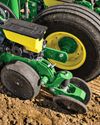
Planter Calibration Sets Yield Potential
Preparing, calibrating, and verifying planter performance help ensure uniform emergence.
4 mins
March 2026
Successful Farming
all around THE FARM
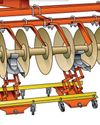
I built this rolling cart out of two Harbor Freight scissor-lift transmission jacks.
1 mins
March 2026
Successful Farming
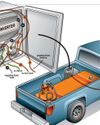
Pickup Box Power Utility Center
An easy-access portable energy source serves multiple functions.
1 mins
March 2026
Successful Farming
6 Tips for a Tighter Calving Window
Experts say a shorter calving season can optimize your barn’s productivity and your checkbook.
4 mins
March 2026

Successful Farming
Are We Too Young for an Estate Plan?
Problem: A young couple with children doesn’t have an estate plan, but their assets may change with future inheritance and acquisitions.
2 mins
March 2026

Successful Farming
New Holland PowerStar Electro Command Tractors
High-power machines feature utility size.
2 mins
March 2026
Successful Farming
Claas Jaguar 1000 Forage Harvester for Wide Crop Flow
The 1000 series is launching with four new models.
2 mins
March 2026

Successful Farming
Mark Crave
At this Wisconsin dairy, sustainability and family farming go hand in hand, from milking 2,300 cows to powering the farm with manure.
3 mins
March 2026

Successful Farming
Insuring Against Fire
Being fully covered in case of fire is critical after a disaster.
3 mins
March 2026
Listen
Translate
Change font size