Prøve GULL - Gratis
When It Was a Scandal if Packers Owned Pigs
Successful Farming
|May - June 2025
The first Pork Powerhouses® editor looks back on the vertical integration of the pork industry.
When Jessie Scott, editor in chief at Successful Farming, asked me to write an editorial for the 30th anniversary of Pork Powerhouses®, wmy first instinct was to turn her down. Do I want to revisit those years of reporting?
I retired from Successful Farming in 2021 after writing about the swine industry for 37 years and had seen the best and worst of that most maligned — yet fascinating — chunk of agriculture. During that time, the industry flipped from independent farrow-to-finish family farmers, like my father, to packers owning production.
The late 1990s, especially, were a time of tremendous stress in the industry. Anyone in the pig business in 1998 and 1999 will never forget it. I will share one example from my reporting that shows the transition to vertical integration.
Does Hormel Own Sows?
In August 1997, I was collecting data for the fourth annual ranking. The largest producer was Murphy Farms in Rose Hill, North Carolina, a family-owned company with 297,200 sows. The largest packer was Smithfield Foods, based in Smithfield, Virginia, which owned 120,000 sows. Vertical integration was legal in the East, but in the Midwest, most states prohibited packers from owning pigs.
I got a call from one of my sources at a large feed company, saying packer Hormel Foods was “using Rich Bell to put 20,000 sows in Colorado.” That lead was seconded by a source at a breeding stock company. Bell Farms, based in Wahpeton, North Dakota, was already on my radar, but the tie to sow ownership by Hormel was news.
I called Hormel, located in Austin, Minnesota, and spoke to Ray Bjornson, then director of pork procurement. (Bjornson passed away in 2015.) He said Hormel had a marketing contract with Bell Farms but wouldn't comment on whether Hormel owned the sows in Colorado, except to say, “We are prohibited from owning livestock or facilities in most Midwest states.”
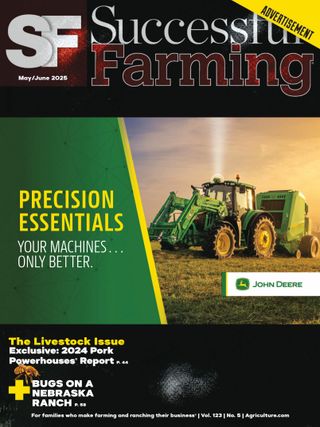

Denne historien er fra May - June 2025-utgaven av Successful Farming.
Abonner på Magzter GOLD for å få tilgang til tusenvis av kuraterte premiumhistorier og over 9000 magasiner og aviser.
Allerede abonnent? Logg på
FLERE HISTORIER FRA Successful Farming
Successful Farming
Roger Wenning
Taking the long view on soil health has allowed this Indiana farmer to drastically transform his land and yields.

3 mins
December 2025

Successful Farming
A Systems Overhaul
These farmers jump-started soil lite to provide health and fertility for crops.
5 mins
December 2025

Successful Farming
Do You Trust Your Land?
A trust may help you and your family with farm succession and retirement.
4 mins
December 2025

Successful Farming
Make Your Own Handy Tools
Craft your own wire splicers for fencing repairs, and a sprayer tip-cap remover to save your fingers.
1 min
December 2025
Successful Farming
Do 100 THINGS 1% Better
Yield contest champions confirm big yields come from small, consistent improvements.
7 mins
December 2025

Successful Farming
Rural Route Ramble
Holiday shoppers are descending on northwest Iowa communities, getting a glimpse of the beauty of small-town life and offering a much-needed boost to businesses.
4 mins
December 2025
Successful Farming
A Fresh Start
Up-and-coming farmers find peace, purpose, and a path to independence in Iowa.
1 mins
December 2025

Successful Farming
Sean Lehmann
The Braunvieh beef breed has become a favorite of this Kansas cattleman and his family.
4 mins
December 2025
Successful Farming
A SLOW UNWINDING
While some data shows farmland values are up, one expert sees farmland values declining due to market dynamics.
5 mins
December 2025
Successful Farming
Who Can Own American Farmland?
What does the National Farm Security Action Plan mean for foreign-owned businesses such as Syngenta?
3 mins
December 2025
Listen
Translate
Change font size