Poging GOUD - Vrij
BRINGING BUFFALO BACK TO STANDING ROCK
Successful Farming
|February 2025
For Ron Brownotter, buffalo are more than just livestock. They're a connection to his ancestors and a way to uplift his family and community.
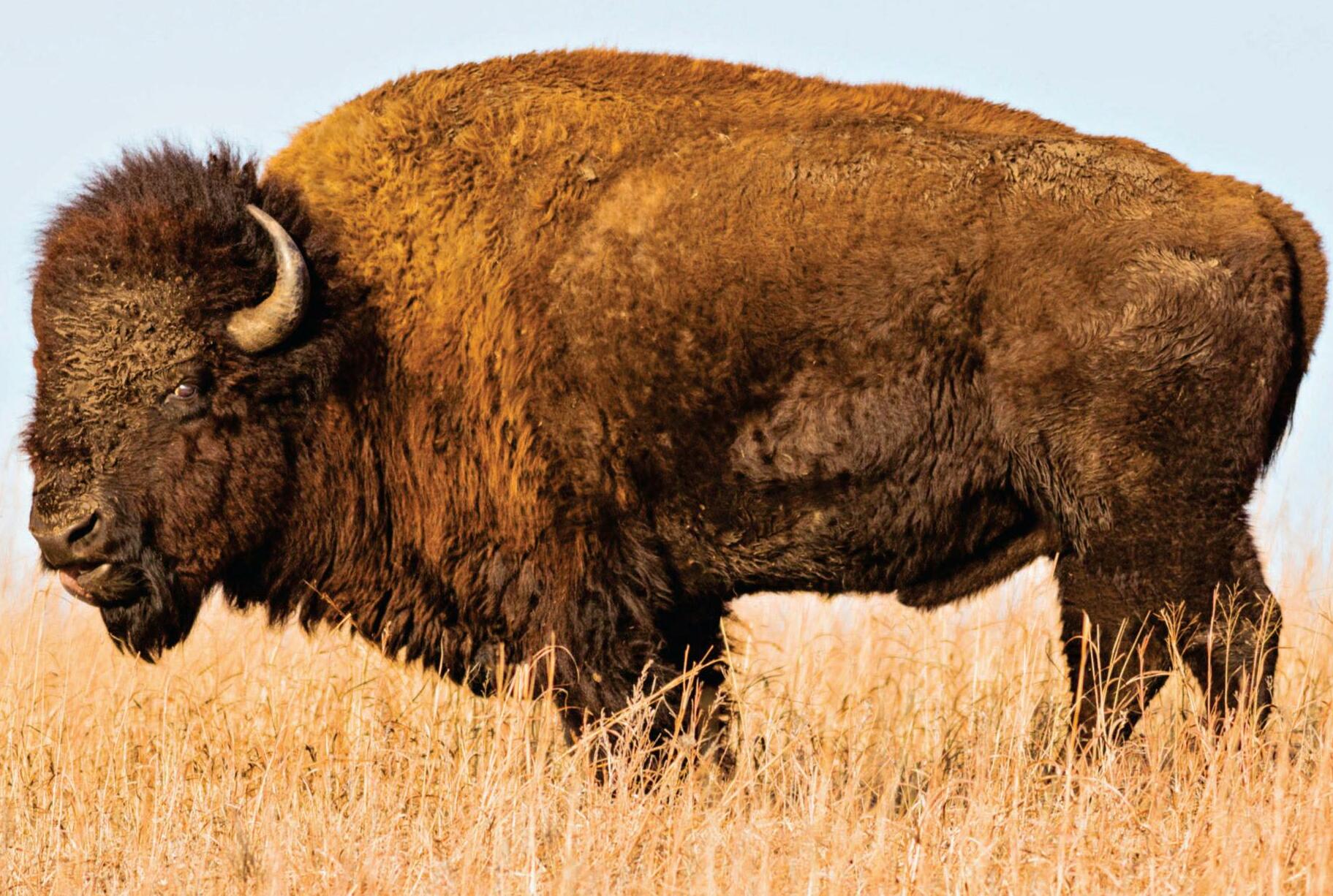
Ron Brownotter stood at the edge of an overlook, gazing for miles across the rolling hills, ravines, and plateaus of the Grand River Valley on the Standing Rock Indian Reservation in northwest South Dakota. In the distance, the largest buffalo herd solely owned by an American Indian in North America Brownotter's herd were tiny, dark brown dots.
“Sitting Bull lived just over that ridge,” he explained, pointing to his left. Then, extending his arms and taking in the view, he said, “This is my office.”
Brownotter, a Lakota-Yanktonai person and member of the Standing Rock Sioux Tribe, came from humble beginnings to own that herd of 600 buffalo and the 20,000 acres on which they roam.
But the path to the top of that overlook was a winding one, and Brownotter didn’t walk it alone.
A Long Road
Brownotter was one of nine children, and although his parents had plenty of love, financial times were very tough. Some of the children — including Brownotter, at age 7 — were sent to a boarding school for Natives more than 200 miles away. “It was brutal,” he recalled. “But the kids in the late 1800s really had it hard, and many of them died in boarding schools.”
Back at Standing Rock and attending a nearby high school, Brownotter knew he wanted to be a rancher. He used his $40 monthly check from the Bureau of Indian Education JohnsonO’Malley Program to buy supplies such as tools, shovels, and axes. The program was created in 1934 to reduce boarding school enrollment and place Native students in public schools.
“They cut me a check every month, and it had my name on it,” Brownotter said. “I thought that was the coolest thing.”
By that point, Brownotter had developed an alcohol addiction. According to the National Institutes of Health, American Indians have the highest rate of alcohol and other drug use disorders of any ethnic group.

Dit verhaal komt uit de February 2025-editie van Successful Farming.
Abonneer u op Magzter GOLD voor toegang tot duizenden zorgvuldig samengestelde premiumverhalen en meer dan 9000 tijdschriften en kranten.
Bent u al abonnee? Aanmelden
MEER VERHALEN VAN Successful Farming

Successful Farming
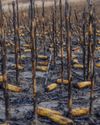
When Fire Backfires
Controlled burns and field fires are part of farm life. But when flames or smoke drift beyond your fence line, you could be on the hook for major damages.

4 mins
March 2026

Successful Farming
Planter Calibration Sets Yield Potential
Preparing, calibrating, and verifying planter performance help ensure uniform emergence.
4 mins
March 2026

Successful Farming
all around THE FARM
I built this rolling cart out of two Harbor Freight scissor-lift transmission jacks.
1 mins
March 2026

Successful Farming
Pickup Box Power Utility Center
An easy-access portable energy source serves multiple functions.
1 mins
March 2026
Successful Farming
6 Tips for a Tighter Calving Window
Experts say a shorter calving season can optimize your barn’s productivity and your checkbook.
4 mins
March 2026

Successful Farming
Are We Too Young for an Estate Plan?
Problem: A young couple with children doesn’t have an estate plan, but their assets may change with future inheritance and acquisitions.
2 mins
March 2026

Successful Farming
New Holland PowerStar Electro Command Tractors
High-power machines feature utility size.
2 mins
March 2026
Successful Farming
Claas Jaguar 1000 Forage Harvester for Wide Crop Flow
The 1000 series is launching with four new models.
2 mins
March 2026

Successful Farming
Mark Crave
At this Wisconsin dairy, sustainability and family farming go hand in hand, from milking 2,300 cows to powering the farm with manure.
3 mins
March 2026
Successful Farming
Insuring Against Fire
Being fully covered in case of fire is critical after a disaster.
3 mins
March 2026
Listen
Translate
Change font size