Prøve GULL - Gratis
BRINGING BUFFALO BACK TO STANDING ROCK
Successful Farming
|February 2025
For Ron Brownotter, buffalo are more than just livestock. They're a connection to his ancestors and a way to uplift his family and community.
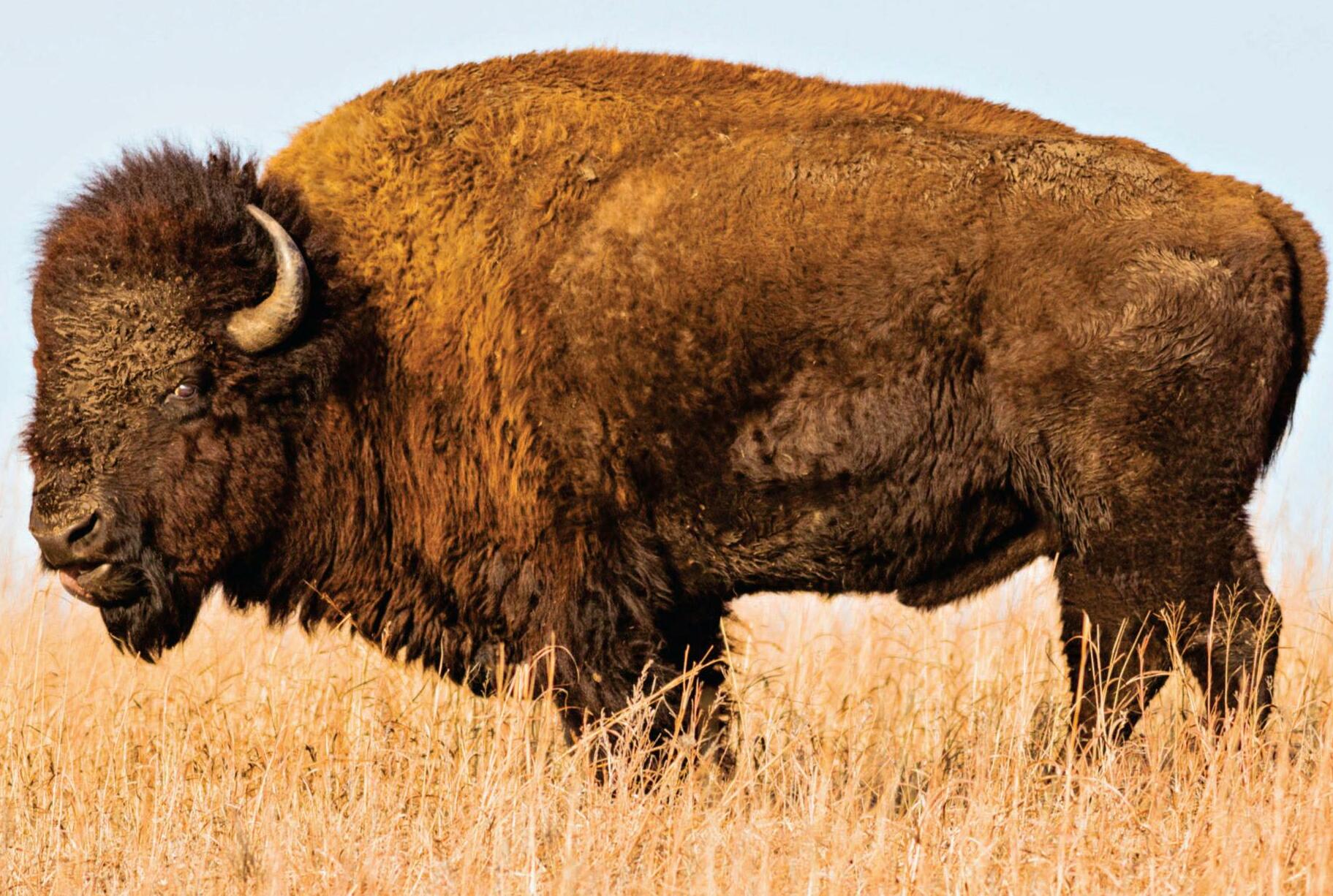
Ron Brownotter stood at the edge of an overlook, gazing for miles across the rolling hills, ravines, and plateaus of the Grand River Valley on the Standing Rock Indian Reservation in northwest South Dakota. In the distance, the largest buffalo herd solely owned by an American Indian in North America Brownotter's herd were tiny, dark brown dots.
“Sitting Bull lived just over that ridge,” he explained, pointing to his left. Then, extending his arms and taking in the view, he said, “This is my office.”
Brownotter, a Lakota-Yanktonai person and member of the Standing Rock Sioux Tribe, came from humble beginnings to own that herd of 600 buffalo and the 20,000 acres on which they roam.
But the path to the top of that overlook was a winding one, and Brownotter didn’t walk it alone.
A Long Road
Brownotter was one of nine children, and although his parents had plenty of love, financial times were very tough. Some of the children — including Brownotter, at age 7 — were sent to a boarding school for Natives more than 200 miles away. “It was brutal,” he recalled. “But the kids in the late 1800s really had it hard, and many of them died in boarding schools.”
Back at Standing Rock and attending a nearby high school, Brownotter knew he wanted to be a rancher. He used his $40 monthly check from the Bureau of Indian Education JohnsonO’Malley Program to buy supplies such as tools, shovels, and axes. The program was created in 1934 to reduce boarding school enrollment and place Native students in public schools.
“They cut me a check every month, and it had my name on it,” Brownotter said. “I thought that was the coolest thing.”
By that point, Brownotter had developed an alcohol addiction. According to the National Institutes of Health, American Indians have the highest rate of alcohol and other drug use disorders of any ethnic group.


Denne historien er fra February 2025-utgaven av Successful Farming.
Abonner på Magzter GOLD for å få tilgang til tusenvis av kuraterte premiumhistorier og over 9000 magasiner og aviser.
Allerede abonnent? Logg på
FLERE HISTORIER FRA Successful Farming
Successful Farming
Make Forested Land Pay Without Cutting a Tree
Landowners can grow high-value, nontimber crops, like ginseng, under existing trees.

4 mins
February 2026
Successful Farming
New Fendt Optimum With Precision Planting Tech
The Optimum is available in five configurations, with a variety of options.
1 mins
February 2026

Successful Farming
The Widening Net
Experts discuss how government aid can inflate input costs.
4 mins
February 2026
Successful Farming
Opportunity Is Knocking
It’s a good time to buy if you’re in the market for a high-horsepower tractor.
4 mins
February 2026

Successful Farming
SUPERCYCLE SLUMP
What will it take for corn and soybean prices to climb again?
5 mins
February 2026

Successful Farming
Ready, Set, Plant!
New research from universities, on-farm trials, and seed companies is reshaping how growers decide which crop to plant first.
8 mins
February 2026
Successful Farming
Get Planting Prep Right
Spending time servicing your planter during the winter pays off when conditions are right to head to the field.
2 mins
February 2026
Successful Farming
Leaving Lasting Impact
A central Iowa community came together to support FFA, agricultural education, and the next generation of leaders in agriculture.
2 mins
February 2026
Successful Farming
Dwight Mogler
This Iowa producer shares how his family stays united as the multigenerational farm grows.
3 mins
February 2026

Successful Farming
Diagnosing Equipment Repairs
Off-the-shelf and manufacturer AI tools can help farmers repair machinery faster.
3 mins
February 2026
Listen
Translate
Change font size