
Ga onbeperkt met Magzter GOLD
Krijg onbeperkte toegang tot meer dan 9000 tijdschriften, kranten en Premium-verhalen voor slechts
Engineering the Future of EV Charging Infrastructure
EM - Efficient Manufacturing
|October 2025
The future of EV charging goes beyond speed; it demands intelligent, adaptive systems that can evolve with battery chemistries, grid conditions, and user needs. By merging automation, AI, and advanced thermal management, charging infrastructure can transform into a self-aware, reliable energy backbone for mobility.
-
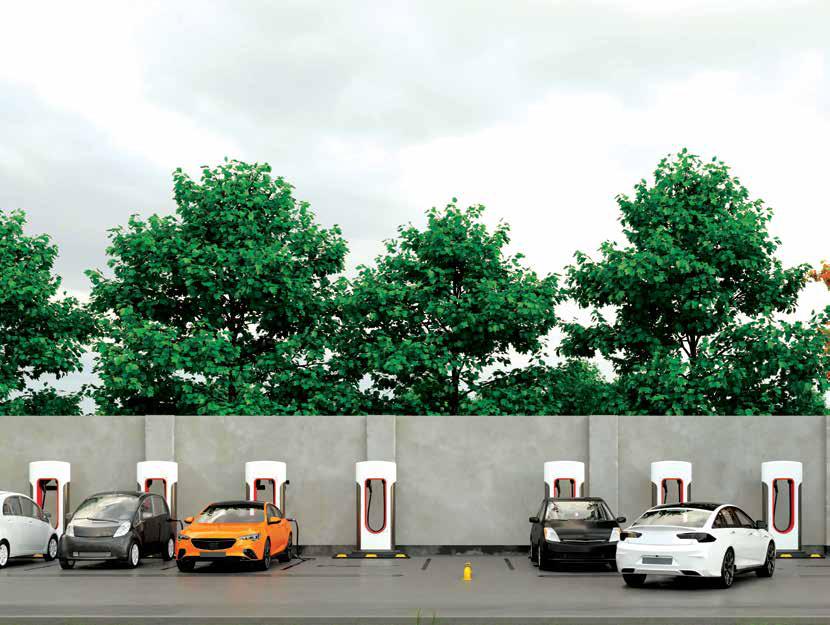
Global Electric Vehicle (EV) adoption is accelerating, but the supporting infrastructure, especially charging systems, faces significant engineering constraints.
The core challenge isn't merely increasing charger numbers or power output; it's about building reliable, intelligent, and adaptive systems. These systems must seamlessly integrate with evolving battery chemistries, fluctuating grid conditions, and high utilisation demands, all while upholding safety and efficiency. Solving this is not a standalone electrical engineering problem but rather a multi-domain system engineering task. Effective solutions necessitate the convergence of expertise from various fields, including industrial automation, electrochemistry, artificial intelligence, and thermal management.
What Charging Can Learn from Smart Automation in Textiles
Modern textile manufacturing offers a surprisingly appropriate model for infrastructure design. Textile plants operate with persistent sensing and real-time feedback. Machines or devices adjust operations on the fly based on data from embedded sensors surveying alignment, tension, temperature, and wear. These systems also predict delinquencies before they happen, minimising downtime.
This principle is instantly transferable to EV charging. Today’s chargers are mostly static, with limited diagnostic ability. A fault often means a total shutdown. By integrating real-time monitoring of voltage, temperature, contact resistance, and component fatigue, chargers can become self-aware. For example, overheating connectors or degraded insulation can be specified early, triggering auto-de-rating or assertive maintenance. These are established practices in elevated industrial sectors, but they remain underutilised in EV infrastructure.

Dit verhaal komt uit de October 2025-editie van EM - Efficient Manufacturing.
Abonneer u op Magzter GOLD voor toegang tot duizenden zorgvuldig samengestelde premiumverhalen en meer dan 9000 tijdschriften en kranten.
Bent u al abonnee? Aanmelden
MEER VERHALEN VAN EM - Efficient Manufacturing

EM - Efficient Manufacturing
Connecting the Future: How Next-Gen Cables Are Powering a Smarter, Greener World
From superconducting power lines to smart, sensor-enabled systems and recyclable materials, the cable and wire industry is undergoing a quiet revolution. These unseen enablers are driving the world's shift to renewable energy, digital connectivity and sustainable engineering.

3 mins
November 2025

EM - Efficient Manufacturing
CIRCUIT OF CHANGE:How India is Powering Global Electronics Manufacturing
India's electronics manufacturing industry is on the fast track to transformation. Once known mainly for assembling products, it's now gearing up to design, build, and export high-quality electronics to the world, powered by strong policies, big investments, and a growing wave of innovation.
7 mins
November 2025

EM - Efficient Manufacturing
Guardians of the Machine Mind: Securing India's Agentic AI Future
As AI systems evolve from passive assistants to autonomous decision-makers, India's digital economy faces a new frontier of cybersecurity challenges. These “agentic AIs” can reason, plan, and act independently, making them powerful allies, but also unpredictable risks. To safeguard the nation's digital transformation, securing these intelligent agents must become a top national priority
3 mins
November 2025

EM - Efficient Manufacturing
Mastering Difficult-to-Cut Materials in Aerospace
Difficult-to-cut materials are defined as engineering materials with significantly lower machinability compared to typical ones.
6 mins
November 2025

EM - Efficient Manufacturing
India's Consumer Electronics Boom: From Assembly Lines to Advanced Manufacturing
India's consumer-electronics industry is entering a new phase of technological maturity. Backed by bold policies, localised production, and rapid adoption of automation and design capabilities, the nation is evolving from an assembly hub into a globally competitive centre for innovation and manufacturing.
2 mins
November 2025

EM - Efficient Manufacturing
Driving the Future of Electric Mobility through Indian Innovation
...says Mohal Lalbhai, Co-founder and CEO of Matter Motor, in conversation with Kaushal Dighavkar. He shares how Matter's India-first innovation philosophy, sustainability initiatives, and indigenous R&D are shaping the nation's EV ecosystem while positioning the company as a global leader in electric mobility.
2 mins
November 2025

EM - Efficient Manufacturing
Accelerating India's Digital Manufacturing Journey through Innovation and Integration
...says Rajkiran C, Senior Director, PTC India, in conversation with Anushka Vani. He shares insights on India's unique Industry 4.0 journey, contrasting adoption patterns between large enterprises and SMEs, and how PTC is enabling manufacturers to drive connected, innovation-led growth.
2 mins
November 2025

EM - Efficient Manufacturing
How smart factories are powering a greener future in manufacturing
Industry 4.0 is redefining manufacturing through smart, data-driven technologies that boost efficiency and sustainability. By embracing smart factories and eco-design, manufacturers are cutting emissions and driving a cleaner, more resilient future.
3 mins
November 2025
EM - Efficient Manufacturing
"Building the Backbone of India's Green Hydrogen Future"
...says Srinivas Suthram, Head - Business Development, Kshema Power, in conversation with Kaushal Dighavkar. He discusses the critical role of EPC players in enabling large-scale hydrogen infrastructure, integrating renewables with advanced technology, and leveraging global learnings to accelerate India's clean energy transition.
3 mins
November 2025

EM - Efficient Manufacturing
Precision, Intelligence and the Future of Electronics Manufacturing
Once a production innovation, Surface-Mount Technology (SMT) has become the foundation of modern electronics manufacturing. With advances in automation, materials, and digital integration, SMT is driving the next era of miniaturised, high-performance, and intelligent electronics assembly.
4 mins
November 2025
Listen
Translate
Change font size