Poging GOUD - Vrij
Learning about LAYERS
BBC Sky at Night Magazine
|May 2022
Expert astrophotographer Will Gater provides a beginner's guide to the power of layers-based image editing

As any astrophotographer will tell you, the cold nights that are spent out capturing data - whether for a simple DSLR camera nightscape or a multihour deep-sky masterpiece - are only the opening stages of a long journey to produce a final image. An enormous amount of work goes into the processing of even quite a simple data set. We may think of stacking and calibration software programs – like DeepSkyStacker or Nebulosity - when we hear the phrase 'astro-image processing, but often much of this work is done in Photoshop or GIMP too - certainly more than a few final tweaks.
These programs allow you adjust different aspects of an image (like the brightness, contrast and colour balance), but they're also important in another respect, as they are what's known as “layers-based' editors. This means that multiple images, or sets of image data, can be brought into these programs as separate layers.
You can think of regular image-editing programs as being similar to the process of painting, where each daub of new paint is added to the canvas, changing the overall image. But a layers-based editor allows multiple, individual layers to simultaneously combine to make the image on screen. Each of these also can be tweaked, adjusted, masked, aligned or blended in myriad ways while processing.
Because each image layer can be switched on or off, and has different treatments or processing techniques applied to it in isolation, it's easy to vary its contribution to the overall picture, or even delete its effect completely. In the painting analogy this is akin to having the ability to remove, tweak or even change the hue of paint strokes that have already been applied to the canvas.
In a non layers-based editor, to go back and tweak an adjustment to part of the image, like a brightness boost or a curves enhancement, you will often need to restart the editing process, if such alterations are possible in the first place.


Dit verhaal komt uit de May 2022-editie van BBC Sky at Night Magazine.
Abonneer u op Magzter GOLD voor toegang tot duizenden zorgvuldig samengestelde premiumverhalen en meer dan 9000 tijdschriften en kranten.
Bent u al abonnee? Aanmelden
MEER VERHALEN VAN BBC Sky at Night Magazine
BBC Sky at Night Magazine
The Giant Leap: Why Space is the Next Frontier in the Evolution of Life
“Earth is the cradle of humanity, but one cannot live in the cradle forever,” wrote Konstantin Tsiolkovsky in 1911.

1 mins
February 2026
BBC Sky at Night Magazine
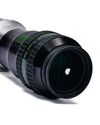
Tele Vue Nagler Type-7 series eyepieces
These premium optics were inspired by Apollo - and deliver a giant leap to your views
4 mins
February 2026
BBC Sky at Night Magazine
Once Upon a Time in Space
While the Space Race of the Cold War years was ultimately a geopolitical contest between the USA and the Soviet Union, the rivalry sparked rapid innovation and inspired multiple generations to look skyward.
1 mins
February 2026
BBC Sky at Night Magazine
The Multiverse: When One Universe Isn't Enough
The concept of a 'multiverse' – the idea that our Universe may be just one of many – is widespread in science fiction and a common thread of online discussions.
1 mins
February 2026
BBC Sky at Night Magazine
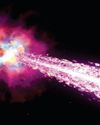
Q&A WITH A GAMMA RAY SPECIALIST
In 2025, astronomers detected a blast from space that lasted seven hours. Now they're uncovering the strange processes behind the exceptional outburst
3 mins
February 2026
BBC Sky at Night Magazine
Astronomy Photographer of the Year
The world-leading astrophotography competition returns. Could your image take the top prize of £10,000?
2 mins
February 2026
BBC Sky at Night Magazine
MOONWATCH
February's top lunar feature to observe
2 mins
February 2026
BBC Sky at Night Magazine
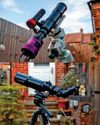
NOVAStar Scarlet A62Q 62mm f/8.4 quadruplet achromatic refractor
Well-built and capable, this beginner scope punches well above its bargain price
4 mins
February 2026
BBC Sky at Night Magazine
STAR OF THE MONTH
Rasalas, Leo the Lion's metal-rich crown
1 min
February 2026
BBC Sky at Night Magazine
Comet 24P/Schaumasse
Having reached perihelion on 8 January, comet 24P/ Schaumasse is now fading. Starting the month at a small-telescope-friendly mag. +10.5, it dims throughout February to below 12th magnitude.
1 min
February 2026
Translate
Change font size