Poging GOUD - Vrij
A Hurrah For No Complexo
Outlook
|September 5, 2016
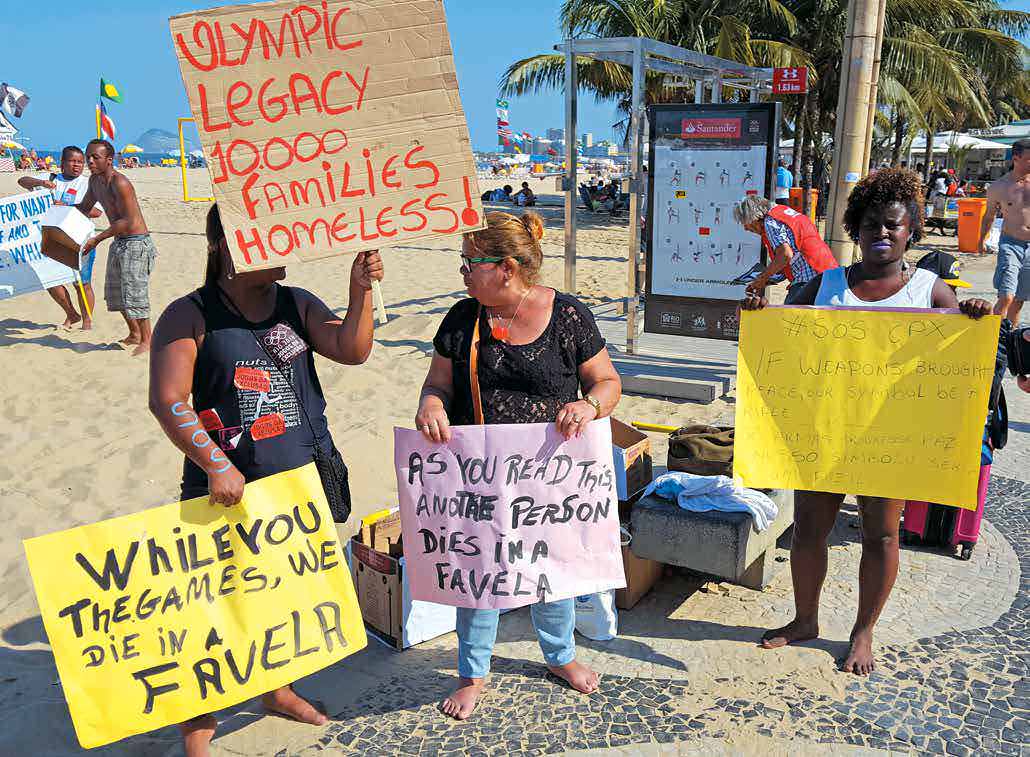
‘The Rio Games is a grand success’, trumpet a few. A divided country begs to differ.

Neymar Jr is no Mario Zagallo. Not yet. But after scoring the winning penalty against Germany in the match for the football gold, Neymar sounded as bruisingly redemptive as Zagallo, the legend involved in Brazil’s four World Cup triumphs. “Now they will have to swallow me,” said the Number 10, after about of hearty sobbing on the maracana pitch. This was Neymar’s shot at silencing his—and the Brazilian team’s—critics as he wore gold around his neck. A day later, the president of the Rio 2016 Organising Committee, Carlos Nuzman, too, echoed Zagallo when he asked his critics to “swallow the success” of the event. “It was a tremendous and extraordinary success. The world bowed to Rio,” Nuzman told a group of journalists on August 22, a day after the Games officially closed at the Maracana.
Even before thousands of athletes, officials, journalists and tourists left, the Brazilian establishment is busy patting its own back for its ‘success’ in organising the first-ever Olympics in South America.
The Modern Olympics, which started in 1896, still have an amphitheatrical feel to them. Every four years, thousands of athletes congregate in a large city to dazzle the world with their extraordinary abilities. It’s not just the athletes who want to outrun and outjump others, the host city—and the country—too wants to make a leap into a select club of global cities as Olympic hosts. Rio dreamt thus too. But just weeks before the circus arrived in town, it seemed Rio faced utter disaster: the Zika virus hit town and scared off athletes, bridges collapsed, ISIS terror cells were a probability and a sudden spike in murders made global headlines foretell doom.

Dit verhaal komt uit de September 5, 2016-editie van Outlook.
Abonneer u op Magzter GOLD voor toegang tot duizenden zorgvuldig samengestelde premiumverhalen en meer dan 9000 tijdschriften en kranten.
Bent u al abonnee? Aanmelden
MEER VERHALEN VAN Outlook

Outlook
Hating Dating
For many women, dating in their 30s and 40s is defined less by romance than by exhaustion, confusion and a sense of emotional attrition

2 mins
February 21, 2026

Outlook
Rage of Betrayals
THIS is a popular poem often shared when anyone talks of the 4B movement in South Korea. The women in this movement boycott the world of men; boycott heterosexual marriage, relationships, sex, and giving birth.
2 mins
February 21, 2026

Outlook
Class and Caste
Caste hierarchies continue to exist in everyday life and across campuses. Due to the persistence of caste in schools and colleges, long believed to be places for upward mobility and rational thought, these institutions end up becoming spaces where questions of \"merit\", cultural capital, language and access-or the lack of thereof-are highlighted and ridiculed. The discrimination persists from Kashmir to Kerala. From delayed degrees and stalled promotions to verbal abuse, professional isolation, and sometimes death, these case studies underscore not isolated instances but a pattern
18 mins
February 21, 2026

Outlook
The Misuse Myth
A close look at reported cases over the past ten years shows that there is no pattern of rampant misuse of the SC/ST Act in universities or higher education institutions
6 mins
February 21, 2026
Outlook
The Higher, The Lower
What is clear is that the entrenched caste hierarchy feels that power is slipping out from their grasp
6 mins
February 21, 2026
Outlook
Writing is Acting by Another Name
My wife spots him first while my attention is focused on the bucket of theatre popcorn (medium, salt and caramel mix). I look up and there he is. Pico Iyer, great travel writer, essayist, novelist, columnist, humanist, and in recent years, friend and correspondent. While the rest gasp when Timothee Chalamet appears in Marty Supreme, we gasp when Pico does.
3 mins
February 21, 2026

Outlook
Sins of Savarnatva
The upper castes believe that the UGC regulations are a death knell to their own existence
6 mins
February 21, 2026

Outlook
Invisible Labour, Visible Costs
Women shoulder disproportionate emotional and domestic work, shaping how they view intimacy and relationships
2 mins
February 21, 2026

Outlook
Between textbooks and court orders
From first choice to uncertainty as HIMSR-Jamia Hamdard dispute leaves students stranded
5 mins
February 21, 2026
Outlook
Aggressive Victimhood Versus Predictable Protests
The current controversy around the UGC regulations is meant neither to promote social justice and equity nor hurt the interests of the dominant castes. It's meant for the two to be at loggerheads and further consolidate their support behind the BJP-RSS combine
5 mins
February 21, 2026
Translate
Change font size