Intentar ORO - Gratis
A Hurrah For No Complexo
Outlook
|September 5, 2016
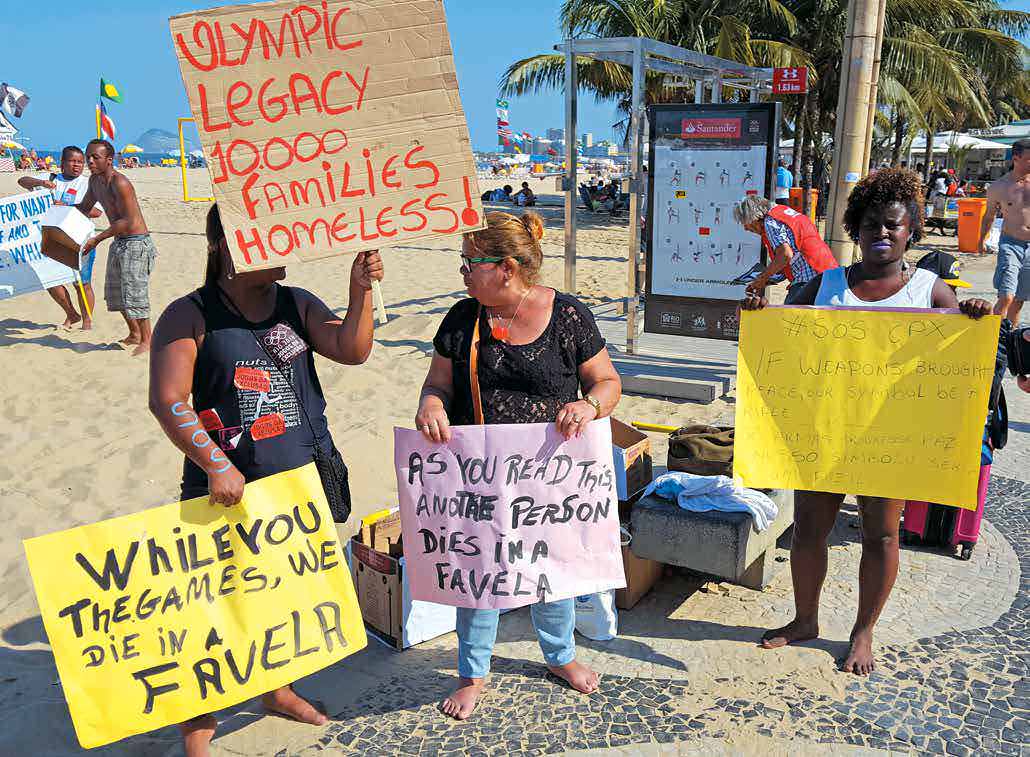
‘The Rio Games is a grand success’, trumpet a few. A divided country begs to differ.

Neymar Jr is no Mario Zagallo. Not yet. But after scoring the winning penalty against Germany in the match for the football gold, Neymar sounded as bruisingly redemptive as Zagallo, the legend involved in Brazil’s four World Cup triumphs. “Now they will have to swallow me,” said the Number 10, after about of hearty sobbing on the maracana pitch. This was Neymar’s shot at silencing his—and the Brazilian team’s—critics as he wore gold around his neck. A day later, the president of the Rio 2016 Organising Committee, Carlos Nuzman, too, echoed Zagallo when he asked his critics to “swallow the success” of the event. “It was a tremendous and extraordinary success. The world bowed to Rio,” Nuzman told a group of journalists on August 22, a day after the Games officially closed at the Maracana.
Even before thousands of athletes, officials, journalists and tourists left, the Brazilian establishment is busy patting its own back for its ‘success’ in organising the first-ever Olympics in South America.
The Modern Olympics, which started in 1896, still have an amphitheatrical feel to them. Every four years, thousands of athletes congregate in a large city to dazzle the world with their extraordinary abilities. It’s not just the athletes who want to outrun and outjump others, the host city—and the country—too wants to make a leap into a select club of global cities as Olympic hosts. Rio dreamt thus too. But just weeks before the circus arrived in town, it seemed Rio faced utter disaster: the Zika virus hit town and scared off athletes, bridges collapsed, ISIS terror cells were a probability and a sudden spike in murders made global headlines foretell doom.

Esta historia es de la edición September 5, 2016 de Outlook.
Suscríbete a Magzter GOLD para acceder a miles de historias premium seleccionadas y a más de 9000 revistas y periódicos.
¿Ya eres suscriptor? Iniciar sesión
MÁS HISTORIAS DE Outlook

Outlook
'Why GDP Growth Doesn't Always Translate Into Votes'
The recent election results have once again shown that economic growth alone does not guarantee electoral victory.

3 mins
June 06, 2026

Outlook
Lights, Camera, Othering
The establishment of Israel has been accompanied by a national cinema devoted to negating and erasing the Palestinian Other
5 mins
June 06, 2026

Outlook
Goodbye to All That
Booker-winning British author Julian Barnes' Departure(s) is a unique hybrid work: playful, philosophical, whimsical
4 mins
June 06, 2026

Outlook
Collapse of Trust
As the NEET-UG 2026 paper leak forced the cancellation of India’s biggest medical entrance exam, more than 22 lakh aspirants find themselves trapped in uncertainty
11 mins
June 06, 2026

Outlook
NO LONGER A TWELFTH MAN
Bihar cricket, which has languished in the shadows for long, is all set to improve its strike rate, thanks to Vaibhav Sooryavanshi, the new Bihari kid on the block
5 mins
June 06, 2026

Outlook
BLAZE OF GLORY
The challenges of being a celebrity cricketer at a young age can be tough to handle
5 mins
June 06, 2026

Outlook
THE SWASHBUCKLERS
A new generation of fearless stars is emerging and finding its feet at the very top of an extremely competitive cricketing environment
5 mins
June 06, 2026

Outlook
THE TEEN TORNAD
At the age of 15, Vaibhav Sooryavanshi is already a cricketing legend
10 mins
June 06, 2026

Outlook
A Journey to Remember
The prerecorded message crackled over the din in the compartment: ‘Welcome to the Shatabdi Express.
4 mins
June 06, 2026

Outlook
Crossing Borders
Ruth Martin is the translator of German-Iranian author Shida Bazyar’s novel The Nights are Quiet in Tehran (originally written in German), which has been shortlisted for the 2026 International Booker Prize.
4 mins
June 06, 2026
Translate
Change font size