Poging GOUD - Vrij
The Life Of Letters
Reader's Digest India
|May 2019
On the lost art of letter-writing.

Every time I visited my mother’s parents, I would be greeted by the sound of the typewriter. My dadu (grandfather), would be typing, seated cross-legged on a low, wooden bed. What was he typing? Letters. Dadu wrote letters in English and in Bengali. Many of his letters in English were typewritten. There were personal letters to family, friends and acquaintances. There were letters to editors of newspapers and many types of business letters. He was also a scribe to many people—young and old, rich and poor, unlettered and well educated. They wanted him to write applications, complaints, recommendations and petitions. He would listen to them carefully and write what they needed. All this was part of his voluntary role as a community elder.
For most, if not all of us, letters have now become part of a lost past—not only because letters capture moments bygone, but also because we no longer write letters. Regular letter writers usually had a stock of stationery on hand: postcards, inland letter forms, stamps, envelopes, notepaper and glue. This stock was replenished periodically.
My grandfather usually wrote his personal letters on postcards. He wrote neatly, in tiny letters, so that he could fit in a great deal in the limited space. Like many of his generation, he would inscribe the om symbol at the top of his missive. Frugality was crucial for my grandfather. He wrote on postcards because they were the cheapest way to send a letter. Also, he never ceased to remind us to not waste paper! Thamma, my father’s mother, was also a letter writer. Her six children lived in different parts of the country and she kept in touch through inland letter forms.


Dit verhaal komt uit de May 2019-editie van Reader's Digest India.
Abonneer u op Magzter GOLD voor toegang tot duizenden zorgvuldig samengestelde premiumverhalen en meer dan 9000 tijdschriften en kranten.
Bent u al abonnee? Aanmelden
MEER VERHALEN VAN Reader's Digest India

Reader's Digest India
ME & MY SHELF
Former editor of Elle and Debonair Amrita Shah, is the author of Ahmedabad: A City in the World (2015), Vikram Sarabhai: A Life (2007), Telly-Guillotined: How Television Changed India (2019) and, most recently, The Other Mohan in Britain's Indian Ocean Empire (2024).

2 mins
January 2026
Reader's Digest India
WORD POWER
Take a bite out of these sweet-talking words, straight from the dessert cart
1 min
January 2026
Reader's Digest India
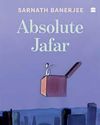
Absolute Jafar
Sarnath Banerjee is a pioneer of the English-language graphic novel in India, with memorable works like Corridor, All Quiet in Vi-kaspuri and The Barn-Owl’s Wondrous Capers to his credit.
1 min
January 2026

Reader's Digest India
Paying Attention to Adult ADHD
New awareness and diagnostic tools are helping of us understand how our brains work
8 mins
January 2026
Reader's Digest India
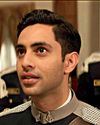
IKKIS, In theatres from 1 January
Sriram Raghavan's latest film Ikkis is based on the life of Second Lieutenant Arun Khetarpal (played by Agastya Nanda) who was awarded a posthumous Param Vir Chakra for his heroic actions during the Battle of Basantar in the Indo-Pak War of 1971.
1 min
January 2026
Reader's Digest India
STUDIO
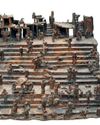
Makar Sankranti at Dashashwameth Ghat, Varanasi by Latika Katt, Bronze sculpture, Single-piece casting 28 x 28 x 7 inches
1 min
January 2026

Reader's Digest India
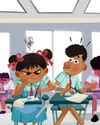
I See FACES
Why do some people see faces in random patterns? Helen Foster set out to learn more about pareidolia
3 mins
January 2026
Reader's Digest India
Left Behind in a Right-Handed World
Excuse the elbow, I'm a leftie, you see
2 mins
January 2026

Reader's Digest India
THE SAILOR VERSUS THE SEA
LAURENT WAS TRAPPED INSIDE FLOODING CABIN OF HIS OVERTURNED BOAT. AS THE HOURS SLIPPED BY, SO DID HIS CHANCES
9 mins
January 2026
Reader's Digest India
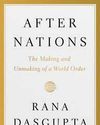
After Nations: The Making and Unmaking of a World Order
It's fair to say that the idea of nation-states has never been under as much stress as it is right now.
1 min
January 2026
Translate
Change font size