試す 金 - 無料
The Life Of Letters
Reader's Digest India
|May 2019
On the lost art of letter-writing.

Every time I visited my mother’s parents, I would be greeted by the sound of the typewriter. My dadu (grandfather), would be typing, seated cross-legged on a low, wooden bed. What was he typing? Letters. Dadu wrote letters in English and in Bengali. Many of his letters in English were typewritten. There were personal letters to family, friends and acquaintances. There were letters to editors of newspapers and many types of business letters. He was also a scribe to many people—young and old, rich and poor, unlettered and well educated. They wanted him to write applications, complaints, recommendations and petitions. He would listen to them carefully and write what they needed. All this was part of his voluntary role as a community elder.
For most, if not all of us, letters have now become part of a lost past—not only because letters capture moments bygone, but also because we no longer write letters. Regular letter writers usually had a stock of stationery on hand: postcards, inland letter forms, stamps, envelopes, notepaper and glue. This stock was replenished periodically.
My grandfather usually wrote his personal letters on postcards. He wrote neatly, in tiny letters, so that he could fit in a great deal in the limited space. Like many of his generation, he would inscribe the om symbol at the top of his missive. Frugality was crucial for my grandfather. He wrote on postcards because they were the cheapest way to send a letter. Also, he never ceased to remind us to not waste paper! Thamma, my father’s mother, was also a letter writer. Her six children lived in different parts of the country and she kept in touch through inland letter forms.


このストーリーは、Reader's Digest India の May 2019 版からのものです。
Magzter GOLD を購読すると、厳選された何千ものプレミアム記事や、10,000 以上の雑誌や新聞にアクセスできます。
すでに購読者ですか? サインイン
Reader's Digest India からのその他のストーリー

Reader's Digest India
EXTRAORDINARY INDIANS
Six ordinary people who turned concern into action, fixed what was broken—and made life fairer, safer, and kinder for all

16 mins
February 2026
Reader's Digest India
STUDIO
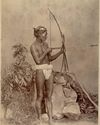
Untitled (Native Man from Chotanagpur drawing Bow and Arrow)
1 min
February 2026
Reader's Digest India
Learning to FLY
A small act of rebellion on a cold Oxford night creates a moment of spontaneous joy
4 mins
February 2026

Reader's Digest India
MY (RELUCTANT) TRIP TO THE TITANIC
In 2023, the submersible Titan imploded on its way to view the famous sunken ocean liner. A year earlier, our author—a sitcom writer— took the same trip. Here's what he saw
9 mins
February 2026

Reader's Digest India
She Carried HOME the Blues
Tipriti Kharbangar has spent two decades carrying a music that refuses spectacle and chases truth. Now the blues singer is asking a deeper question: what does it mean to know your roots—and protect them?
9 mins
February 2026
Reader's Digest India
A Year in France
My time in Aix-en-Provence as a student changed my outlook on life
3 mins
February 2026

Reader's Digest India
A SISTERHOOD IN THE WILD
COMMUNITY In a city better known for traffic snarls than bird calls, a small but growing initiative is helping women slow down and look closer at the wild spaces around them.
3 mins
February 2026
Reader's Digest India
How Famine and History Rewired Our Genes
What if India's current diabetes crisis began generations ago? Science reveals that food scarcity, colonial history, and epigenetics quietly shaped South Asia's metabolic fate
4 mins
February 2026

Reader's Digest India
Tracing the Birth of Nations
In his latest book, Sam Dalrymple interlaces high political history with intimate human stories to examine the complex, often violent, foundations of modern west and south Asian countries
4 mins
February 2026
Reader's Digest India
The Case for Curiosity
Two trivia enthusiasts explore how wonder fades with age— and why asking questions might be the key to finding it again
3 mins
February 2026
Translate
Change font size