Poging GOUD - Vrij
Using A Virtual Machine To Run Linux On Windows
Open Source For You
|November 2017
If you would like to run Linux on Windows and have never used a virtual machine, this tutorial explains how you can do so in a few simple steps.
-

Linux and Windows are two of the most popular operating systems in the market. One can say that these two OSs have become essentials because of their continuous development and feature enhancements. Many people prefer one over the other. Yet, people who use Linux sometimes need the Windows operating system, and vice versa. For faster development and more security, people prefer to use Linux over Windows. So these people need Linux alongside Windows.
A common solution for this problem is to use a dual boot, which basically installs the entire operating system. However, due to boot loader changes (like UEFI mode), configuring dual boot becomes difficult.
This article is about running Linux on Windows, without using the dual boot technique. There are different ways to do so, one of the most popular being using a virtual machine.
Virtual machines
Virtualisation is fairly old technology now. It was started around 1980 by IBM. So, currently, this technology is pretty stable. We can create Linux virtual machines in Windows using software like Virtual Box, VMware Player, and VMware Workstation.
A virtual machine provides the same functionality as a physical computer, but it is an emulation of a physical computer. The virtual machine can be created or destroyed at any moment and it will not impact the actual operating system, which is the best part about using it.
To install Linux on Windows, we just require two things — the software to create a virtual machine which is Virtual Box (free software) and an ISO file of the operating system.
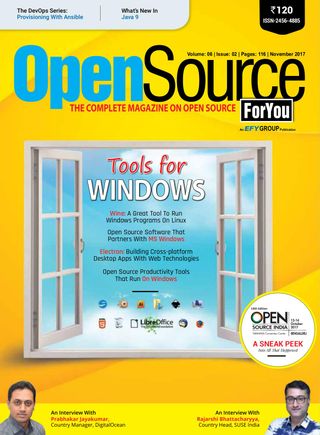

Dit verhaal komt uit de November 2017-editie van Open Source For You.
Abonneer u op Magzter GOLD voor toegang tot duizenden zorgvuldig samengestelde premiumverhalen en meer dan 9000 tijdschriften en kranten.
Bent u al abonnee? Aanmelden
MEER VERHALEN VAN Open Source For You

Open Source For You
GitHub weighs turning off pull requests as AĬ slop floods projects
GitHub has formally acknowledged that AI-generated 'slop' is overwhelming open source projects, forcing maintainers to sift through poor pull requests (PRS), abandoned submissions and guideline violations - and is now considering restricting or even disabling pull requests, the core mechanism of open collaboration.

1 min
March 2026

Open Source For You
Global banks are deploying Ethereum's Layer-2 stack
Banks are standardising on Ethereum's open source stack as production financial infrastructure, shifting from experimental pilots and proprietary blockchains to live Layer-2 networks for tokenised deposits, interbank payments, and cross-border settlement.
1 min
March 2026

Open Source For You
OpenClaw's creator joins OpenAl
In a move that reinforces its commitment to open development rather than acquisition, OpenAI has brought Peter Steinberger, founder of OpenClaw, into the company while placing the popular AI agent under a foundation structure to ensure it remains open source.
1 min
March 2026
Open Source For You
LibreOffice 26.2 comes with native Markdown support
LibreOffice 26.2 has been released by The Document Foundation, strengthening its position as a fully free and open source office suite for Windows, macOS, and Linux, with support for more than 120 languages.
1 min
March 2026

Open Source For You
Indian government mandates labelling of Al-generated content and quicker deletion of illegal deepfakes
India has introduced sweeping AI content rules that immediately place pressure on social platforms and open source AI ecosystems to label, trace and rapidly remove AI Open ource synthetic media at scale.
1 min
March 2026
Open Source For You
I2C and I3C: How Modern Devices Communicate
I3C and I2C are both two-wire communication protocols that help exchange data between multiple devices. While I3C preserves the simplicity of I2C, it introduces new features suited for today's sensor-rich devices.
8 mins
March 2026
Open Source For You
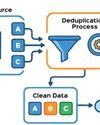
Data Deduplication Done the Right Way
Deduplication helps to save space on Linux-based storage systems. Choose the right platform and check whether it meets your goals.
5 mins
March 2026

Open Source For You
The Relevance of Rubber Duck Debugging in the Age of AI
Discover why rubber duck debugging is a powerful process today.
4 mins
March 2026

Open Source For You
Sending IoT Sensor Data to Public or Private Servers
This IoT system shows a simple and effective way to send sensor data using an ESP8266 microchip.
3 mins
March 2026

Open Source For You
Optimising RAM Usage with Python
Discover how we can make better use of RAM by applying various Python optimisation techniques.
7 mins
March 2026
Translate
Change font size