Poging GOUD - Vrij
Sending IoT Sensor Data to Public or Private Servers
Open Source For You
|March 2026
This IoT system shows a simple and effective way to send sensor data using an ESP8266 microchip.
-
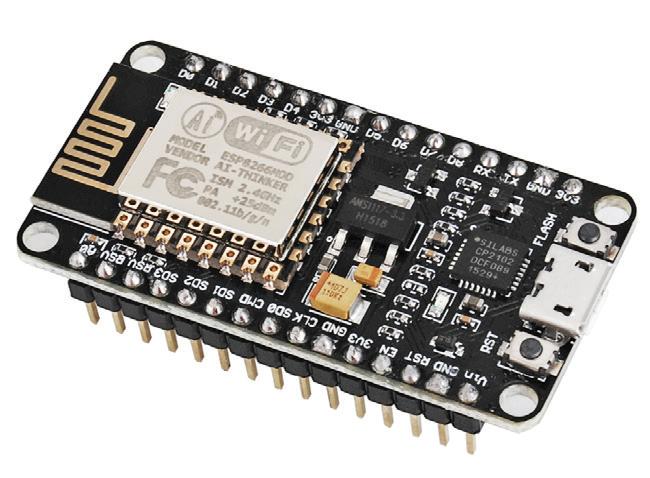
Modern IoT systems rely on sensors to collect real-world data and transmit it to public cloud servers or private on-premises servers for monitoring, analytics, and decision-making. Here's the core working logic of an ESP8266-based IoT node that reads temperature and humidity data and sends it securely to a remote server while also exposing the data locally.
Overview of the system architecture
The code implements a hybrid, dual-mode architecture for an IoT device (like an ESP8266 microcontroller) designed for maximum flexibility in different scenarios. The system doesn't just do one thing; it intelligently operates in two distinct modes, making it useful both when connected to the internet and when operating locally.
Remote data push (Client mode):
Sensor data is periodically sent to a private/public server using HTTP POST (JSON format). This is ideal for cloud dashboards, databases, or analytics pipelines.
Local data access (Server mode):
ESP8266 runs a lightweight web server. Nearby devices can fetch live sensor data directly using a browser or REST call.
This hybrid model is commonly used in smart homes, industrial monitoring, and edge computing systems.
We will now see how this IoT system works.
Library and hardware abstraction is as follows:
#include <ESP8266WiFi.h>
#include <ESP8266HTTPClient.h>
#include <WiFiClient.h>
#include "DHT.h"
These libraries provide:
- WiFi connectivity (ESP8266WiFi)
- HTTP communication (ESP8266HTTPClient)
- Low-level TCP client support (WiFiClient)

Dit verhaal komt uit de March 2026-editie van Open Source For You.
Abonneer u op Magzter GOLD voor toegang tot duizenden zorgvuldig samengestelde premiumverhalen en meer dan 9000 tijdschriften en kranten.
Bent u al abonnee? Aanmelden
MEER VERHALEN VAN Open Source For You
Open Source For You
I2C and I3C: How Modern Devices Communicate
I3C and I2C are both two-wire communication protocols that help exchange data between multiple devices. While I3C preserves the simplicity of I2C, it introduces new features suited for today's sensor-rich devices.

8 mins
March 2026
Open Source For You
Data Deduplication Done the Right Way
Deduplication helps to save space on Linux-based storage systems. Choose the right platform and check whether it meets your goals.
5 mins
March 2026

Open Source For You
The Relevance of Rubber Duck Debugging in the Age of AI
Discover why rubber duck debugging is a powerful process today.
4 mins
March 2026

Open Source For You
Sending IoT Sensor Data to Public or Private Servers
This IoT system shows a simple and effective way to send sensor data using an ESP8266 microchip.
3 mins
March 2026

Open Source For You
Optimising RAM Usage with Python
Discover how we can make better use of RAM by applying various Python optimisation techniques.
7 mins
March 2026

Open Source For You
How a Job Portal Benefited from Microservices Architecture
Microservices architecture has emerged as a preferred pattern for building scalable and maintainable software applications. Here's how a monolithic job portal application was re-engineered into a microservices-based system. The migration process, key design decisions, the technology stack used, and measurable improvements in performance and flexibility are all laid out for you.
9 mins
March 2026

Open Source For You
The Role that Software Architects Play
Software architects design software projects and ensure these meet their goals. They must balance tech skills with leadership and mentoring abilities.
5 mins
March 2026

Open Source For You
The Path to Cybersecurity in the Quantum Era
The rise of quantum computing will be accompanied by a failure of conventional cryptography. Post-quantum cryptography and advanced threat detection methodologies, among other techniques, are being evolved to counter security threats in the quantum era.
8 mins
March 2026

Open Source For You
Why Open Source Large Language Models are Popular
Open source large language models mark a pivotal moment in the evolution of generative Al. By lowering barriers to entry and fostering collaborative innovation,these models are enabling a broader spectrum of organisations to benefit from Al.
7 mins
March 2026

Open Source For You
Ant Group open sources two frontier AI models
Ant Group has open sourced two trillion-parameter frontier AI models-Ling2.5-1T and Ring-2.5-1T-placing advanced large language and reasoning systems directly in the hands of developers and researchers worldwide.
1 min
March 2026
Listen
Translate
Change font size