
Gå ubegrenset med Magzter GOLD
Få ubegrenset tilgang til over 9000 magasiner, aviser og premiumhistorier for bare
Prøve GULL - Gratis
German kitchens, Japanese amps, and Afropop gems
Stereophile
|December 2024
BRILLIANT CORNERS - I have a day job at a museum. One of my favorite things about working there is taking the elevator from my office down to one of the floors open to the public; I walk into the galleries through a discreet panel in the wall. This makes me feel like I'm in one of those horror-movie manors with a tunnel concealed behind a bookshelf. Sometimes I startle people, which I kind of enjoy.

Mostly I like spending time looking at art, especially in the early mornings when the galleries are empty. Lately, I've been watching art handlers hanging a roughly 100'-long tapestry depicting some manner of planetary jetsam-or maybe they are aquatic plantsby Nigerian artist Otobong Nkanga. And I make regular trips to a small theater to watch mesmerizing footage of Orchard Street in working-class lower Manhattan, shot in 1955 by veteran filmmaker Ken Jacobs. Captured on warm, saturated 16mm film, the long-gone people on the screen appear as vividly alive as the museumgoers around me.
My favorite-ever thing at the museum, though, is a life-sized kitchen. Austrian architect Grete Lihotzky designed it for a Frankfurt housing complex in 1927, and it became the prototype for the purpose-built, appliance-filled cooking spaces we know today. Aside from its novelty, what set the Frankfurt Kitchen apart is its stated aim: to improve the lives of women working in the home through the application of attention and, in the broadest sense, love.
Lihotzky came by her love through rational means. She used time-motion studies and interviews with housewives and women's groups to create a marvel of efficiency. Just over 6' by 11', her kitchen contains a revolving stool, a gas stove, a foldaway ironing board, an adjustable ceiling light, and a removable garbage drawer, as well as built-in labeled containers for everything from rice to potato starch, each with a spout for easy pouring. The beauty of the design lay in the details: Lihotzky used oak for the flour containers (to repel mealworms) and beech for cutting surfaces (to resist knife gouges and stains). In Weimar Germany, a woman architect was still a rarity, but it is difficult to imagine a man designing a kitchen with such empathy and care. I have often imagined myself preparing food in that little space, with real delight.

Denne historien er fra December 2024-utgaven av Stereophile.
Abonner på Magzter GOLD for å få tilgang til tusenvis av kuraterte premiumhistorier og over 9000 magasiner og aviser.
Allerede abonnent? Logg på
FLERE HISTORIER FRA Stereophile

Stereophile
ICONS AND INNOVATORS AT DEFINITIVE AUDIO
Definitive Audio in Bellevue, Washington, near Seattle—one of the premier dealerships in the Pacific Northwest—continued its 50th anniversary celebration with an event it called “Icons and Innovators.” Highlighted by showings of the new JBL Everest series and Bowers & Wilkins Nautilus and 801 Abbey Road edition loudspeakers, the event drew a full house to the first of two sessions.

10 mins
February 2026

Stereophile
Touched-up Beatles and Ringo in color
Opinions vary, but like everything connected to The Beatles, charged arguments over Giles Martin's ongoing remastering of, and sonic tinkering with, the band’s hallowed recording catalog are unending.
3 mins
February 2026

Stereophile
Traveling through time and space
In the April 2024 issue of this magazine, a piece by Editor Jim Austin appeared in the “As We See It” space. It was titled “On assessing sonic illusions,” and it has haunted me for more than a year. Jim’s thesis was that a music recording is a “synthetic, whole-cloth creation ... a complete fabrication.” He writes: “Very few recordings correspond to an actual performance. Most are studio concoctions with pieced-together instrumental tracks and artificial ambience that document no sonic event that ever occurred.”
4 mins
February 2026
Stereophile
EgglestonWorks Andra 5
Big loudspeakers are where diligent hi-fi reviewers really earn their pay.
16 mins
February 2026
Stereophile
RECORD REVIEWS
Why award Recording of the Month to a project whose vocal soloists, though thoroughly committed, are in some respects less than ideal?
3 mins
February 2026
Stereophile
Doshi Audio Evolution Stereo
Nick Doshi is cautiously reserved when he talks about his amplifiers, preferring to let the products speak for themselves.
14 mins
February 2026
Stereophile
Sticking with it
David and Alma Wilson must be doing something right. They’ve been married for 50 years, and for 36 years, they’ve owned and operated Accent on Music on Main Street in Mount Kisco, New York, about an hour north of New York City. In a recent, lively Zoom conversation with the Wilsons, it became apparent that staying the course is a viable approach, for marriage and for business.
4 mins
February 2026
Stereophile
Period-style listening
Last night, I sat on a bright yellow velveteen sofa eating red beans and rice while listening for three hours to blues and jazz from rare 78rpm records. I walked out feeling gospel-level raised up, with a head full of dreams and cultural memories.
12 mins
February 2026
Stereophile
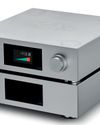
CH Precision L10
TWO-CHASSIS LINE PREAMPLIFIER
16 mins
February 2026
Stereophile
Rock don't give a shit, you know
Punk rock was never meant to grow old. For their first three studio efforts, The Replacements epitomized the punk ethos. Sorry Ma, Forgot to Take Out the Trash (1981), the EP Stink (1982), and Hootenanny (1983) are loud, bashy fun.
3 mins
February 2026
Listen
Translate
Change font size