
Gå ubegrenset med Magzter GOLD
Få ubegrenset tilgang til over 9000 magasiner, aviser og premiumhistorier for bare
Garbage Collection Strategies: Go vs Java vs Julia
Open Source For You
|June 2025
Explore how three open source languages—Java, Go, and Julia—take different paths to solve the invisible challenge of garbage collection. Whether you're working with enterprise apps, cloud-native systems, or scientific models, knowing how each language manages memory can help you make better technical decisions.
-
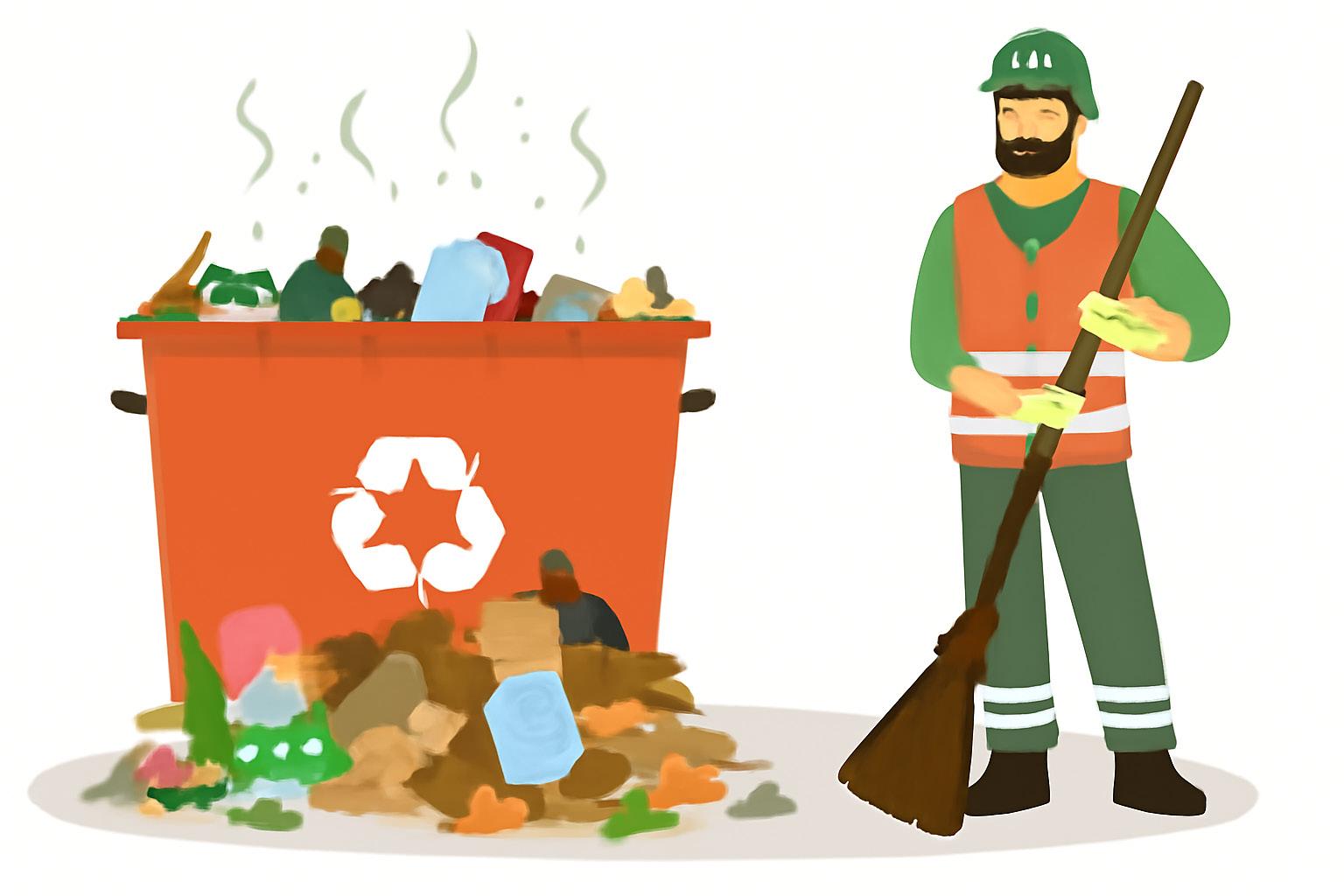
What happens to your app’s memory once it’s no longer needed? Most developers don’t think about it until performance drops, latency spikes, or crashes creep in.
That’s where garbage collection strategies come into play. The way a language handles memory cleanup behind the scenes can quietly shape how fast, reliable, and scalable your software becomes.
Garbage collection isn’t about cleaning memory—it’s about keeping your software breathing under load.
What is garbage collection?
Garbage collection (GC) is a form of automatic memory management. It’s a process that runs in the background of many programming languages, finding and cleaning up memory that’s no longer needed so developers don’t have to do it manually.
Without garbage collection, unused memory can pile up, leading to memory leaks, slower performance, and system crashes. GC helps prevent this by making sure memory is freed up when objects or data are no longer in use.
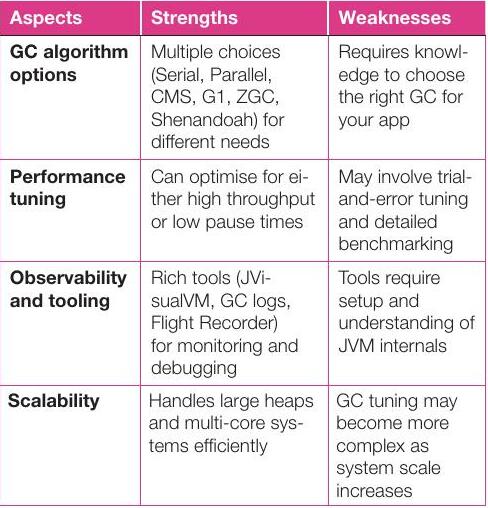 Common garbage collection methods are:
Reference counting: Keeps track of how many parts of the program are using a piece of data. When the count drops to zero, the memory can be freed.
Tracing (mark-and-sweep, generational):
- Mark-and-sweep scans memory to mark active objects and then clears the rest.
- Generational GC splits memory into ‘young’ and ‘old’ objects, optimising how often each part is cleaned.
Stop-the-world vs concurrent GC:
- Stop-the-world pauses the entire program during garbage collection.
- Concurrent GC runs alongside the program to reduce pauses and improve responsiveness.
Java’s garbage collection strategy

Denne historien er fra June 2025-utgaven av Open Source For You.
Abonner på Magzter GOLD for å få tilgang til tusenvis av kuraterte premiumhistorier og over 9000 magasiner og aviser.
Allerede abonnent? Logg på
FLERE HISTORIER FRA Open Source For You

Open Source For You
The Role of Open Source in Building Modern Data Infrastructure
It's no secret that open source is emerging as the backbone of modern data infrastructure. Here’s a list of the core open source technologies used to deploy this infrastructure, along with some real-world examples and a brief on why open source matters.

3 mins
December 2025

Open Source For You
The Whispering Machines: How Open Source is Bringing Intelligence to the Tiniest Devices
Built on open source frameworks, TinyML is enabling complex machine learning models to run on the microcontrollers embedded in connected devices, bringing artificial intelligence to the very edge of the network.
3 mins
December 2025

Open Source For You
Setting Up Snort to Secure Your Network
Snort is a popular, open source intrusion detection system that monitors traffic in real time to detect malware. Here’s a detailed explanation of how to set it up on Ubuntu and test it by generating traffic from another system.
7 mins
December 2025

Open Source For You
When AI Meets DevOps to Build Self-Healing Systems
Traditional DevOps, with its rule-based automation, is struggling to work effectively in today’s complex tech world. But when combined with AlOps, it can lead to IT systems that predict failures and solve issues without human intervention.
7 mins
December 2025

Open Source For You
How to Automate Java Code Modernisation
This short guide illustrates that automating Java code modernisation with Python and OpenAI API is not just possible-it's remarkably effective.
5 mins
December 2025

Open Source For You
The Quest to Build a Quantum Computer
The road to large-scale quantum computing is long and hard, with incremental advances paving the way. But the destination is in sight.
12 mins
December 2025

Open Source For You
Job Opportunities: What's Hot in the Cloud Space?
If there's one field that refuses to slow down, it's cloud computing. Even as automation and AI reshape roles, cloud adoption continues to surge. From startups deploying microservices overnight to enterprises migrating decades of legacy systems, cloud remains the engine of digital transformation. For professionals, this means one thing: skills that live in the cloud won't come down anytime soon.
2 mins
December 2025

Open Source For You
Securing Client Identity with Post-Quantum Cryptography
Here's a quick tutorial on how to build a secure, real world client-server model that establishes client identity by using CRYSTALS-Dilithium, a post-quantum cryptography algorithm.
3 mins
December 2025

Open Source For You
Unlocking the Power of Multi-Agent Solutions with the Microsoft Agentic Framework
The Microsoft Agentic Framework is rapidly emerging as a cornerstone for developers, architects, and technology leaders seeking to build dynamic, intelligent systems powered by multiple collaborating agents. In an era where automation, distributed intelligence, and adaptive software are increasingly vital, this framework offers robust tools and features to accelerate the design and deployment of agent-based solutions.
6 mins
December 2025

Open Source For You
Apache Iceberg and Trino: Powering Data Lakehouse Architecture
Apache Iceberg is a cornerstone of any open data lakehouse, providing the transactional foundation upon which highly scalable and flexible analytics can flourish. Along with Trino, it can be used to build a robust, scalable, and high-performance data lakehouse.
4 mins
December 2025
Listen
Translate
Change font size