
Gå ubegrenset med Magzter GOLD
Få ubegrenset tilgang til over 9000 magasiner, aviser og premiumhistorier for bare
Reptiles - Colour changing... wall running...sun basking... long living...
The Week Junior Science+Nature UK
|December 2025
They're slithery, scaly and super-cool. Peter Fenech meets the animals with real-life superpowers.
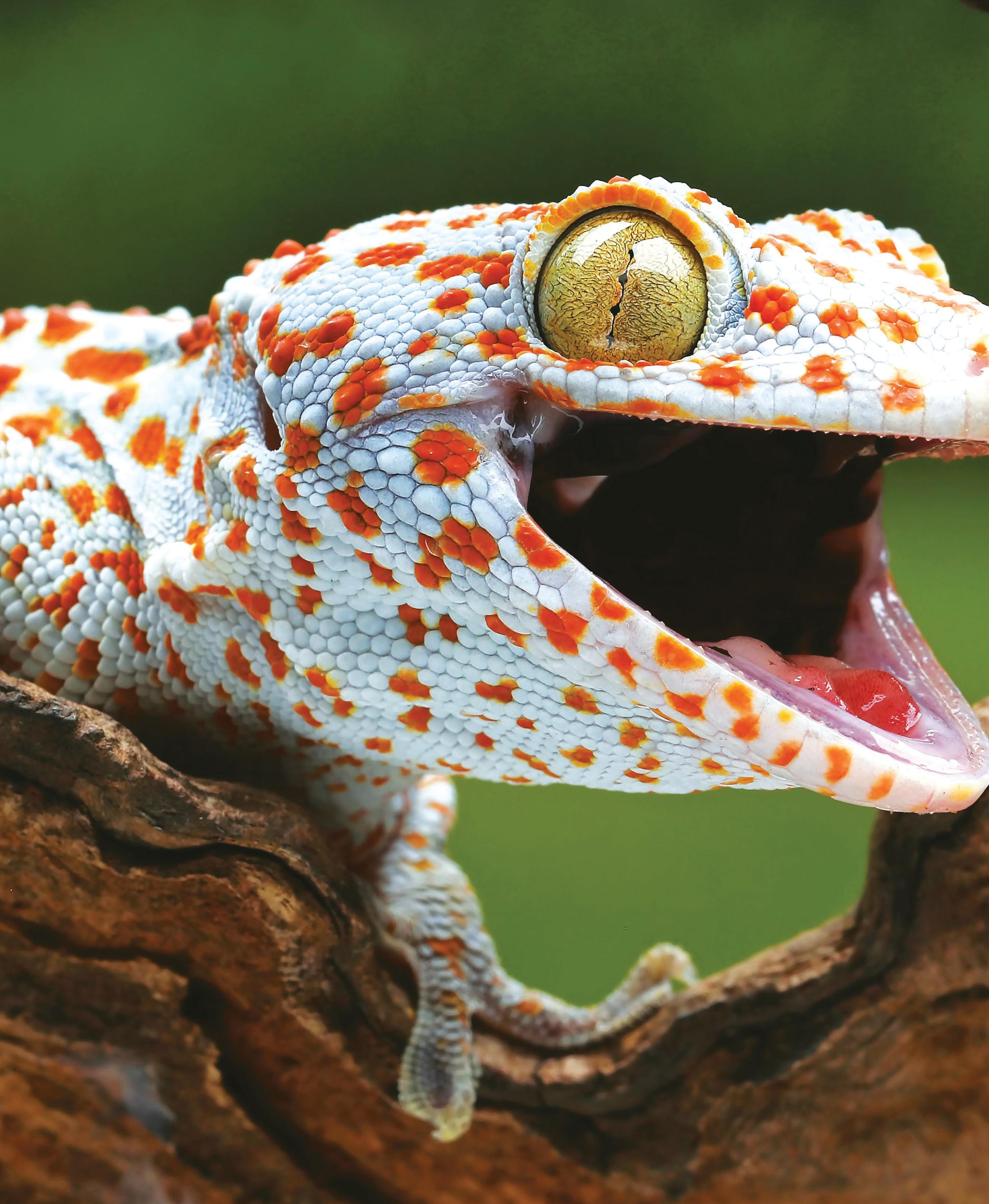
Forget Spider-Man, Ant-Man, or Captain Marvel, it's reptiles that are the true superheroes of the natural world. Did you know that some of these creatures' amazing superpowers include walking on water (check out the basilisk or "Jesus lizard"); becoming "invisible" (the New Zealand forest gecko); living for nearly two centuries (the Seychelles giant tortoise); or surviving a deep freeze (painted turtles)? It's clear that Captain America has nothing on these critters!
Almost anywhere in the world, you'll be able to find reptiles of all shapes and sizes. There are so many varieties that they keep biologists and marine scientists busy on virtually every continent except Antarctica. It would take a whole issue of The Week Junior Science+Nature to talk about them all, but let's set off on an epic journey across the planet to discover some of the fastest and largest – and sometimes scariest – characters you might find in the reptilian universe.
Coldblooded critters
So what are reptiles? If you find a scaly animal slithering through the grass or scampering up a wall, that has a long body, clawed feet and a forked tongue, it's probably a reptile. Most species also lay eggs, which keep the still-developing embryo (an unborn or unhatched animal) safe inside a shell.
You may have heard the term "coldblooded" used to describe reptiles, but what does this mean exactly? The scientific term is "ectothermic", which means that – unlike humans and other mammals – reptiles don't generate heat inside their bodies using energy Tokay gecko. from their food. Instead, they absorb heat energy radiated by the Sun, which is why you will often find lizards basking during the daytime. This sunbathing behaviour allows reptiles to go without food for longer, and it also explains why many are found in hotter climates. That's where we'll begin our journey, exploring the four main reptile groups.


Denne historien er fra December 2025-utgaven av The Week Junior Science+Nature UK.
Abonner på Magzter GOLD for å få tilgang til tusenvis av kuraterte premiumhistorier og over 9000 magasiner og aviser.
Allerede abonnent? Logg på
FLERE HISTORIER FRA The Week Junior Science+Nature UK
The Week Junior Science+Nature UK
FIGHTING THE FREEZE
Claire Karwowski uncovers nature's wildest ways of fighting the winter freeze.

6 mins
Christmas 2025
The Week Junior Science+Nature UK
Cook up bioplastic decorations
Make your own eco-friendly ornaments.
1 min
Christmas 2025

The Week Junior Science+Nature UK
Should we switch off Christmas lights?
They brighten up the festive season, but they can have a negative impact on the environment.
1 mins
Christmas 2025
The Week Junior Science+Nature UK
Three spectacular illuminations
Glow Wild, Wakehurst
1 min
Christmas 2025

The Week Junior Science+Nature UK
THE LAST DAYS OF POMPEII
For the first time, an immersive exhibition about the destruction of the ancient Roman city of Pompeii has opened in London.
1 min
Christmas 2025
The Week Junior Science+Nature UK
Wildlife watch
Jenny Ackland unveils a winter wonderland of natural delights this festive season.
1 mins
Christmas 2025
The Week Junior Science+Nature UK
Make Snow globes
Create the perfect Christmas gift.
1 min
Christmas 2025

The Week Junior Science+Nature UK
Maggie Aderin-Pocock
Meet the scientist \"blasting off into space\" at the Christmas Lectures.
3 mins
Christmas 2025
The Week Junior Science+Nature UK
Make vegan eggnog
Whip up a dairy-free festive winter warmer that is perfect for cold nights.
1 min
Christmas 2025
The Week Junior Science+Nature UK
Octopuses
Meet the colour-changing, shape-shifting, fortune-telling aliens of the seas.
2 mins
Christmas 2025
Listen
Translate
Change font size