Prøve GULL - Gratis
Permaculture: Redefining Agriculture for a Sustainable Future
Scientific India
|March - April 2025
Permaculture is an agricultural and social system that seeks to design sustainable and self-sufficient ecosystems, utilizing natural resources efficiently, minimizing waste, and promoting biodiversity.
For Indian farmers, permaculture offers a promising alternative to conventional farming practices by focusing on ecological balance, soil health, and resource conservation.
Key Principles of Permaculture
Observe and Interact:
Permaculture encourages farmers to understand the local environment, climate, and ecosystem before starting any agricultural activity. Indian farmers can benefit from observing seasonal patterns, local plant species, soil types, and water availability. These observations will help in designing farming systems that align with nature, reducing the need for external inputs like synthetic fertilizers and pesticides.
Capture and Store Energy:
Permaculture emphasizes capturing and storing energy from the sun, wind, and water. For Indian farmers, this could mean using techniques like rainwater harvesting, solar energy, and wind turbines for irrigation or energy needs. This reduces dependence on external sources and makes farms more resilient to environmental challenges.
Obtain a Yield:
Permaculture aims to ensure that farmers generate a steady output from their land, both in terms of food and income. In India, this could involve growing a variety of crops such as multi-cropping, perennial plants, and agroforestry systems that produce food, medicine, fuelwood, and other products year-round.
Apply Self-Regulation and Accept Feedback:
Permaculture encourages farmers to assess the impact of their actions and make necessary adjustments. In the Indian context, this could mean monitoring soil health, water usage, and crop diversity, then adjusting practices to improve sustainability and reduce the overuse of resources.
Use and Value Renewable Resources and Services:
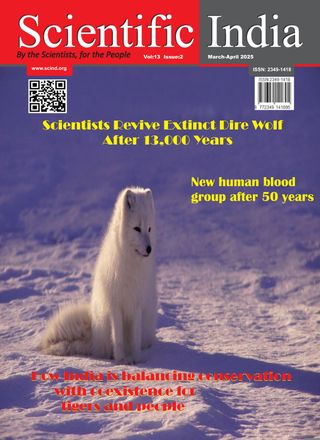

Denne historien er fra March - April 2025-utgaven av Scientific India.
Abonner på Magzter GOLD for å få tilgang til tusenvis av kuraterte premiumhistorier og over 9000 magasiner og aviser.
Allerede abonnent? Logg på
FLERE HISTORIER FRA Scientific India
Scientific India
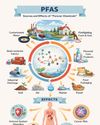
Global Fight Against PFAS Pollution: A Turning Point in Regulation and Justice
Per-and polyfluoroalkyl substances (PFAS), a group of over 10,000 synthetic chemicals known for their extreme persistence in the environment and the human body, have become one of the most challenging pollution issues of our times.

2 mins
January - February 2026

Scientific India
CRISPR-Cas Technology: Revolutionizing the future of modern disease diagnosis and healthcare
The accurate and rapid detection of human pathogens is critical for public health.
3 mins
January - February 2026
Scientific India
Ecology to Epidemiology: How Forest Loss Is Increasing Mosquitoes Thirst for Human Blood
Forests are not only important for climate regulation and biodiversity conservation they are also critical for maintaining ecological balance and protecting human health.
3 mins
January - February 2026
Scientific India
The 10 biggest science stories of 2025
The year 2025 was marked by remarkable scientific achievements that pushed the boundaries of medicine, genetics, and biotechnology. Breakthroughs once considered futuristic moved from theory to real-world application, offering new hope for patients and redefining the limits of innovation.
6 mins
January - February 2026

Scientific India
Just two days of oatmeal cut bad cholesterol by 10%
Eating mostly oatmeal for just two days may significantly reduce cholesterol, according to a clinical trial from the University of Bonn published in Nature Communications.
3 mins
January - February 2026
Scientific India
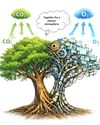
Artificial Trees: The Technology Breathe for the Globe
Global raising concern over for clean air due to progression of population, industrialization, urbanization, vehicular emission are pushed air pollution and atmospheric carbon dioxide to alarming level.
4 mins
January - February 2026

Scientific India
Five outstanding physics research in 2025
This year has been vibrant for physics research; scientists of various sub disciplines have uncovered many unknowns, from the discovery of single naked black holes to the invention of 2D metallic sheets.
5 mins
January - February 2026

Scientific India
Top 10 Science Stories of India in 2025
The year 2025 has been a landmark for Indian science, characterized by \"firsts\" in space, indigenous computing, and breakthroughs in lifesaving genetics. Here are the top 10 science and technology stories from India in 2025:
4 mins
January - February 2026

Scientific India
Extremophiles Microbes from Hot Springs - Identified as a Potential Source of Next Generation Biobased Sunscreens
Protection from harmful ultraviolet (UV) radiation is essential for human health.
3 mins
January - February 2026
Scientific India
Global Fight Against PEAS Pollution: A Turning Point in Regulation and Justice
Per- and polyfluoroalkyl substances (PFAS), a group of over 10,000 synthetic chemicals known for their extreme persistence in the environment and the human body, have become one of the most challenging pollution issues of our times.
2 mins
January - February 2026
Listen
Translate
Change font size