
Gå ubegrenset med Magzter GOLD
Få ubegrenset tilgang til over 9000 magasiner, aviser og premiumhistorier for bare
Prøve GULL - Gratis
THE CIRCULARITY ARGUMENT
Down To Earth
|February 01, 2025
A circular economy can help India achieve its developmental aspirations while following the low-carbon pathway. It will also help address the challenges of waste management, pollution and overexploitation of natural resources. Industries are already innovating to reuse high-volume wastes and have shown that the transition can usher in both environmental and financial windfalls
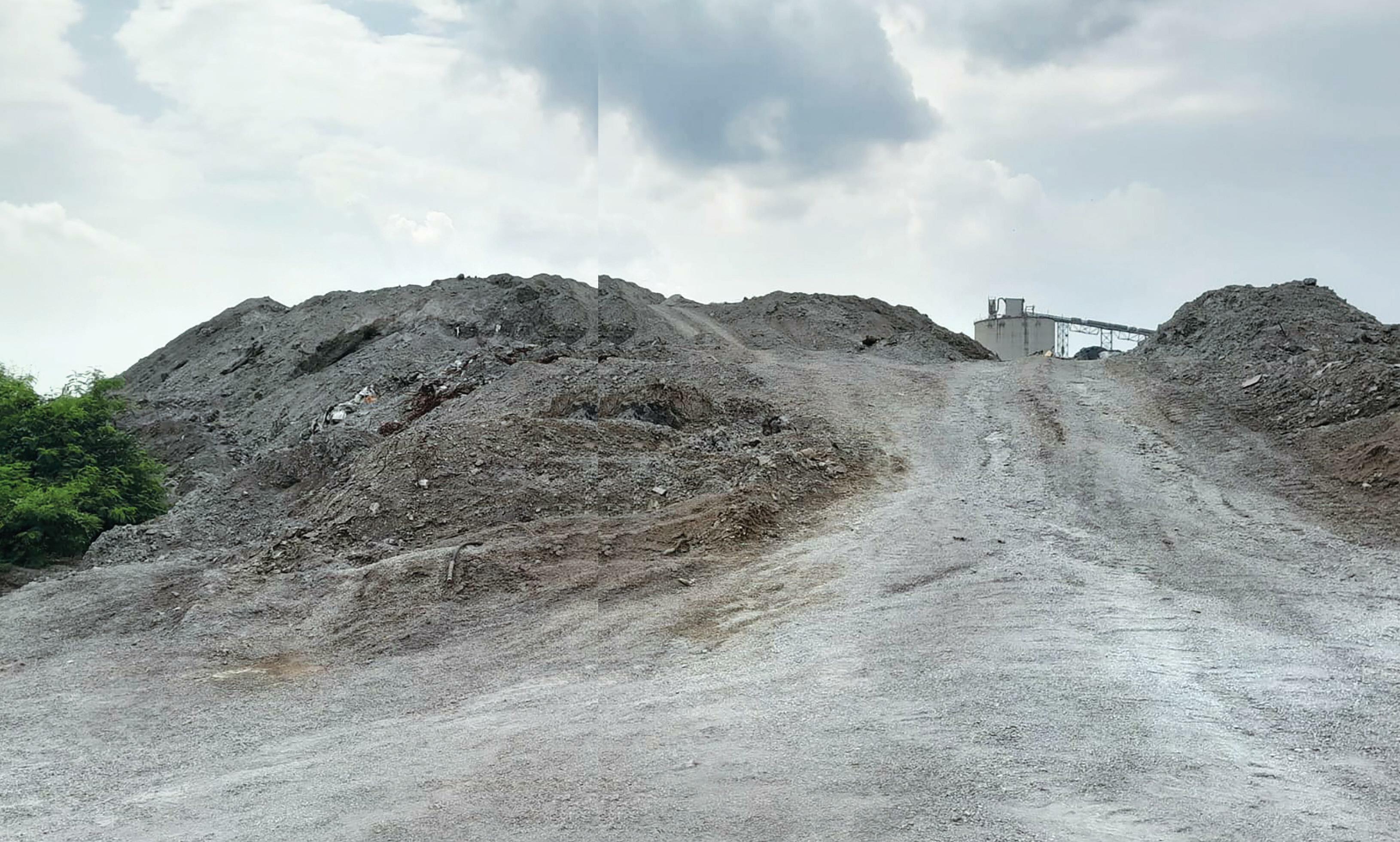
STRAY PAPER hangs on every bush, flutters in every tree, is caught flying by the electric wires, haunts every enclosure. Since Charles Dickens wrote these words in Our Mutual Friend, published in the 1860s, the world's waste problem has changed in both scale and composition. These days, sprawling rubbish mountains have altered natural landscapes; toxic chemicals have invaded ecosystems; pollutants like black carbon have choked the ambient air. These ever-increasing loads of wastes are harming people and the environment, rendering farmlands barren, and endangering species.
A large chunk of the wastes are by-products of industrial activities, vital to modern economies and technological progress. In other words, these wastes are the fallout of the way our economies have evolved-in a linear fashion, where manufacturing extracts the limited natural resources from the environment and turns them into products which are used and then disposed of into the environment, along with the waste generated during the making process. It does not have to be this way.
In the past decade, global focus has shifted towards a circular economy, which works on the principle that waste is not only a waste but a resource.
In Europe, where the quantum of goods recycled is as high as 70 per cent, the European Parliament defines circular economy as a model of production and consumption that involves circularity (sharing, leasing, reusing, repairing, refurbishing and recycling) of existing materials and products for as long as possible. The purpose behind this shift is multi-fold: it can eliminate waste and promote economic growth, while taking the pressure off natural resources and reducing carbon emissions across supply chains.

Denne historien er fra February 01, 2025-utgaven av Down To Earth.
Abonner på Magzter GOLD for å få tilgang til tusenvis av kuraterte premiumhistorier og over 9000 magasiner og aviser.
Allerede abonnent? Logg på
FLERE HISTORIER FRA Down To Earth

Down To Earth
Bitter pill
THE WEB SERIES PHARMA EXPOSES HARSH TRUTHS OF THE PHARMACEUTICAL INDUSTRY, WHERE PROFIT OFTEN BECOMES MORE IMPORTANT THAN HUMAN HEALTH

3 mins
January 16, 2026

Down To Earth
CHAOS IN-DEFINITION
The Aravallis are perhaps India's most litigated hill range. More than 4,000 court cases have failed to arrest their destruction. The latest dispute concerns a narrow legal definition of this geological antiquity, much of which has been obliterated by mining and urban sprawl. While the Supreme Court has stayed its own judgement accepting that definition, it must see the underlying reality and help reconcile development and national security with conservation.
19 mins
January 16, 2026

Down To Earth
BITS: INDIA
Indore has recorded 16 deaths and more than 1,600 hospitalisations between December 24 and January 6.
1 min
January 16, 2026

Down To Earth
GUARANTEE EXPIRES
India's rural employment guarantee law is replaced with a centrally controlled, budget-capped scheme. Is this an attack on the right to work?
3 mins
January 16, 2026

Down To Earth
BLOOM OR BANE
Surge of vibrant pink water lilies in Kuttanad, Kerala, provides socio-economic benefits, but the plant's ecological impacts must be understood
4 mins
January 16, 2026
Down To Earth
INVISIBLE EMPLOYER
Field and academic evidence shows sharp falls in casual agricultural employment at places where groundwater access declines
3 mins
January 16, 2026

Down To Earth
Schemed for erasure
Does the VB-G RAMG Act address structural weaknesses long observed in MGNREGA's implementation?
10 mins
January 16, 2026

Down To Earth
School of change
An open school in Panagar, Madhya Pradesh, aims to protect children of tribal settlements from falling into the trap of addiction
2 mins
January 16, 2026

Down To Earth
PULSE OF RESILIENCE
As a climate-ready crop, cowpea shows potential for widespread use in India
3 mins
January 16, 2026
Down To Earth
BITS GLOBAL
Britain recorded its hottest and sunniest year ever in 2025, the country's meteorological office said on January 2.
1 min
January 16, 2026
Listen
Translate
Change font size