Versuchen GOLD - Frei
THE CIRCULARITY ARGUMENT
Down To Earth
|February 01, 2025
A circular economy can help India achieve its developmental aspirations while following the low-carbon pathway. It will also help address the challenges of waste management, pollution and overexploitation of natural resources. Industries are already innovating to reuse high-volume wastes and have shown that the transition can usher in both environmental and financial windfalls
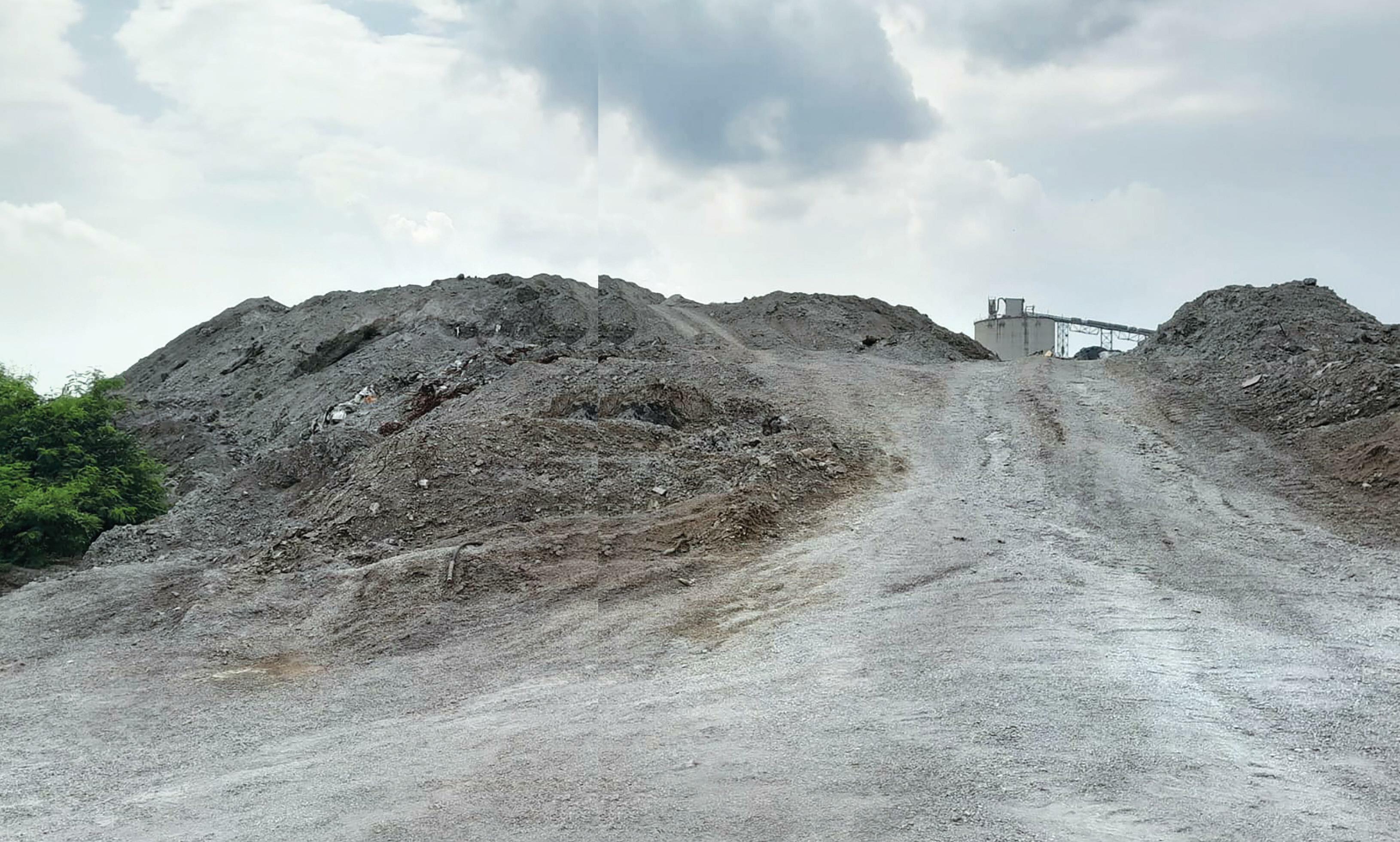
STRAY PAPER hangs on every bush, flutters in every tree, is caught flying by the electric wires, haunts every enclosure. Since Charles Dickens wrote these words in Our Mutual Friend, published in the 1860s, the world's waste problem has changed in both scale and composition. These days, sprawling rubbish mountains have altered natural landscapes; toxic chemicals have invaded ecosystems; pollutants like black carbon have choked the ambient air. These ever-increasing loads of wastes are harming people and the environment, rendering farmlands barren, and endangering species.
A large chunk of the wastes are by-products of industrial activities, vital to modern economies and technological progress. In other words, these wastes are the fallout of the way our economies have evolved-in a linear fashion, where manufacturing extracts the limited natural resources from the environment and turns them into products which are used and then disposed of into the environment, along with the waste generated during the making process. It does not have to be this way.
In the past decade, global focus has shifted towards a circular economy, which works on the principle that waste is not only a waste but a resource.
In Europe, where the quantum of goods recycled is as high as 70 per cent, the European Parliament defines circular economy as a model of production and consumption that involves circularity (sharing, leasing, reusing, repairing, refurbishing and recycling) of existing materials and products for as long as possible. The purpose behind this shift is multi-fold: it can eliminate waste and promote economic growth, while taking the pressure off natural resources and reducing carbon emissions across supply chains.

Diese Geschichte stammt aus der February 01, 2025-Ausgabe von Down To Earth.
Abonnieren Sie Magzter GOLD, um auf Tausende kuratierter Premium-Geschichten und über 9.000 Zeitschriften und Zeitungen zuzugreifen.
Sie sind bereits Abonnent? Anmelden
WEITERE GESCHICHTEN VON Down To Earth

Down To Earth
THE GREAT PIVOT
China's moves to transition to clean energy offer critical lessons to India

4 mins
March 01, 2026

Down To Earth
COAL V CORRIDOR
A proposal to mine coal along a corridor that links two tiger reserves in central India is a step away from getting final clearance. The move could affect movement and genetic diversity of tiger populations in the region
8 mins
March 01, 2026

Down To Earth
India's challenging AI predicament
Hobbled by lack of innovation and AI skills in its crucial technology sector, India is focusing on a ruinous plan to host data centres
4 mins
March 01, 2026
Down To Earth
China to implement zero tariffs across Africa
CHINA ON February 14 announced that it will implement zero tariffs for imports from all the 53 African nations it has diplomatic relations with, starting from May 1.
1 min
March 01, 2026
Down To Earth
Poverty, sans the threshold
MEASUREMENT OF poverty is a fundamental exercise, needed to direct development programmes.
2 mins
March 01, 2026

Down To Earth
A bridge across forever
For two decades, a Chhattisgarh village remains stuck in a loop of building temporary river crossings to access markets and sell forest produce
4 mins
March 01, 2026
Down To Earth
Liveable cities need a new model
CRY FOR my Delhi. This is my city—my family records many generations who have lived here.
3 mins
March 01, 2026

Down To Earth
Real impacts of the changing seasons
This refers to the article \"1,500 days, and an alarm for new climate\" (1-15 December, 2025).
1 mins
March 01, 2026

Down To Earth
‘It’s a systematic effort by US to dismantle climate policy’
The US, the world's largest historical emitter of greenhouse gases, has overturned its “endangerment finding”, the legal foundation for regulating emissions under the Clean Air Act since 2009.
4 mins
March 01, 2026
Down To Earth
Amazon turned carbon source in 2023 drought
EXTREME DROUGHT and a prolonged heatwave in 2023 pushed parts of the Amazon rainforest from acting as a carbon sink to becoming a carbon source for three months, according to a February 13 study published in the journal AGU Advances of the American Geophysical Union.
1 min
March 01, 2026
Listen
Translate
Change font size