Prøve GULL - Gratis
HIDDEN RESOURCE
Down To Earth
|December 01, 2025
Punjab's 1.4 million abandoned borewells offer a chance to mitigate flood damage and replenish depleting groundwater
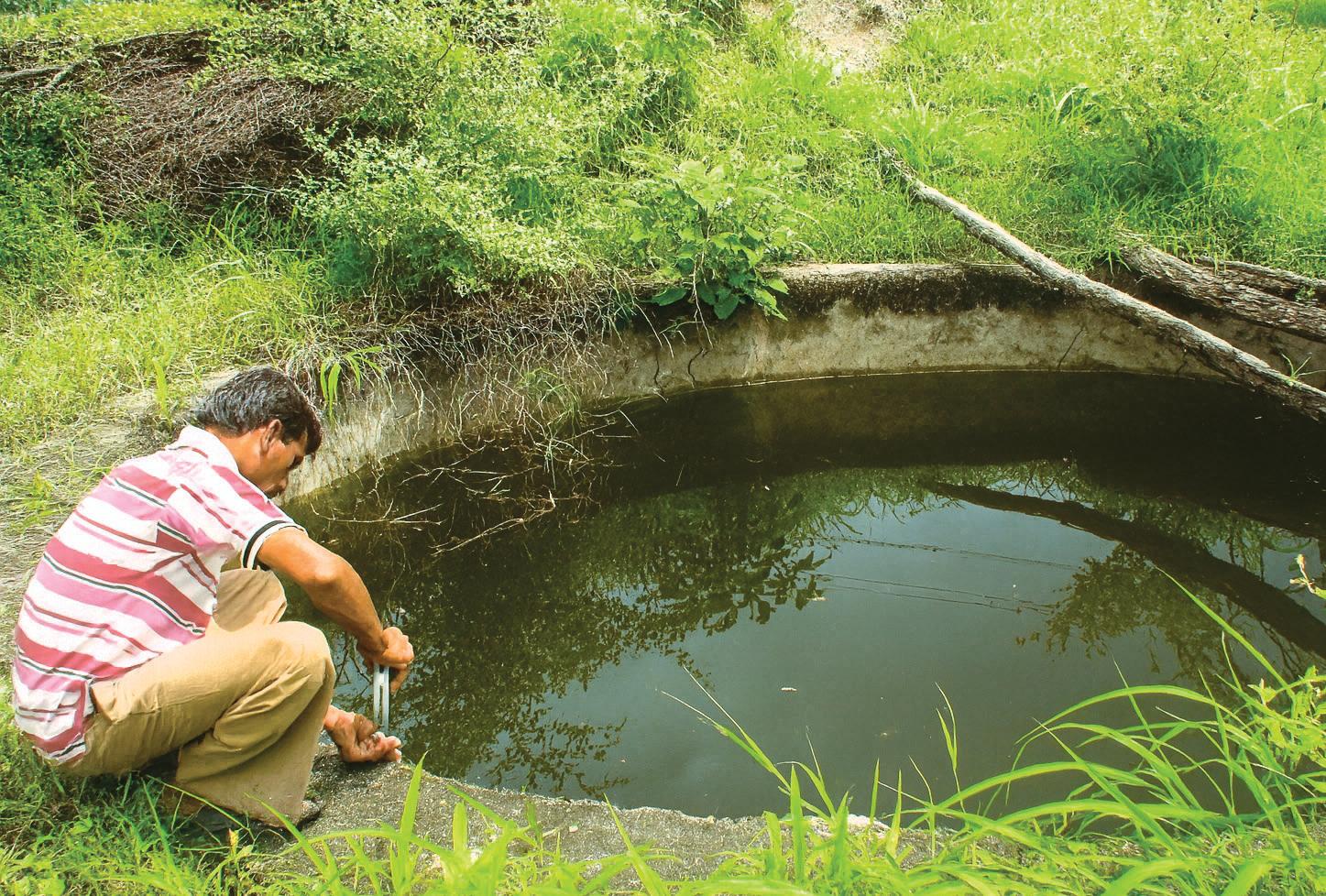
THE 2025 southwest monsoon brought to Punjab its worst flood in four decades.
In late August, all the major rivers that flow through the state flooded simultaneously—perhaps for the first time. The disaster was driven by unusually heavy rainfall in Punjab as well as in Himachal Pradesh and Jammu and Kashmir and compounded by sudden release of water from swollen dams (see “Plan or perish”, Down To Earth, 16-30 September, 2025).
By the time the floodwaters receded in early September, more than 800,000 people had been displaced, with thousands shifting to relief camps. Nearly 0.17 million hectares (ha) of farmland were submerged and infrastructure collapsed as roads, bridges and drainage systems were damaged across districts. In the successive months, the state government has announced the release of funds and foodgrains to support relief and rehabilitation across affected villages.
Given that this is not only Punjab’s worst flooding event but also the third such disaster since 2019, there is a need to look at long-term flood mitigation rather than short-term recovery. Punjab may already possess a potential mitigation tool: its vast number of abandoned borewells.
Borewells have been part of Punjab’s landscape since the Green Revolution in the 1960s. Their construction picked up pace in 1997-98, when the groundwater levels stood at around 12 m. Over the next two decades, however, groundwater extraction intensified and its levels fell sharply, in many places reaching depths of 150 m or more. As the water table declined, existing borewells were dug deeper, but ultimately most of them were abandoned.


Denne historien er fra December 01, 2025-utgaven av Down To Earth.
Abonner på Magzter GOLD for å få tilgang til tusenvis av kuraterte premiumhistorier og over 9000 magasiner og aviser.
Allerede abonnent? Logg på
FLERE HISTORIER FRA Down To Earth

Down To Earth
GREAT NICOBAR DILEMMA
In the fragile ecosystem of Nicobar, strategic development must align with constitutional commitment to protect environment, indigenous dignity

3 mins
March 16, 2026
Down To Earth
CATCH BY THE ROOTS
Sabai grass could be a game-changer for the marginalised economies of West Bengal's dry uplands. All it needs is an efficient market strategy
4 mins
March 16, 2026

Down To Earth
POWERING TRANSITION
India's renewable ambitions are rising rapidly, with half of its installed power capacity now coming from non-fossil sources. Yet the gap between capacity and generation remains wide. The experiences of two pioneering states, Karnataka and Tamil Nadu, which together generate over a fifth of the country's renewable energy, offer crucial lessons for accelerating the transition, reports PUJA DAS from Bengaluru, Chennai, Mumbai and New Delhi
16 mins
March 16, 2026

Down To Earth
At core of survival
Water scarcity defines life in a village inside Sariska Tiger Reserve's critical habitat, as debates over its relocation drag on
5 mins
March 16, 2026

Down To Earth
What's on your plate
An upcoming digital tool can help people learn about the origin of their meals and make climate-positive food choices
2 mins
March 16, 2026

Down To Earth
'Bad environment can never be good economics'
The Supreme Court of India and even the high courts were once very active and took a proactive role in protecting the environment; unfortunately, that is no longer true
4 mins
March 16, 2026
Down To Earth
Things fall apart
IN THE past year, the world has counted more missiles and bombs than hours.
2 mins
March 16, 2026

Down To Earth
Universities in crisis, innovation is stifled
Political control and skewed policies have led to unrest in academia, stifling creativity and meaningful research
4 mins
March 16, 2026

Down To Earth
SPARK IN THE GAME
The Reserve Bank of India's restored recognition of Default Loss Guarantees re-enables credit flow into last-mile electric mobility
3 mins
March 16, 2026

Down To Earth
Ushering in new eras
An appraisal of the state of biodiversity conservation, pollution reduction and climate adaptation regimes in India
3 mins
March 16, 2026
Listen
Translate
Change font size