يحاول ذهب - حر
HIDDEN RESOURCE
December 01, 2025
|Down To Earth
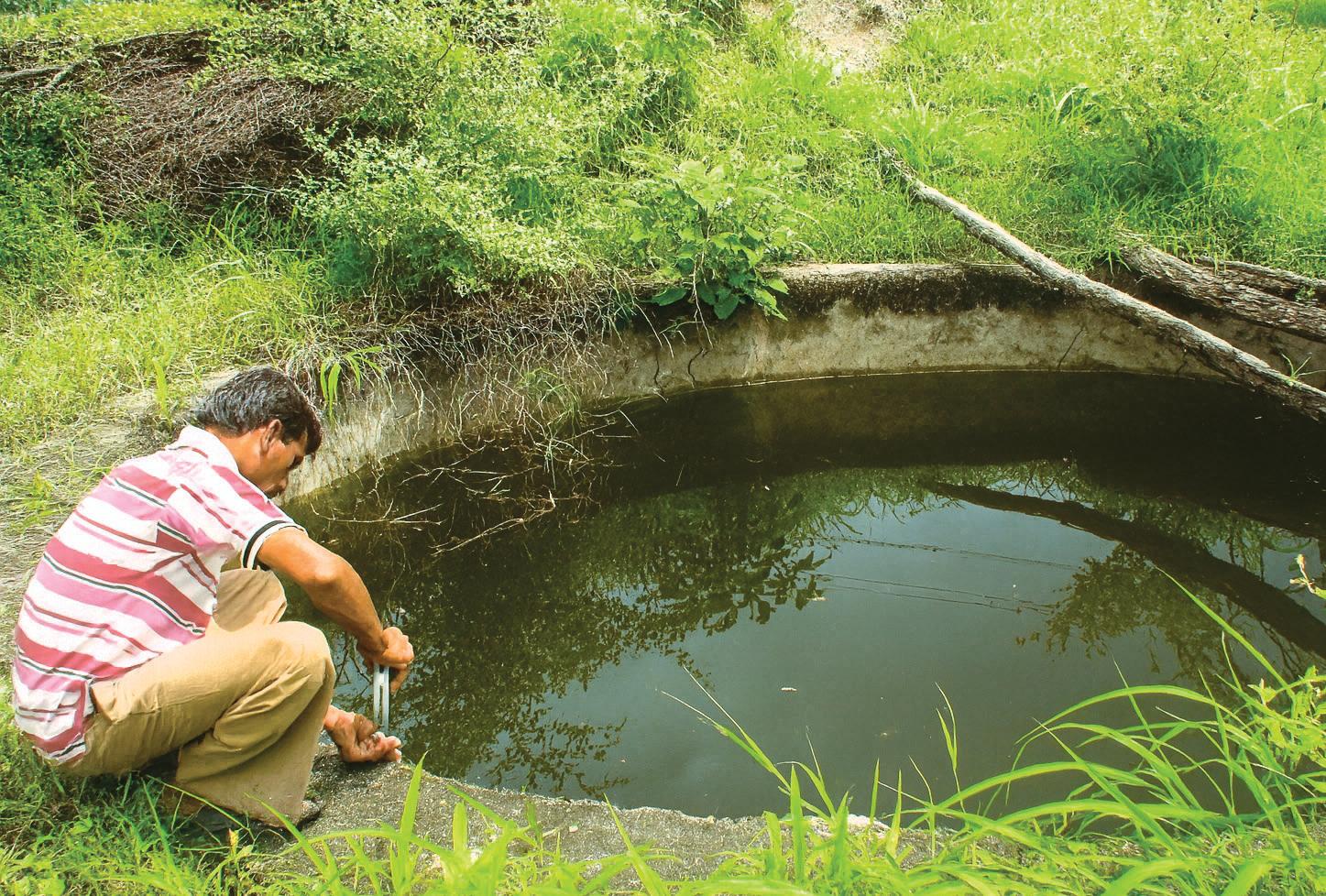
Punjab's 1.4 million abandoned borewells offer a chance to mitigate flood damage and replenish depleting groundwater
THE 2025 southwest monsoon brought to Punjab its worst flood in four decades.
In late August, all the major rivers that flow through the state flooded simultaneously—perhaps for the first time. The disaster was driven by unusually heavy rainfall in Punjab as well as in Himachal Pradesh and Jammu and Kashmir and compounded by sudden release of water from swollen dams (see “Plan or perish”, Down To Earth, 16-30 September, 2025).
By the time the floodwaters receded in early September, more than 800,000 people had been displaced, with thousands shifting to relief camps. Nearly 0.17 million hectares (ha) of farmland were submerged and infrastructure collapsed as roads, bridges and drainage systems were damaged across districts. In the successive months, the state government has announced the release of funds and foodgrains to support relief and rehabilitation across affected villages.
Given that this is not only Punjab’s worst flooding event but also the third such disaster since 2019, there is a need to look at long-term flood mitigation rather than short-term recovery. Punjab may already possess a potential mitigation tool: its vast number of abandoned borewells.
Borewells have been part of Punjab’s landscape since the Green Revolution in the 1960s. Their construction picked up pace in 1997-98, when the groundwater levels stood at around 12 m. Over the next two decades, however, groundwater extraction intensified and its levels fell sharply, in many places reaching depths of 150 m or more. As the water table declined, existing borewells were dug deeper, but ultimately most of them were abandoned.


هذه القصة من طبعة December 01, 2025 من Down To Earth.
اشترك في Magzter GOLD للوصول إلى آلاف القصص المتميزة المنسقة، وأكثر من 9000 مجلة وصحيفة.
هل أنت مشترك بالفعل؟ تسجيل الدخول
المزيد من القصص من Down To Earth

Down To Earth
THE GREAT PIVOT
China's moves to transition to clean energy offer critical lessons to India

4 mins
March 01, 2026

Down To Earth
COAL V CORRIDOR
A proposal to mine coal along a corridor that links two tiger reserves in central India is a step away from getting final clearance. The move could affect movement and genetic diversity of tiger populations in the region
8 mins
March 01, 2026

Down To Earth
India's challenging AI predicament
Hobbled by lack of innovation and AI skills in its crucial technology sector, India is focusing on a ruinous plan to host data centres
4 mins
March 01, 2026
Down To Earth
China to implement zero tariffs across Africa
CHINA ON February 14 announced that it will implement zero tariffs for imports from all the 53 African nations it has diplomatic relations with, starting from May 1.
1 min
March 01, 2026
Down To Earth
Poverty, sans the threshold
MEASUREMENT OF poverty is a fundamental exercise, needed to direct development programmes.
2 mins
March 01, 2026

Down To Earth
A bridge across forever
For two decades, a Chhattisgarh village remains stuck in a loop of building temporary river crossings to access markets and sell forest produce
4 mins
March 01, 2026
Down To Earth
Liveable cities need a new model
CRY FOR my Delhi. This is my city—my family records many generations who have lived here.
3 mins
March 01, 2026

Down To Earth
Real impacts of the changing seasons
This refers to the article \"1,500 days, and an alarm for new climate\" (1-15 December, 2025).
1 mins
March 01, 2026

Down To Earth
‘It’s a systematic effort by US to dismantle climate policy’
The US, the world's largest historical emitter of greenhouse gases, has overturned its “endangerment finding”, the legal foundation for regulating emissions under the Clean Air Act since 2009.
4 mins
March 01, 2026
Down To Earth
Amazon turned carbon source in 2023 drought
EXTREME DROUGHT and a prolonged heatwave in 2023 pushed parts of the Amazon rainforest from acting as a carbon sink to becoming a carbon source for three months, according to a February 13 study published in the journal AGU Advances of the American Geophysical Union.
1 min
March 01, 2026
Listen
Translate
Change font size