
Gå ubegrenset med Magzter GOLD
Få ubegrenset tilgang til over 9000 magasiner, aviser og premiumhistorier for bare
Prøve GULL - Gratis
Flushed and forgotten
Down To Earth
|November 01, 2025
Poor containment systems, weak monitoring and illegal dumping have turned Uttar Pradesh's faecal sludge handling into an environmental ticking bomb
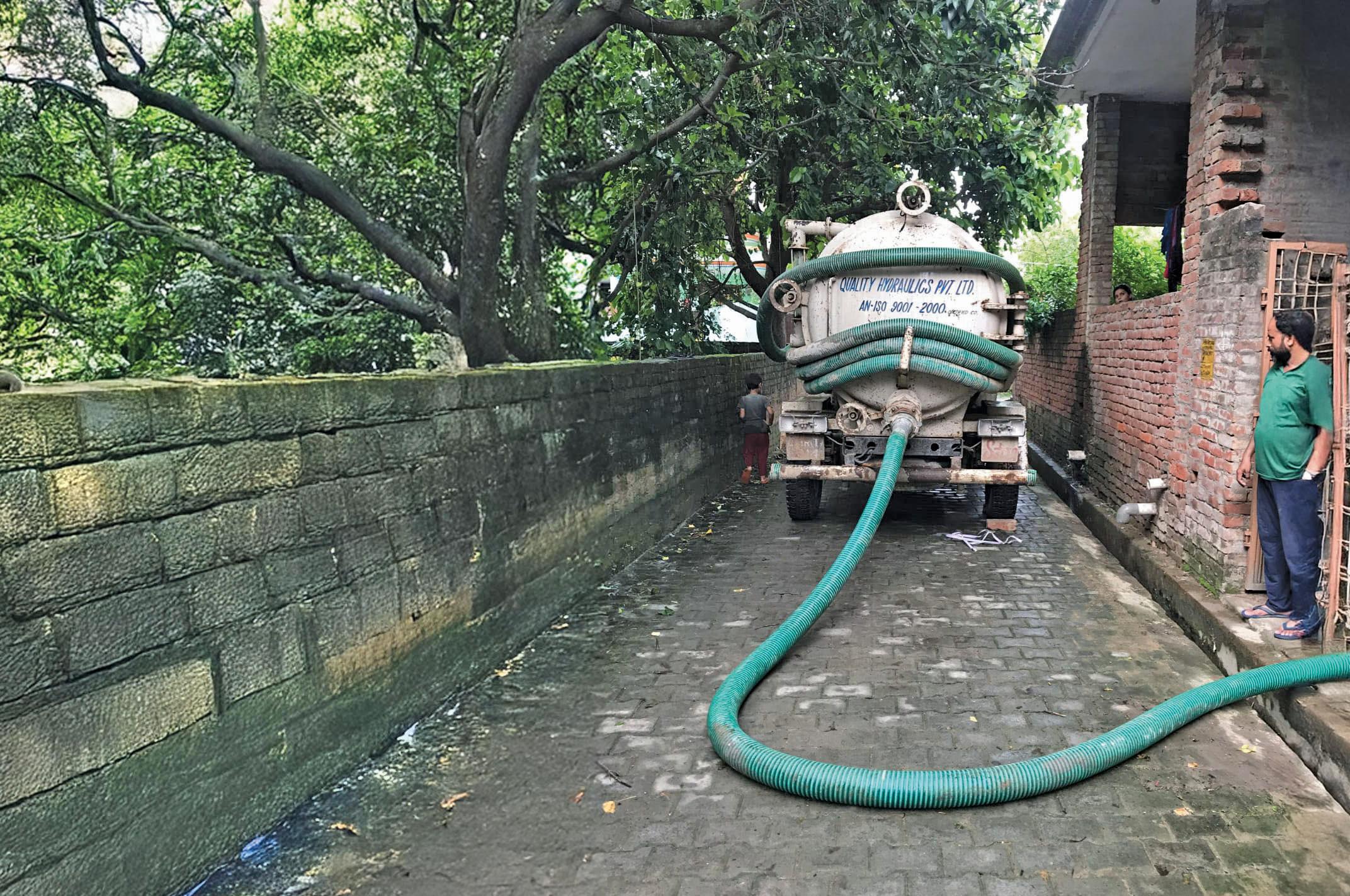
MOST OF us confuse toilets with sanitation. What happens after we flush or pour water, where the waste goes and how it is treated, rarely crosses our minds. But this process is turning into an environmental and public health crisis in Uttar Pradesh, India's most populous state. Even as the state celebrates 100 per cent toilet coverage under Swachh Bharat Mission (Urban), the downstream systems to handle faecal sludge remain neglected.
Across more than 700 towns, Uttar Pradesh has constructed over 50 faecal sludge treatment plants (FSTPs) and co-treatment facilities to safely manage waste from septic tanks and non-sewered toilets. An FSTP treats waste collected from onsite sanitation systems such as pit latrines and septic tanks, while a co-treatment plant is a sewage treatment facility modified to also process faecal sludge. These units were intended to form the backbone of urban sanitation in areas without underground sewer networks.
However, many remain severely underutilised. As of April 2025, at least 18 are operating at just 20 per cent of their capacity, according to a report by the Delhi-based nonprofit Centre for Science and Environment (CSE). The report delves into why these projects are underperforming.
Examining four representative towns—Raebareli, Sitapur, Shikohabad and Gonda—each with an FSTP of 32 kilolitres per day capacity, it found that while Shikohabad and Gonda record steady inflows, Raebareli and Sitapur are unable to fill their treatment units.
CHOKED SYSTEM


Denne historien er fra November 01, 2025-utgaven av Down To Earth.
Abonner på Magzter GOLD for å få tilgang til tusenvis av kuraterte premiumhistorier og over 9000 magasiner og aviser.
Allerede abonnent? Logg på
FLERE HISTORIER FRA Down To Earth

Down To Earth
GREAT NICOBAR DILEMMA
In the fragile ecosystem of Nicobar, strategic development must align with constitutional commitment to protect environment, indigenous dignity

3 mins
March 16, 2026
Down To Earth
CATCH BY THE ROOTS
Sabai grass could be a game-changer for the marginalised economies of West Bengal's dry uplands. All it needs is an efficient market strategy
4 mins
March 16, 2026

Down To Earth
POWERING TRANSITION
India's renewable ambitions are rising rapidly, with half of its installed power capacity now coming from non-fossil sources. Yet the gap between capacity and generation remains wide. The experiences of two pioneering states, Karnataka and Tamil Nadu, which together generate over a fifth of the country's renewable energy, offer crucial lessons for accelerating the transition, reports PUJA DAS from Bengaluru, Chennai, Mumbai and New Delhi
16 mins
March 16, 2026

Down To Earth
At core of survival
Water scarcity defines life in a village inside Sariska Tiger Reserve's critical habitat, as debates over its relocation drag on
5 mins
March 16, 2026

Down To Earth
What's on your plate
An upcoming digital tool can help people learn about the origin of their meals and make climate-positive food choices
2 mins
March 16, 2026

Down To Earth
'Bad environment can never be good economics'
The Supreme Court of India and even the high courts were once very active and took a proactive role in protecting the environment; unfortunately, that is no longer true
4 mins
March 16, 2026
Down To Earth
Things fall apart
IN THE past year, the world has counted more missiles and bombs than hours.
2 mins
March 16, 2026

Down To Earth
Universities in crisis, innovation is stifled
Political control and skewed policies have led to unrest in academia, stifling creativity and meaningful research
4 mins
March 16, 2026

Down To Earth
SPARK IN THE GAME
The Reserve Bank of India's restored recognition of Default Loss Guarantees re-enables credit flow into last-mile electric mobility
3 mins
March 16, 2026

Down To Earth
Ushering in new eras
An appraisal of the state of biodiversity conservation, pollution reduction and climate adaptation regimes in India
3 mins
March 16, 2026
Listen
Translate
Change font size