Essayer OR - Gratuit
Flushed and forgotten
Down To Earth
|November 01, 2025
Poor containment systems, weak monitoring and illegal dumping have turned Uttar Pradesh's faecal sludge handling into an environmental ticking bomb
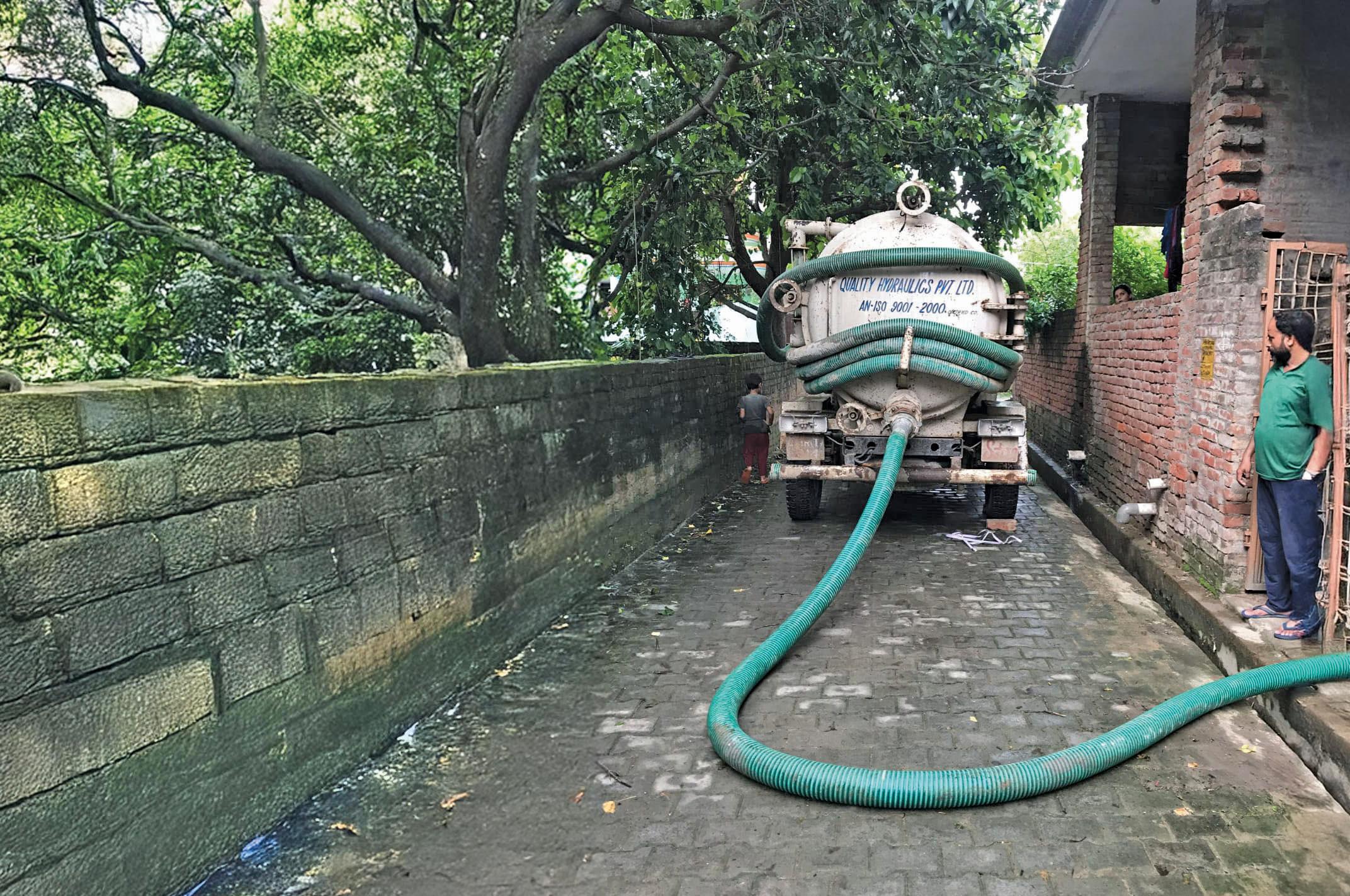
MOST OF us confuse toilets with sanitation. What happens after we flush or pour water, where the waste goes and how it is treated, rarely crosses our minds. But this process is turning into an environmental and public health crisis in Uttar Pradesh, India's most populous state. Even as the state celebrates 100 per cent toilet coverage under Swachh Bharat Mission (Urban), the downstream systems to handle faecal sludge remain neglected.
Across more than 700 towns, Uttar Pradesh has constructed over 50 faecal sludge treatment plants (FSTPs) and co-treatment facilities to safely manage waste from septic tanks and non-sewered toilets. An FSTP treats waste collected from onsite sanitation systems such as pit latrines and septic tanks, while a co-treatment plant is a sewage treatment facility modified to also process faecal sludge. These units were intended to form the backbone of urban sanitation in areas without underground sewer networks.
However, many remain severely underutilised. As of April 2025, at least 18 are operating at just 20 per cent of their capacity, according to a report by the Delhi-based nonprofit Centre for Science and Environment (CSE). The report delves into why these projects are underperforming.
Examining four representative towns—Raebareli, Sitapur, Shikohabad and Gonda—each with an FSTP of 32 kilolitres per day capacity, it found that while Shikohabad and Gonda record steady inflows, Raebareli and Sitapur are unable to fill their treatment units.
CHOKED SYSTEM

Cette histoire est tirée de l'édition November 01, 2025 de Down To Earth.
Abonnez-vous à Magzter GOLD pour accéder à des milliers d'histoires premium sélectionnées et à plus de 9 000 magazines et journaux.
Déjà abonné ? Se connecter
PLUS D'HISTOIRES DE Down To Earth
Down To Earth
Popular distrust
THE WORLD seems to be going through a period of stasis despite facing an unfathomable polycrisis.

2 mins
February 01, 2026
Down To Earth
CONSERVE OR PERISH
Periyar Tiger Reserve has rewritten Indian conservation by turning poachers into protectors and conflict into coexistence
5 mins
February 01, 2026

Down To Earth
'Rivers need to run free'
From Tibet to West Bengal, the Brahmaputra is the pulse of communities and ecosystems along its course. But what are the risks the river faces through human interventions, particularly dams, discusses journalist, author and filmmaker SANJOY HAZARIKA in his new book, River Traveller.
4 mins
February 01, 2026

Down To Earth
India is facing up to its innovation lag
There are signs now that India is acknowledging the superior strides made by China in a frontier technology like Al
4 mins
February 01, 2026

Down To Earth
Competing concerns
What are the repercussions of the EU-Mercosur pact that have made European farmers protest against the free trade agreement?
4 mins
February 01, 2026

Down To Earth
From fryer to flight
Sustainable fuel made from used cooking oil can play a pivotal role in helping India achieve its aviation emission reduction goals. Measures to collect this oil must be revamped
4 mins
February 01, 2026

Down To Earth
ACCESS OPEN
An amendment to India's nodal forest conservation law opens up forests across India to commercial exploitation by the paper industry
6 mins
February 01, 2026
Down To Earth
DRINK FROM TAP CAN BE A REALITY
As cities across India struggle to supply safe piped water, Odisha offers a success story
2 mins
February 01, 2026

Down To Earth
GREAT DRYING
The Earth is hotter than at any point in the past 100,000 years, with 2023-25 becoming the warmest three-year period on record and also breaching the 1.5°C threshold for the first time. One fallout is dwindling freshwater.
22 mins
February 01, 2026

Down To Earth
Green redemption
Restoration of grasslands of Kerala's Pampadum Shola National Park, once dominated by invasive Australian wattles, see a return of streams and native species
1 mins
February 01, 2026
Listen
Translate
Change font size