
Gå ubegrenset med Magzter GOLD
Få ubegrenset tilgang til over 9000 magasiner, aviser og premiumhistorier for bare
The Universe without gravity
BBC Sky at Night Magazine
|February 2025
Life with no gravity might sound a fun idea, but as Govert Schilling explains, shutting off this pivotalforce would spell disaster for Earth and beyond
Gravity is a nuisance, don't you think? The gravity of our home planet makes it hard to climb a mountain. It can cause a broken leg if you fall down the stairs. It makes you very much aware of your body mass. And it's the main reason why pigs – or people – don't fly.
Wouldn't it be great to experience no gravity? To effortlessly float around in any direction you wish, like astronauts on board the International Space Station? You wouldn't need stairs anymore, or elevators, for that matter. Then again, as every astronaut can tell you, drinking a cup of coffee would become quite a challenge.
But it's an interesting thought experiment. What would the world, and indeed the Universe, look like if there were no gravity, if we could shut it off completely, or if it had never existed at all?
For one, life on our planet would have been completely different. In a world with no gravity, there's no need for the evolution of wings. Legs aren't really necessary either. And animals could be much larger than blue whales or dinosaurs, as weight no longer puts constraints on body size.
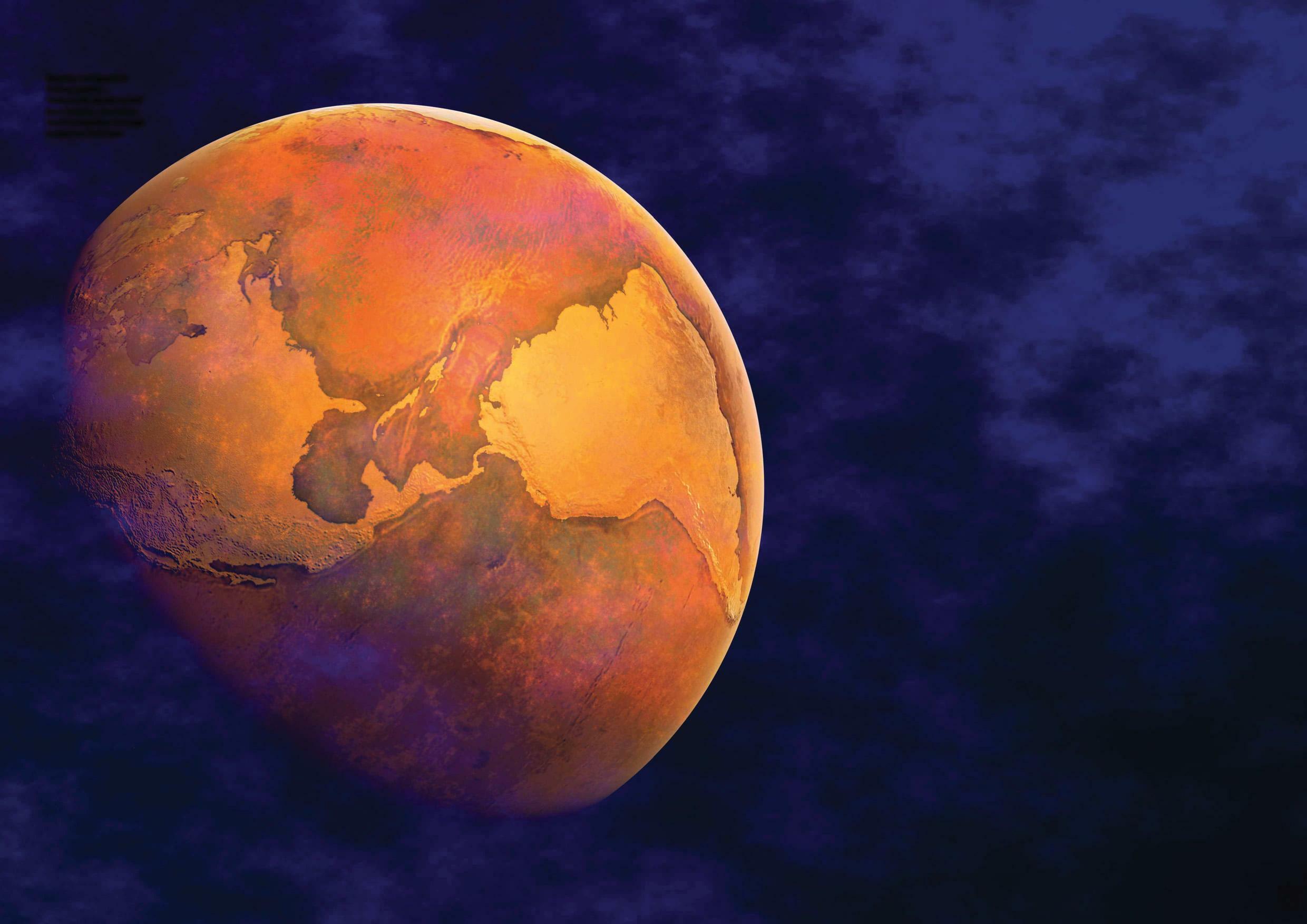
 But wait a moment. Life would have a very difficult time existing in the first place, as Earth would have no atmosphere. Only through gravity is our planet capable of retaining that thin layer of breathable gases. Without gravity, the atmosphere – and the oceans, for that matter – would escape into space, and the third rock from the Sun would be as barren as low-mass worlds like the Moon and Mercury.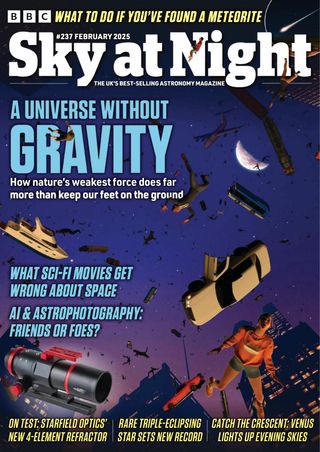

Denne historien er fra February 2025-utgaven av BBC Sky at Night Magazine.
Abonner på Magzter GOLD for å få tilgang til tusenvis av kuraterte premiumhistorier og over 9000 magasiner og aviser.
Allerede abonnent? Logg på
FLERE HISTORIER FRA BBC Sky at Night Magazine
BBC Sky at Night Magazine
MOONWATCH
January's top lunar feature to observe

2 mins
January 2026
BBC Sky at Night Magazine
Speed up your processing workflow
How to use Photoshop's Actions tool to drastically cut your processing time
3 mins
January 2026
BBC Sky at Night Magazine
Chasing Canada's polar lights
With solar maximum peaking and a new Moon promising dark skies, Jamie Carter travels to Churchill, Manitoba to hunt the Northern Lights - and dodge polar bears – in Canada's far north
7 mins
January 2026
BBC Sky at Night Magazine
Beyond Pluto: The search for the hidden planets
Could one – or even two - undiscovered planets lurk at the edges of our Solar System? Nicky Jenner explores how close we are to finding the elusive 'Planet 9'
6 mins
January 2026
BBC Sky at Night Magazine
Jupiter moon events
Jupiter is a magnificent planet to observe.
2 mins
January 2026
BBC Sky at Night Magazine
What samples from space have taught us
Alastair Gunn explains what scientists have learnt in the 20 years since the first unmanned mission brought materials back from alien worlds
3 mins
January 2026
BBC Sky at Night Magazine
The Milky Way as you've never seen it before
This is the largest low-frequency radio colour image of our Galaxy ever assembled
1 min
January 2026
BBC Sky at Night Magazine
Merger of ‘impossibly' massive black holes explained
Scientists discover how enormous, fast-spinning black holes can exist after all
1 mins
January 2026
BBC Sky at Night Magazine
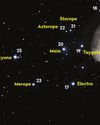
Lunar occultation of the Pleiades
BEST TIME TO SEE: 27 January from 20:30 UT
1 min
January 2026
BBC Sky at Night Magazine
The Universe's expansion may be slowing down
New study suggests current theories of dark energy could be wrong
1 mins
January 2026
Listen
Translate
Change font size