Prøve GULL - Gratis
SKILLS FOR STARGAZERS
BBC Sky at Night Magazine
|December 2025
Take great photos of the Milky Way
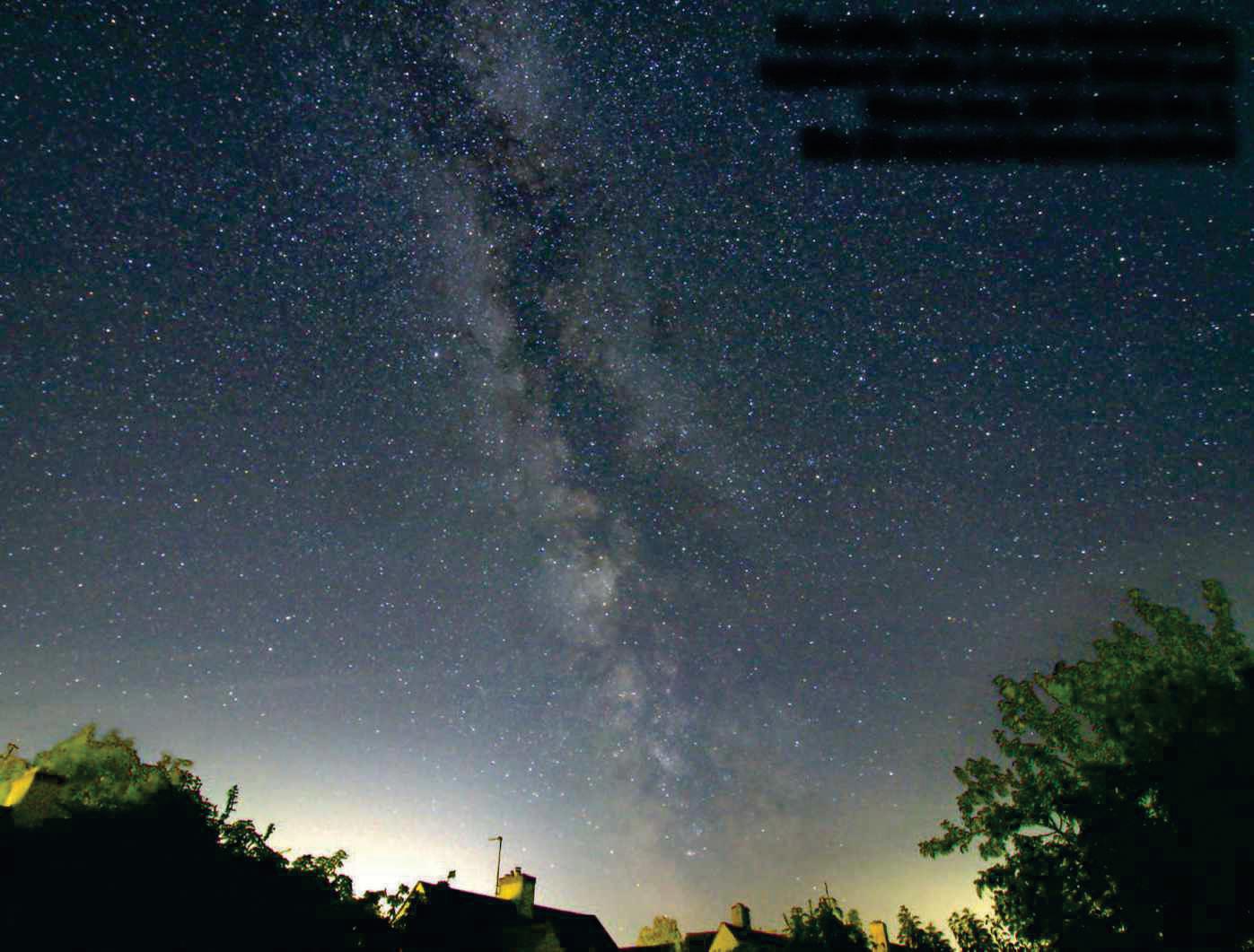
How to capture, stack and process your way to glorious shots of our Galaxy
The Milky Way is a firm favourite for nightscape photographers and astrophotographers alike, but beautiful images of our Galaxy are well within reach of beginners with basic entry-level equipment too.
While a longer focal length will capture specific regions such as nebulae, here we'll show you how a wide-angled lens and short, untracked exposures can capture more of the Milky Way at once and achieve stunning results.
There are several advantages to shorter exposures. They reduce the chances of capturing unwanted aircraft, satellites or light pollution. They can also be taken without a specialist tracking mount, so there's less equipment to carry and set up. And when it comes to photographing the Milky Way near the horizon, short exposures won't blur the foreground, so you can skip the step of having to blend separate background and foreground photos.
Be prepared
Start with a little planning. To determine what time of year is best for capturing different regions of the Milky Way from your location, try a planetarium app such as Stellarium. Shooting on a moonless night is preferable. You'll need to work out the correct exposure length for your lens. The longer the focal length, the shorter the exposure needs to be to keep your stars sharp.

Denne historien er fra December 2025-utgaven av BBC Sky at Night Magazine.
Abonner på Magzter GOLD for å få tilgang til tusenvis av kuraterte premiumhistorier og over 9000 magasiner og aviser.
Allerede abonnent? Logg på
FLERE HISTORIER FRA BBC Sky at Night Magazine

BBC Sky at Night Magazine
Crush: Close Encounters with Gravity
Gravity is something that we're all innately familiar with. It keeps our feet on the ground, fights against a rocket trying to leave Earth and governs the movement of the planets and stars.

1 mins
April 2026

BBC Sky at Night Magazine
Exploring the Universe
There's no shortage of children's books about astronomy.
2 mins
April 2026
BBC Sky at Night Magazine
Make your Milky Way images pop
Simple, free processing techniques using FastStone Image Viewer
3 mins
April 2026

BBC Sky at Night Magazine
Nightfaring: In Search of the Disappearing Darkness
This book is a manifesto for dark skies, written as a travel memoir.
1 mins
April 2026
BBC Sky at Night Magazine
Flying saucers- The making of a modern myth
Our obsession with UFOs goes back further than you might think. Robert Pateman traces how early science fiction, dubious sightings and an alien-mad media led to the 1950s saucer fever
9 mins
April 2026
BBC Sky at Night Magazine
STAR OF THE MONTH
Alphecca, the brightest jewel in the Crown
1 min
April 2026
BBC Sky at Night Magazine
How to use a planisphere
Navigate the sky with the original stargazer's tool. No batteries, apps or Wi-Fi required!
3 mins
April 2026
BBC Sky at Night Magazine
Why rockets don't launch straight up
For a rocket to get its payload into space, it has to follow a curved path. But what would happen if it didn't?
2 mins
April 2026

BBC Sky at Night Magazine
Q&A WITH A DARK MATTER SPECIALIST
Dark matter makes up 27 per cent of all matter in the Universe. So why is it so hard to find? Meet one of the people making a map that leads us to it
3 mins
April 2026

BBC Sky at Night Magazine
Why I want to put a hotel on the Moon
Bored of the beach? Sick of city breaks? Step this way. Space entrepreneur Skyler Chan explains how he'll build a holiday destination on the Moon by 2030
2 mins
April 2026
Listen
Translate
Change font size