Prøve GULL - Gratis
REVIEW: Sony WH-1000XM5: The gold standard for headphones
BBC Science Focus
|August 2022
Some of the best headphones around, says Alex Hughes, but they don't come cheap

Let's get this bit out of the way, Sony's new flagship headphones, the WH-1000XM5, cost £379. By any measure that is expensive, even when compared to the likes of Apple and Bang & Olufsen who scoff at the idea of affordable. And with headphone tech improving to the point where you can buy a decent pair for under £100, there's no sane reason to spend nearly £400. Or is there?
If you're not familiar with these headphones, they have a bit of a history. Over the last five years they've scooped up every award in the business, becoming the go-to for anyone looking for noise-cancelling wireless headphones. But with so many competitors now, is this upgrade worth the new, bigger price tag?
A COMPLETE REDESIGN
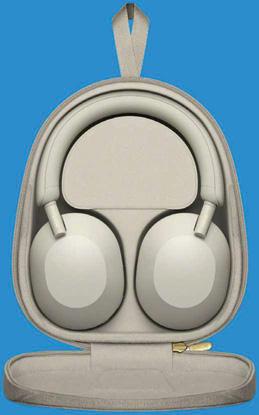
Since the first iteration of these headphones back in 2016, Sony has relied on a singular design, only making small upgrades here and there. This time, Sony has gone for a complete redesign. The result is a sleek and slim pair of headphones, with minimal lines and uniform materials. It's a design that's reminiscent of the WH-1000XM5's biggest competitor, the Apple AirPods Max.
While the redesign gives the headphones a modern look and feel, the main benefit is the comfort. They are seriously light and can be worn for hours without really noticing them - a feat many over-ears don't manage.
Sony has also added a section of memory foam in the middle of the headband, and the headphones seem to apply just the right amount of clamping so your head doesn't feel like it's being squeezed.
There is one major downside. Unlike previous versions, these cannot be folded up. Instead, the earcups can be rotated to make the headphones flat. They do come with a case to store them, but chucking them in a bag without the case is more of a challenge.

Denne historien er fra August 2022-utgaven av BBC Science Focus.
Abonner på Magzter GOLD for å få tilgang til tusenvis av kuraterte premiumhistorier og over 9000 magasiner og aviser.
Allerede abonnent? Logg på
FLERE HISTORIER FRA BBC Science Focus

BBC Science Focus
HEALTH: Eating oats could lower your cholesterol in just two days
The health benefits of a two-day porridge diet lasted for weeks afterwards

1 mins
April 2026

BBC Science Focus
Most people are too sure they can identify fake human faces
Even 'super recognisers' struggle with the challenge. Can you do better?
1 min
April 2026

BBC Science Focus
WHAT'S THE WORST THING YOU CAN DO FOR THE PLANET ONLINE?
Human beings can barely move a muscle without some kind of deleterious effect on the environment around us.
2 mins
April 2026

BBC Science Focus
A bug in the system
The complex arrangement of equipment you see here is part of a particle accelerator.
1 min
April 2026

BBC Science Focus
Snug as a bug in a rug
At first glance, you might feel envious of this little leafhopper, swaddled beneath the folds of what appears to be a luxurious fur blanket.
1 min
April 2026

BBC Science Focus
WHY DO WE ROOT FOR THE VILLAIN IN MOVIES?
Whether it's Darth Vader or Cruella de Vil, we all have a favourite movie villain.
1 mins
April 2026

BBC Science Focus
A TURN TO DISPERSE
Why a fart walk after dinner does more than release your gas
3 mins
April 2026

BBC Science Focus
Hatching a nebula
Welcome to the Egg Nebula, an enigmatic structure formed by ejected stardust in the Cygnus constellation around 1,000 light-years from Earth.
1 min
April 2026

BBC Science Focus
7 TIMES AI GOT IT SPECTACULARLY WRONG
For the past four years, AI has been reshaping how we work and live. But its failures are proving just as transformative as its triumphs
8 mins
April 2026

BBC Science Focus
CHARLES ADCOCK, VIA EMAIL: COULD DARK MATTER BE ALL AROUND PLANET EARTH BUT UNDETECTABLE?
Astronomers have gathered overwhelming evidence that 80 per cent of all matter in the Universe is invisible.
1 min
April 2026
Translate
Change font size