Versuchen GOLD - Frei
REVIEW: Sony WH-1000XM5: The gold standard for headphones
BBC Science Focus
|August 2022
Some of the best headphones around, says Alex Hughes, but they don't come cheap

Let's get this bit out of the way, Sony's new flagship headphones, the WH-1000XM5, cost £379. By any measure that is expensive, even when compared to the likes of Apple and Bang & Olufsen who scoff at the idea of affordable. And with headphone tech improving to the point where you can buy a decent pair for under £100, there's no sane reason to spend nearly £400. Or is there?
If you're not familiar with these headphones, they have a bit of a history. Over the last five years they've scooped up every award in the business, becoming the go-to for anyone looking for noise-cancelling wireless headphones. But with so many competitors now, is this upgrade worth the new, bigger price tag?
A COMPLETE REDESIGN
Since the first iteration of these headphones back in 2016, Sony has relied on a singular design, only making small upgrades here and there. This time, Sony has gone for a complete redesign. The result is a sleek and slim pair of headphones, with minimal lines and uniform materials. It's a design that's reminiscent of the WH-1000XM5's biggest competitor, the Apple AirPods Max.
While the redesign gives the headphones a modern look and feel, the main benefit is the comfort. They are seriously light and can be worn for hours without really noticing them - a feat many over-ears don't manage.
Sony has also added a section of memory foam in the middle of the headband, and the headphones seem to apply just the right amount of clamping so your head doesn't feel like it's being squeezed.
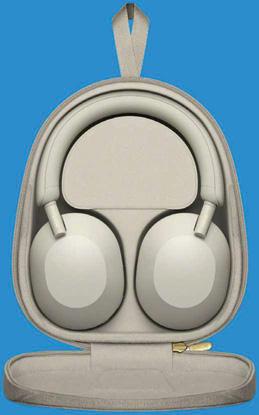
There is one major downside. Unlike previous versions, these cannot be folded up. Instead, the earcups can be rotated to make the headphones flat. They do come with a case to store them, but chucking them in a bag without the case is more of a challenge.

Diese Geschichte stammt aus der August 2022-Ausgabe von BBC Science Focus.
Abonnieren Sie Magzter GOLD, um auf Tausende kuratierter Premium-Geschichten und über 9.000 Zeitschriften und Zeitungen zuzugreifen.
Sie sind bereits Abonnent? Anmelden
WEITERE GESCHICHTEN VON BBC Science Focus

BBC Science Focus
DOES MY DOG HAVE ADHD?
Officially, Attention-Deficit Hyperactivity Disorder (ADHD) is a human condition. People are diagnosed with it. Dogs are not. Yet many of its core features, including hyperactivity, impulsivity and distractibility, can be found in dogs.

1 min
March 2026

BBC Science Focus
DOES MY BRAIN LIVE A LITTLE IN THE PAST?
Yes, your brain does live a little in the past. It can't help it. The information it receives via your senses is always a little out of date. Whether it's light entering the retinas in your eyes, or sounds vibrating the hairs in your ears, it not only takes time for the data to arrive, but your brain then has to process it.
2 mins
March 2026

BBC Science Focus
ASTRONOMY FOR BEGINNERS
RETURN OF THE EVENING STAR (VENUS)
1 mins
March 2026

BBC Science Focus
CAN YOU STOP YOUR SENSE OF TASTE DULLING AS YOU AGE?
Sometimes I hear people say that food just doesn't taste the same as they get older. It's tempting to blame this on age, but there are other factors at play, too.
1 mins
March 2026

BBC Science Focus
MICROBIOMES OF THE SUPERAGERS
BY STUDYING THE INCREASING NUMBER OF PEOPLE WHO ARE LIVING BEYOND THEIR 100TH BIRTHDAYS, SCIENTISTS ARE DISCOVERING THAT THE SECRET TO REACHING A RIPE OLD AGE IN RUDE HEALTH MIGHT LIE IN OUR GUTS
8 mins
March 2026

BBC Science Focus
HOW BIG WERE MEDIEVAL WAR HORSES?
You might picture knights charging into battle on towering steeds, but medieval horses were typically no bigger than modern-day ponies.
1 min
March 2026

BBC Science Focus
FORCES OF HABIT
Could new research on setting up healthy habits resuscitate those stuttering New Year resolutions?
3 mins
March 2026

BBC Science Focus
5 DANGERS HIDING IN YOUR PROCESSED FOOD
We all know that ultra-processed foods are bad for us, but what ingredients should we particularly try to avoid? And what are they doing to our bodies?
9 mins
March 2026

BBC Science Focus
Mosquitoes are becoming thirstier for human blood
Habitat loss may be pushing mosquitoes towards human hosts with deadly consequences
1 mins
March 2026

BBC Science Focus
HOW CAN I GET OVER MY EX?
Relationship breakups can be brutal, just look at the popularity of songs like 'Someone Like You' by Adele, or all the covers of 'Cry Me a River' by Julie London.
1 mins
March 2026
Translate
Change font size