Prøve GULL - Gratis
CAPITAL'S PUNISHMENT
THE WEEK India
|January 11, 2026
DELHI'S AIR POLLUTION PROBLEM, SO FAR, HAS SEEN 'SOLUTIONS' THAT HAVE HAD LITTLE IMPACT. EXPERTS SAY IT IS TIME TO TACKLE THE ISSUE AT ITS SOURCE
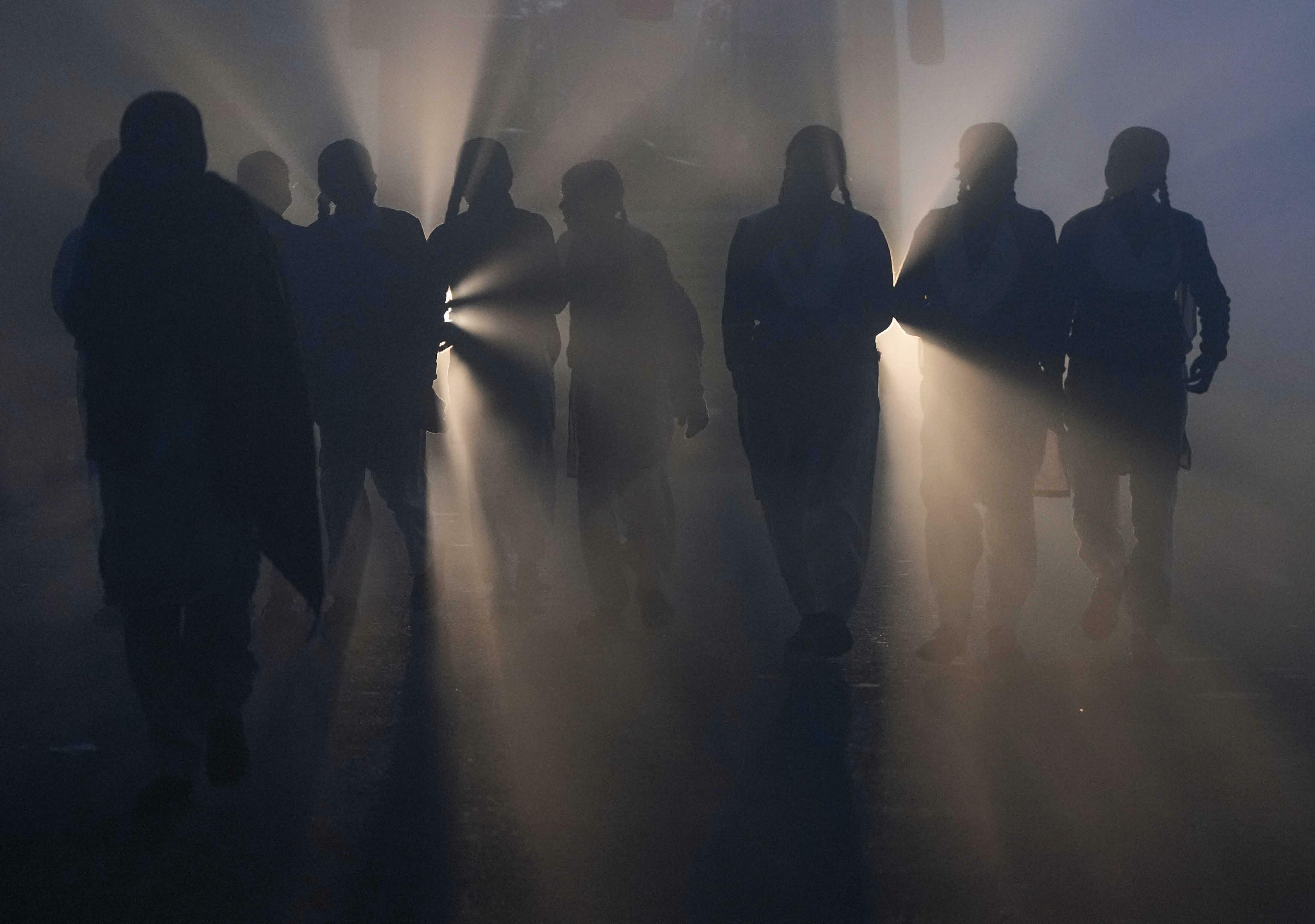
This year, Delhi's fight against pollution has seen everything: Chief Minister Rekha Gupta’s “AQI is a temperature” gaffe, the AAP’s Santa-fainting skit, protesters being sent to police custody, an unsuccessful cloud seeding experiment, talks of AI-enabled pollution management and water sprinkling wherever one looks. Everything—except breathable air.
The air, meanwhile, remains ‘poor’ or ‘very poor’—if not ‘severe’—its smell smoky and taste metallic, with the air quality index (AQI) even hitting the cap of 500, posing a serious health risk.
The BJP government in Delhi had allocated ₹300 crore in the 2025-2026 budget to curb pollution, and had earlier approved a dust-control proposal, which is set to cost ₹2,388 crore over the next decade. This is only the latest in a long line of plans rolled out by successive governments—from expanding metro networks to the more cosmetic odd-even rule under the AAP. Yet little has changed on the ground, prompting a question: Are the solutions part of the problem?
WHICH NUMBER TO TRUST?
There was a time when winter conversations revolved around the chill—how biting it was, but also a reward: a few months meant for being outdoors, exercising, picnicking, breathing easier in an otherwise tropical climate. But that winter no longer exists.
Today, stepping out during these months can itself be a health hazard. The conversations, meanwhile, have shifted—from the chill in the air to the air itself.
For instance, if you live in Delhi NCR, chances are you check the AQI at least once a day. AQI turns complex data on pollutants like PM2.5 (particulate matter smaller than 2.5 micrometres), PM10, ozone and carbon monoxide into a single number and category, making it easy for the public to understand local air quality. What you see, however, depends heavily on which monitor you refer to.

Denne historien er fra January 11, 2026-utgaven av THE WEEK India.
Abonner på Magzter GOLD for å få tilgang til tusenvis av kuraterte premiumhistorier og over 9000 magasiner og aviser.
Allerede abonnent? Logg på
FLERE HISTORIER FRA THE WEEK India

THE WEEK India
WEIGHT AND WATCH
India stands at the epicentre of parallel epidemics: obesity, diabetes and heart disease, each fuelling the other and blurring the line between lifestyle and disease. But there is hope-GLP-1 therapies are transforming the treatment landscape

17 mins
January 11, 2026

THE WEEK India
Bliss and the body
Humans have been using cannabinoids—the active compounds found in the cannabis plant—for medicinal and ritual purposes for at least 5,000 years, with some archaeological evidence suggesting an even longer relationship with the plant.
1 mins
January 11, 2026

THE WEEK India
THE SILENT CRISIS CANCER IN THE ELDERLY DEMANDS OUR ATTENTION
The greying of India is accelerating, expected so with regards to longevity. Current estimates suggest nearly 140 million Indians are aged above 60, a figure set to double within three decades. With advancing age comes increased cancer risk, yet specialised geriatric oncology [Specialty care for elderly cancer patients] services remain conspicuously absent across most Indian healthcare settings.
1 mins
January 11, 2026

THE WEEK India
Writing our own destiny
As the field of epigenetics advances, we are stepping into a new era of medicine, where health and even destiny become choices we can shape
3 mins
January 11, 2026

THE WEEK India
Just Pakistan, everywhere
Gadar, Veer-Zaara, Bajrangi Bhaijaan, Raazi, Uri, Gadar 2, Dhurandhar—the list of successful Hindi films featuring Pakistan is long and varied. Romance, comedy, drama and war: stories from almost every genre, unfolding in cinematic stand-ins for 'Karachis,' NWFPs' and ‘Lahores’ routinely play out on Indian screens to packed houses.
2 mins
January 11, 2026

THE WEEK India
New Year, new resolve, new you
A New Year always brings me back to the same realisation. Good health does not flourish through one dramatic commitment. It grows through the quiet courage to care for oneself, every single day.
2 mins
January 11, 2026
THE WEEK India
Ms. Multani notes that India's growth increasingly depends on robust healthcare, with hospitals emerging as key drivers of productivity and future competitiveness
Why Health Infrastructure Matters More Than EverA 2024 meta-review found that improvements in public health consistently contribute to higher GDP per capita growth, especially in developing countries undergoing demographic transition. Good health enables a workforce that is more productive, less prone to absenteeism, and capable of longer, healthier working lives. For India, with a median age under 30 and a workforce numbering over 500 million, the stakes are enormous. A healthy working-age population today is the real capital for the India of 2030-2040.
1 mins
January 11, 2026
THE WEEK India
HELP...
India's mental health crisis must not be hijacked by those with dubious methods
4 mins
January 11, 2026

THE WEEK India
BOLLYWOOD BLUES
The Hindi film industry needs an urgent revamp. Here's what needs to be done
4 mins
January 11, 2026

THE WEEK India
For folk's sake
In Rajasthan's musical communities, forming a band is unconventional. The three-member SAZ is breaking convention in more ways than one, preserving and reimagining folk music along the way
4 mins
January 11, 2026
Listen
Translate
Change font size