Versuchen GOLD - Frei
CAPITAL'S PUNISHMENT
THE WEEK India
|January 11, 2026
DELHI'S AIR POLLUTION PROBLEM, SO FAR, HAS SEEN 'SOLUTIONS' THAT HAVE HAD LITTLE IMPACT. EXPERTS SAY IT IS TIME TO TACKLE THE ISSUE AT ITS SOURCE
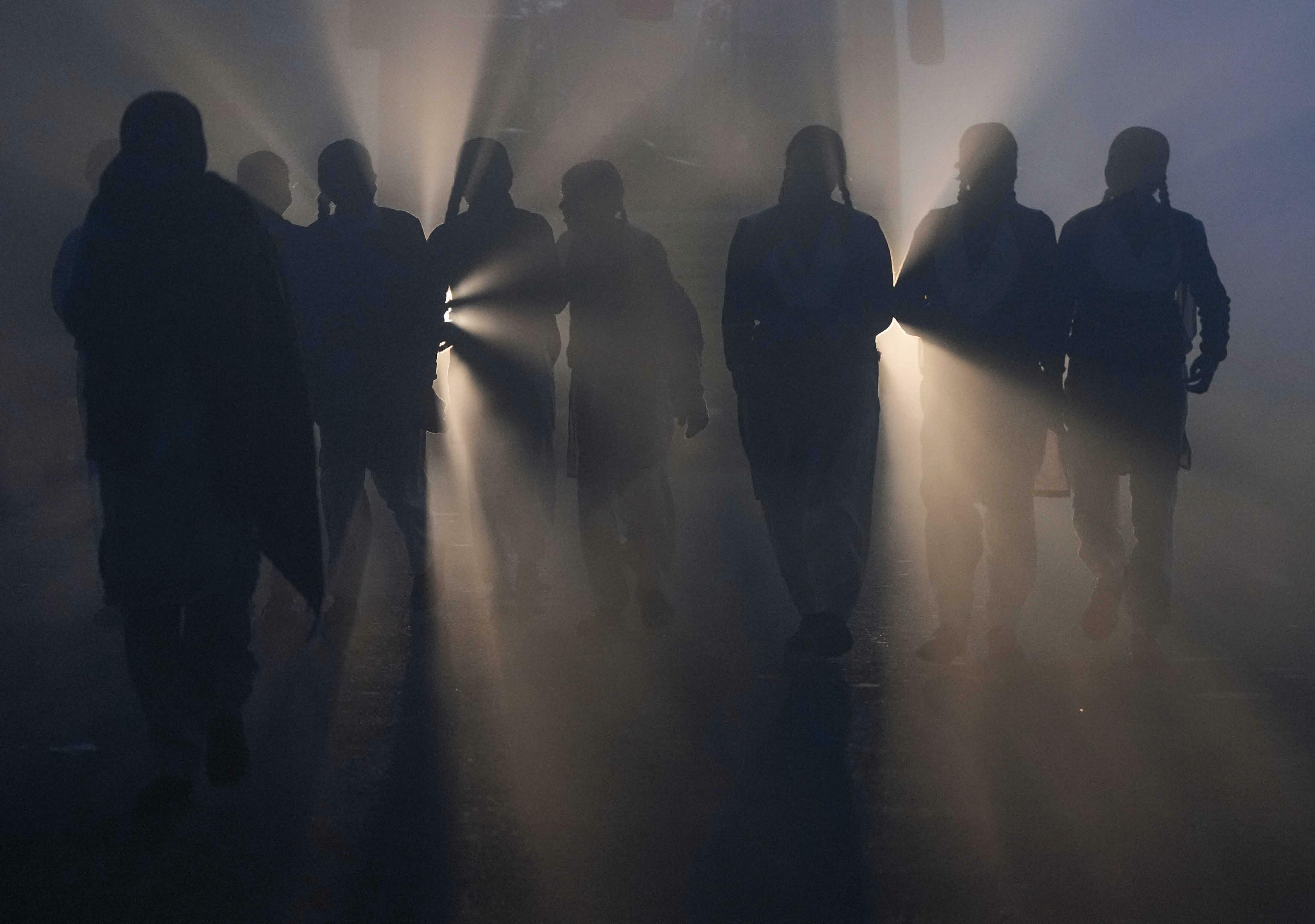
This year, Delhi's fight against pollution has seen everything: Chief Minister Rekha Gupta’s “AQI is a temperature” gaffe, the AAP’s Santa-fainting skit, protesters being sent to police custody, an unsuccessful cloud seeding experiment, talks of AI-enabled pollution management and water sprinkling wherever one looks. Everything—except breathable air.
The air, meanwhile, remains ‘poor’ or ‘very poor’—if not ‘severe’—its smell smoky and taste metallic, with the air quality index (AQI) even hitting the cap of 500, posing a serious health risk.
The BJP government in Delhi had allocated ₹300 crore in the 2025-2026 budget to curb pollution, and had earlier approved a dust-control proposal, which is set to cost ₹2,388 crore over the next decade. This is only the latest in a long line of plans rolled out by successive governments—from expanding metro networks to the more cosmetic odd-even rule under the AAP. Yet little has changed on the ground, prompting a question: Are the solutions part of the problem?
WHICH NUMBER TO TRUST?
There was a time when winter conversations revolved around the chill—how biting it was, but also a reward: a few months meant for being outdoors, exercising, picnicking, breathing easier in an otherwise tropical climate. But that winter no longer exists.
Today, stepping out during these months can itself be a health hazard. The conversations, meanwhile, have shifted—from the chill in the air to the air itself.
For instance, if you live in Delhi NCR, chances are you check the AQI at least once a day. AQI turns complex data on pollutants like PM2.5 (particulate matter smaller than 2.5 micrometres), PM10, ozone and carbon monoxide into a single number and category, making it easy for the public to understand local air quality. What you see, however, depends heavily on which monitor you refer to.

Diese Geschichte stammt aus der January 11, 2026-Ausgabe von THE WEEK India.
Abonnieren Sie Magzter GOLD, um auf Tausende kuratierter Premium-Geschichten und über 9.000 Zeitschriften und Zeitungen zuzugreifen.
Sie sind bereits Abonnent? Anmelden
WEITERE GESCHICHTEN VON THE WEEK India
THE WEEK India
The buzz is real
The investment announcements by Google and other companies in Andhra Pradesh are already yielding tangible results, triggering a real estate surge across Visakhapatnam's IT zones and adjoining districts.

1 mins
January 18, 2026

THE WEEK India
Legacy reloaded
From sugar mills in Uttar Pradesh to Mumbai's high-street retail, a new generation of scions is reshaping India's old businesses
7 mins
January 18, 2026

THE WEEK India
TRIAL IN THE US IS THE ONLY WAY TO GET RID OF MADURO
Mercedes Baptista Guevara is an attorney and diplomat based in Spain.
3 mins
January 18, 2026

THE WEEK India
Wrong decisions, right places
Sometimes a film, a book, and a bottle of vodka blend in ways so unexpectedly perfect that you feel grateful simply for having been present.
4 mins
January 18, 2026

THE WEEK India
TRUST FACTOR
Lokesh's willingness to listen, his comfort with detail, and his bias for execution create confidence
3 mins
January 18, 2026

THE WEEK India
March to Caracas—Yankee oil doo
Lefties and liberals want Narendra Modi to condemn Don Trump's invasion of Venezuela. All invasions are bad; innocents get shot. But if we condemn one, shouldn't we condemn all?
2 mins
January 18, 2026
THE WEEK India
Revision before the exam
BJP and Trinamool use SIR to kick-off state election campaign, but those affected by the exercise remain anxious about their future
5 mins
January 18, 2026
THE WEEK India
Nuclear governance: caution to confidence
Nuclear power has long occupied a singular and somewhat uneasy place in Bharat's public imagination. It has been viewed, often with pride, as proof of scientific achievement and strategic resolve, yet governed with a restraint that reflected a deeper discomfort with the diffusion of risk.
2 mins
January 18, 2026

THE WEEK India
I WANT TO BE KNOWN AS CHIEF JOB CREATOR
Historically, the Telugu Desam Party has been a regional party but it has always had the nation’s interest at heart.
12 mins
January 18, 2026

THE WEEK India
The battle of words
As young adults we certainly used abbreviations and cryptic phrases. But MC and BC did not stand for the master of ceremonies and the era before Christ. They stood for something else which, if said in full, would certainly have made our mothers make us rinse our mouths with soap. Once you have tasted soap, you would not want to taste it ever again.
4 mins
January 18, 2026
Listen
Translate
Change font size