Prøve GULL - Gratis
Exploring Oregon Beach Fossils
Rock&Gem Magazine
|July 2025
There's an old saying that finding fossils in Oregon is not about where to look, but where not to look.
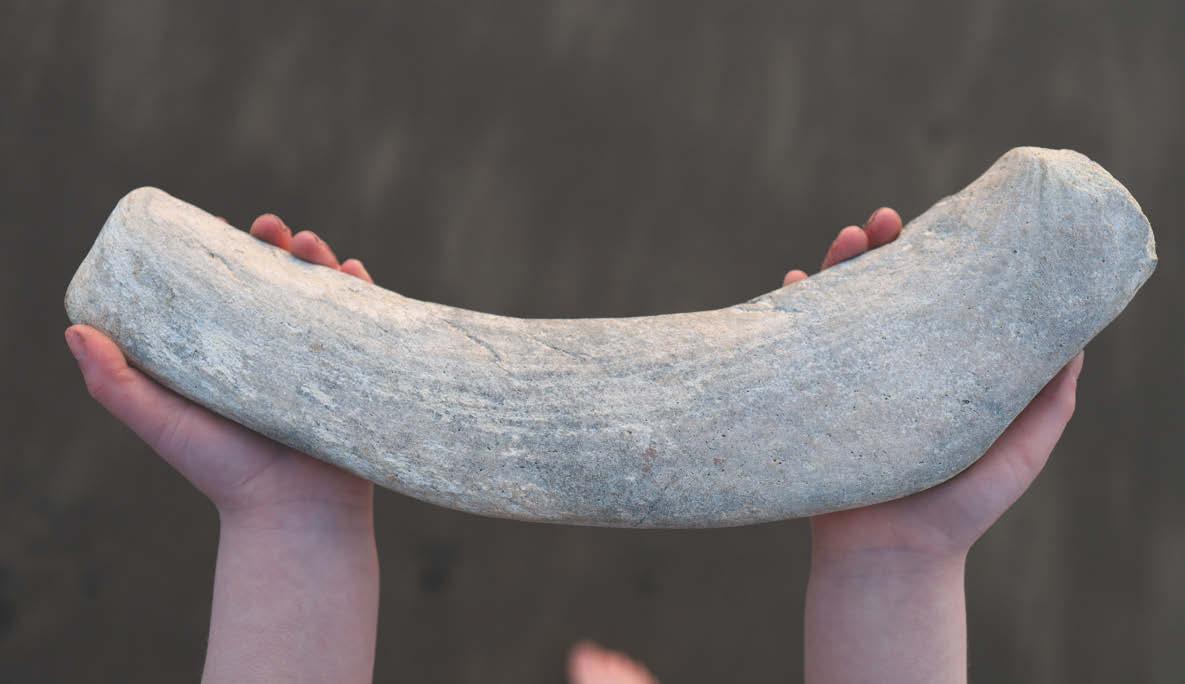
Top, left: Our fossilized mystery mammal bone found at Stonefield Beach (Lane County)
The Oregon Coast and much of the Coast Range was underwater and part of an ancient sea floor. So, marine fossils can be found a significant distance inland from the current shoreline. There are numerous geological formations here and each one holds different specifics and clues about what used to call this place home.
Today, Oregon Coast fossils are mostly known from three formations: Astoria, Nye Mudstone and Coaledo. Astoria is roughly 15 to 20 million-year-old blue-grey sandstone layers mixed with compressed volcanic ash, making up the northern to central coast beaches. Nye Mudstone is up to 20-million-year-old, fine-grained grey sedimentary rock found in areas within the central coast. Coaledo is loosely 25to 30-million-year-old dark ash and sand, found on the south coast stretches of beach. There are handfuls of others in between and inland, containing traces of equally interesting prehistoric life. Here’s what can be found in these formations, the better-known fossil hunting localities and best practices when going rockhounding at the beach.
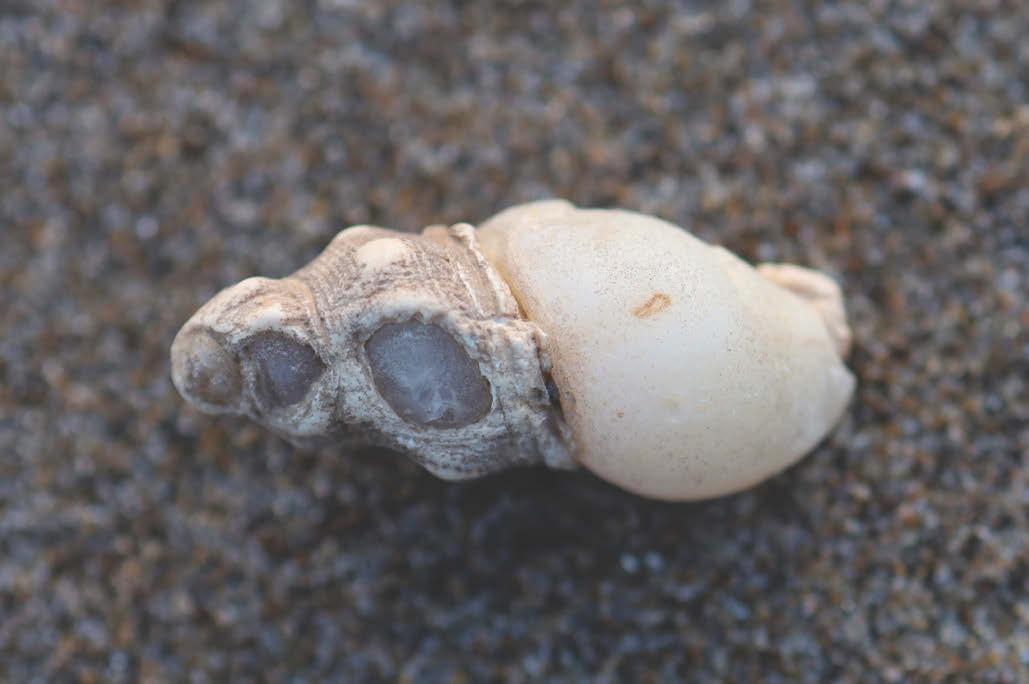 Top, right: Agatized gastropod fossil from Nehalem (Tillamook County)
KNOW BEFORE YOU GO
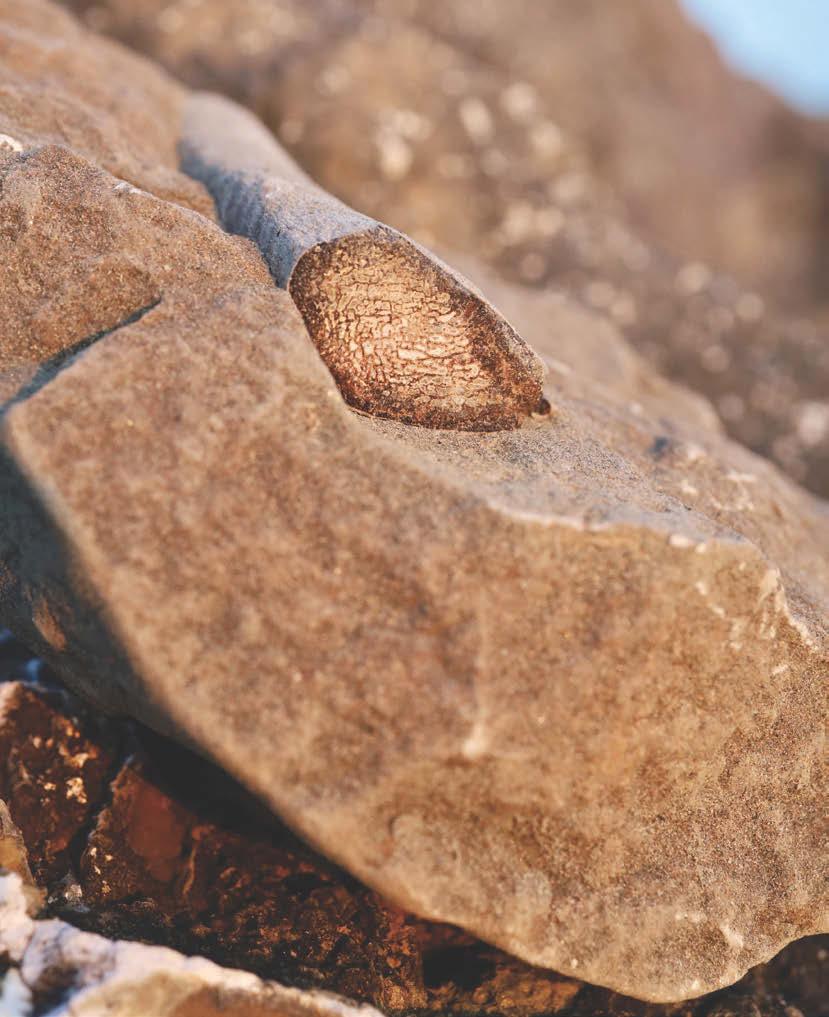
One of the first things to do is to have an idea or a visual in your head of what is out there and possible to find. Sometimes what you think you're on the hunt for looks a bit different in reality because of the age or the conditions in which it can found today. Other times, fossils can take you by surprise and you might not think something is a fossil at all when it really is. Be open-minded, question things, and have fun, too.

Denne historien er fra July 2025-utgaven av Rock&Gem Magazine.
Abonner på Magzter GOLD for å få tilgang til tusenvis av kuraterte premiumhistorier og over 9000 magasiner og aviser.
Allerede abonnent? Logg på
FLERE HISTORIER FRA Rock&Gem Magazine
Rock&Gem Magazine
A New Amber Locality Fills a Gap
A sandstone quarry in central Ecuador has yielded the first significant deposit of Mesozoic amber from South America.

1 min
January / February 2026
Rock&Gem Magazine
Did "Left-Handed" Fish Leave Water Earlier than Thought?
Fossil evidence suggests that fish (or \"fishapods\") dragged themselves onto land during the middle Devonian Period.
1 min
January / February 2026

Rock&Gem Magazine
"Lab Quakes” Produce Surprising Results
When faults let loose and earthquakes result, the main effect we mortals experience is the violent shaking.
1 min
January / February 2026
Rock&Gem Magazine
This Egg is No Spring Chicken
How to date a dino egg
1 min
January / February 2026
Rock&Gem Magazine
Have we Already Mined the Critical Minerals We Need
Then why are we throwing them away?!
1 min
January / February 2026
Rock&Gem Magazine
One Toxic Worm
A critter that creates & tolerates orpiment!
1 min
January / February 2026
Rock&Gem Magazine
ROCK & GEM FIELD GUIDE: Silver
Silver (Ag) is a native element and one of Earth's most prized precious metals.
2 mins
January / February 2026
Rock&Gem Magazine
DINOSAURS OF THE HELL CREEK MUSEUM
In the Badlands of South Dakota, just outside the small town of Belle Fourche—pronounced “Bell Foosh”—a new attraction has taken shape that every dinosaur enthusiast should see. The Dinosaurs of the Hell Creek Museum is part hands-on exhibit, part science center and part active research lab.
3 mins
January / February 2026
Rock&Gem Magazine
The Lost Twins of Kongsberg
A Silver Story Resurfaced
3 mins
January / February 2026

Rock&Gem Magazine
Switzerland's ICE PALACE
Walk Inside a Glacier at The Top of Europe
7 mins
January / February 2026
Listen
Translate
Change font size