Prøve GULL - Gratis
METAL TOXINS & DUCKS
Hobby Farms
|July/August 2025
Poisoning from metal toxins is a surprisingly common issue in backyard duck flocks.
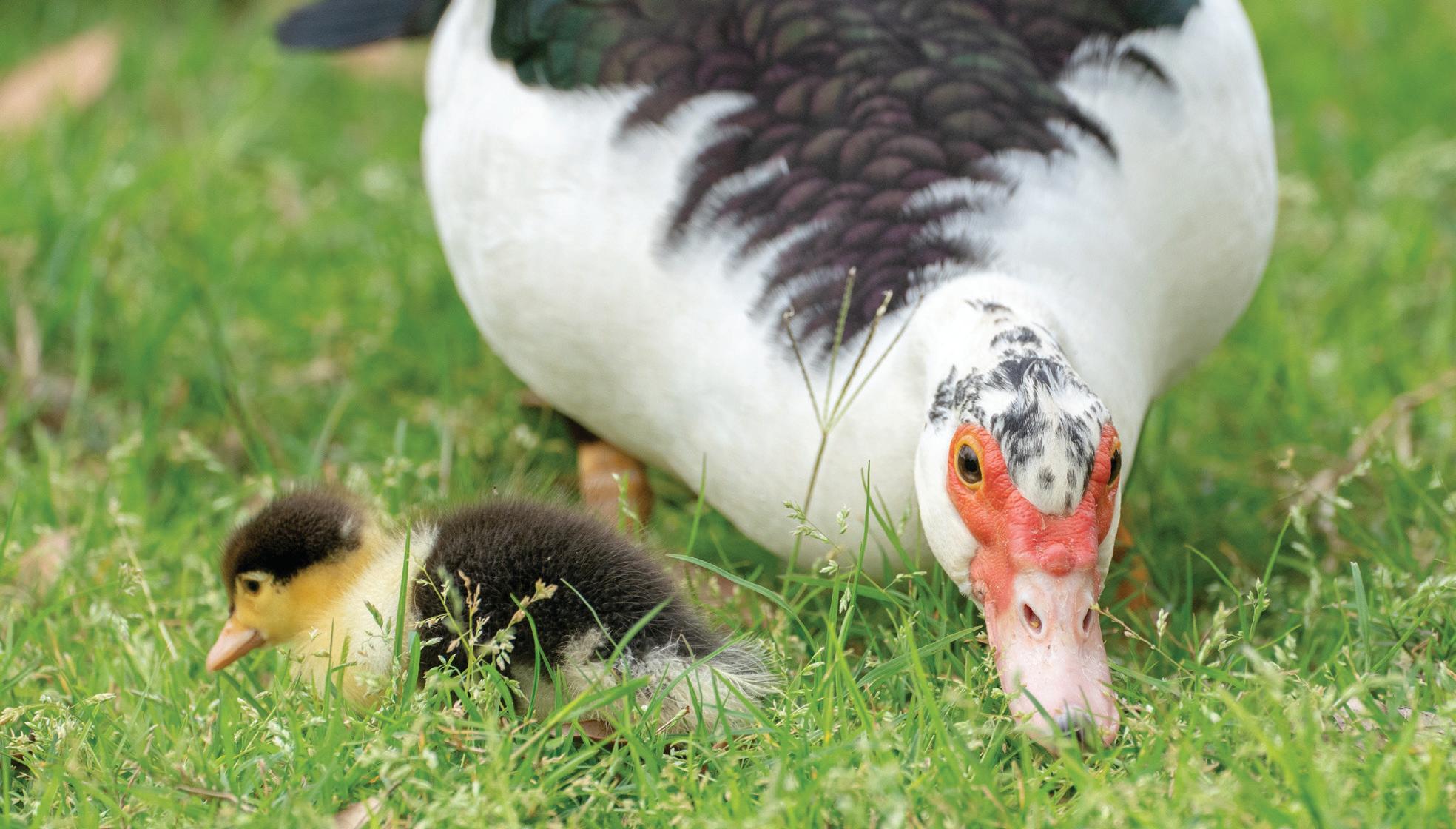
Often referred to as hardware disease, metal poisoning, heavy metal poisoning, zinc poisoning and lead poisoning, metal toxicity is a common occurrence in backyard duck flocks. This condition is caused by lead or zinc entering a duck's body and bloodstream from ingesting contaminated water, dirt or feed, or when a duck eats bits of metal such as wire or screws.
When a duck ingests a screw or other metal object, the metal piece usually works its way through a duck's body until arriving at the gizzard. A duck's gizzard works like a hammer, crushing the food before it moves through the lower intestine and pancreas. When a metal object is in the duck's gizzard, the gizzard will try to destroy it. This crushing releases zinc or lead into the duck's bloodstream, sending toxins throughout the body.
TREATING METAL TOXINS IN DUCKS
Lead and zinc are the two kinds of metal poisoning ducks can suffer from. Symptoms, treatments and risks can vary between these metals, so take your duck to the vet to ensure proper treatment.
LEAD
Lead is the more deadly and understandably most feared metal toxin found in ducks. Lead is challenging to remove from the bloodstream and can cause severe health concerns, including seizures, ataxia and reproductive problems. Lead can also decrease your duck's ability to fight infection or disease.
SYMPTOMS: seizures, loss of appetite, weakness, weight loss, reproductive issues, bright-green diarrhea, ataxia, body tremors, drooping wings, convulsions, blindness, depression, head tilt and lameness
DIAGNOSIS: Only an experienced veterinarian can accurately diagnose with a blood test.


Denne historien er fra July/August 2025-utgaven av Hobby Farms.
Abonner på Magzter GOLD for å få tilgang til tusenvis av kuraterte premiumhistorier og over 9000 magasiner og aviser.
Allerede abonnent? Logg på
FLERE HISTORIER FRA Hobby Farms
Hobby Farms
SHETLAND SHEEP
With their wide range of colors and fleece types, excellent meat, small size, resistance to disease and ability to take good care of themselves, Shetland sheep are an ideal breed for many small farms.

1 mins
July/August 2026
Hobby Farms
Got (Sheep) Milk?
Here’s a beginner’s guide to dairy sheep.
4 mins
July/August 2026
Hobby Farms
BABYDOLL SOUTHDOWN SHEEP
The North American Babydoll Southdown Sheep Association refers to this diminutive breed as “charming creatures” because of its dispositions and adorable appearance.
1 min
July/August 2026

Hobby Farms
WELL DONE
Happy Hollow Farm has adapted to farming in uncertain water years.
7 mins
July/August 2026
Hobby Farms
Pig Mites & Lice
Learn how to tell lice and mites apart for accurate diagnosis and treatment.
4 mins
July/August 2026

Hobby Farms
Rotational Grazing for All
Better forage, healthier soil and improved weight gain can make the planning worthwhile.
7 mins
July/August 2026

Hobby Farms
Beat the Heat
Easy DIY cooling systems you can set up on your hobby farm to keep your livestock cool and comfortable this summer.
7 mins
July/August 2026
Hobby Farms
HARLEQUIN SHEEP
This U.S.-developed miniature sheep breed is hardy and lambs easily, often having multiple lambs.
1 min
July/August 2026

Hobby Farms
Cherry Tomato Rainbow
Cherry tomatoes may be small, but they can be every bit as flavorful as the juiciest slicer you've ever grown.
6 mins
July/August 2026
Hobby Farms
Natural Selection
Try one of these herbal remedies for goats.
6 mins
July/August 2026
Listen
Translate
Change font size