Prøve GULL - Gratis
Anatomy quick tips - HOW TO STUDY THE BACK MUSCLES
ImagineFX
|January 2023
CHARLIE PICKARD continues his ten-part series of quick tips on anatomy; this month, in the final instalment, he explores a few structural notes on the back
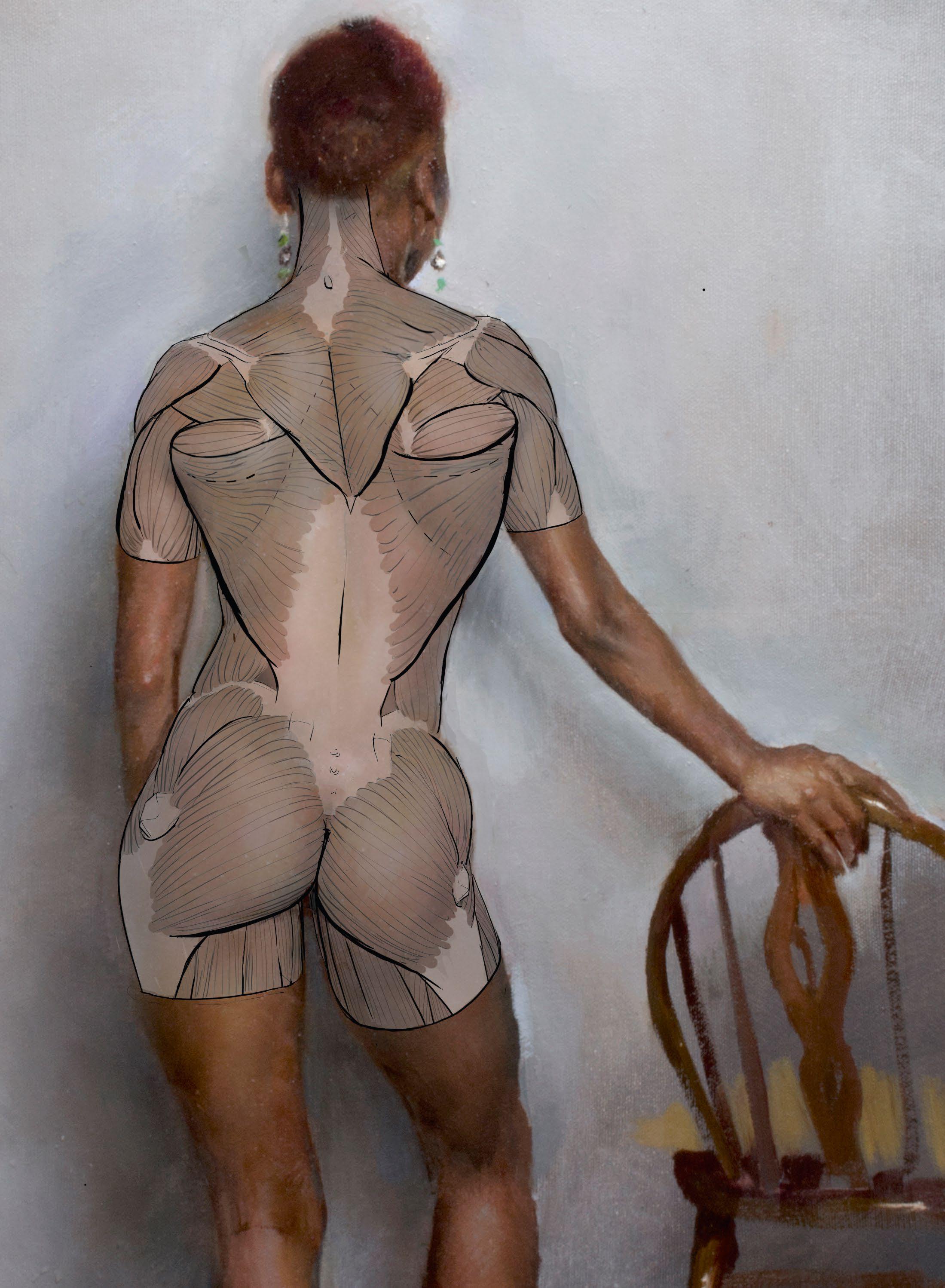
The back of the torso in figure drawing is often viewed as one of, if not the most difficult and complex area of the body to depict and learn. This is not without good reason; the back reveals and hides many of its structures depending on the body fat present in the model, the level of muscular development and even the position of the pose! At times, learning this structure can seem overwhelming to students.
However, if we take a structured approach to learning the many forms that create the back and break down the problem into easy-to-grasp, learnable chunks, we can approach it with confidence.
The first thing that will help us in this endeavour is to understand the reason for this complexity. As with all areas of the human form, the shapes of the back are created by its function. The more complex the function, the more complex the muscles required.
The main functions of the back are twofold. Firstly, it holds us upright. This is one of the special features of the human animal and it requires large, strong muscles.
The second function (and the reason for the complexity), is to allow as much movement of the arm as possible. To allow for this function, we have a free moving scapula. Meaning, unlike other joints in the human body, the scapula doesn't move within a static joint. It shifts across the ribcage, which is actually the reason for most of the movement of the arm. Try to move your arm without moving this bone and you will immediately understand its necessity. The various movements of this bone across the ribcage accounts for much of the back's complexity. The back is truly a marvel of organic engineering and the following are a few notes on the study of this beautiful form.

1 Boney landmarks

Denne historien er fra January 2023-utgaven av ImagineFX.
Abonner på Magzter GOLD for å få tilgang til tusenvis av kuraterte premiumhistorier og over 9000 magasiner og aviser.
Allerede abonnent? Logg på
FLERE HISTORIER FRA ImagineFX

ImagineFX
HP Omnibook X Flip 16
DOUBLING UP HP's latest Omnibook 2-in-1 is a decent-enough productivity laptop, but it truly shines when it's transformed into tablet mode

2 mins
February 2026
ImagineFX
Phaya Akat - The Sanctuary
“Phaya Akat’s Sanctuary Village began from a simple idea inspired by Thailand’s tradition of boiling eggs in natural hot springs.
1 min
February 2026

ImagineFX
HOW SURFACE NORMALS IMPROVE YOUR 3D ART
Ant Ward explains how to quickly change the way a polygon model looks by adjusting its normals
1 mins
February 2026

ImagineFX
Painting in Procreate: Reimagine Your Surroundings
VISIONARY WORK Across 20 lessons, Mikko Eerola reveals how he brings his ideas to life on the iPad using Procreate
1 mins
February 2026

ImagineFX
Technique focus: WORK SMARTER WITH COLOURS
Álvaro Jiménez reveals the workflow process he follows to summon an armoured demon
1 mins
February 2026

ImagineFX
FIVE MINUTES WITH PAT IMRIE
Big-screen blockbusters and a certain 3D art magazine helped set this creative on his career path
3 mins
February 2026
ImagineFX
RIFF ON YOUR PASSIONS
Max Froer draws on a range of influences when rendering a beast that's part machine
1 min
February 2026

ImagineFX
Anker SOLIX C1000
BOX OF DELIGHTS The chonkiest power bank around is powerful, portable (after a fashion) and boy is it well built
2 mins
February 2026

ImagineFX
PAINTING A SCENE OF GREEK DRAMA
Alexander Leskinen creates a stormy environment featuring harpies, the winged messengers of Zeus.
3 mins
February 2026

ImagineFX
HOW DO I COLOUR A 3D OBJECT?
The process of colouring a 3D image has a lot of layers, so let's start at the surface. Mike Griggs weighs up the material requirements
2 mins
February 2026
Translate
Change font size