Prøve GULL - Gratis
Acting Against Their Nature
Writer’s Digest
|July - August 2024
Four ways to create effective uncharacteristic behavior in your characters.

Creating consistent characters is one of the mainand most important-jobs of writing. If a character acts in ways that feel incongruous with how the author has developed and presented them, their behavior often feels jarring and erratic, and can undermine the reader's investment and a story's impact.
Human nature can be complex and opaque, but even our seemingly irregular actions are almost always based in reason, even if not in logic. We may not know what's prompting it, and nor may those around us, but something is causing our behavior. It does not exist in a vacuum. What may seem to be a person acting against their nature is usually simply someone doing something for which we, and sometimes even they, don't yet understand their motivations.
The author's job is to determine and believably convey what those factors are and ensure that when characters seem to be acting against their nature it's deliberate and supported and for a purpose that serves the narrative. Using out-of-character behavior intentionally can create more interesting, faceted characters, build reader engagement, and drive the story propulsively forward.
What Defines Character
Consistent characterization stems from three main elements: their personality/traits, their background/ situation, and their identity-in other words, who your character innately is, what forces shaped them, and who they have become as a result. Nature and nurture combine to form cohesive characterization, and the writer's job is to show that consistently on the page in how they act, react, and interact with other characters.
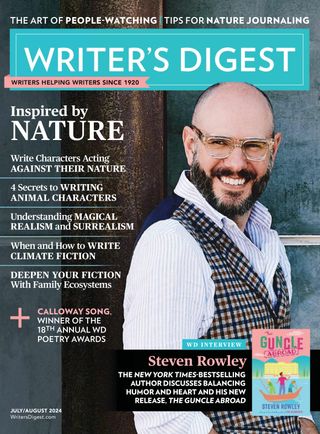

Denne historien er fra July - August 2024-utgaven av Writer’s Digest.
Abonner på Magzter GOLD for å få tilgang til tusenvis av kuraterte premiumhistorier og over 9000 magasiner og aviser.
Allerede abonnent? Logg på
FLERE HISTORIER FRA Writer’s Digest
Writer’s Digest
100 Best Markets for Writers
A list of print and online publications looking for freelancers to contribute their knowledge on everything from pet care to finance and beyond.

65 mins
Yearbook 2026

Writer’s Digest
Memoir Plus
Add a bonus to your personal narrative for a marketing boost.
8 mins
Yearbook 2026
Writer’s Digest
Surefire Ways to Sell Your Children's Book
In my 28 years editing children's books, I've learned that publishing exists at the intersection of art and commerce.
5 mins
Yearbook 2026
Writer’s Digest
The ABCs of Freelance Success
Many freelance writers, especially those at the beginning of their careers, tend to place almost all of their professional focus on one specific component: craft.
5 mins
Yearbook 2026
Writer’s Digest
How to Write in Different Genres
Emiko Jean and Yulin Kuang share tips and strategies for how they successfully write in different genres and mediums.
8 mins
Yearbook 2026
Writer’s Digest
Small But Mighty
Why small presses might be the perfect home for your book.
8 mins
Yearbook 2026

Writer’s Digest
The Story Behind the Story
What's backstory, and what's it doing here anyway?
6 mins
Yearbook 2026

Writer’s Digest
2025 Year in Review
Publishing expert Jane Friedman recaps the biggest news in the industry.
8 mins
Yearbook 2026

Writer’s Digest
What Is Your Story Question?
When a story isn't working—when you know it's not quite coming together, when beta readers and critique partners confirm your fears but can't put a finger on why, or you're not getting offers from agents or publishers—savvy authors start trying to diagnose the issue by examining its component parts, like characterization, plot, and stakes.
6 mins
Yearbook 2026
Writer’s Digest
Writer's Digest 27th Annual 101 Best Websites for Writers
For the 27th year, Writer's Digest is shining a light on 101 websites with a goal of helping writers in a variety of ways.
26 mins
Yearbook 2026
Listen
Translate
Change font size