Prøve GULL - Gratis
LIVING IT LARGE
BBC Wildlife
|August 2023
Patagotitan is likely the biggest dinosaur to have walked the Earth. Here's how it lived its supersized life.
MILLIONS OF YEARS AGO, M Earth was ruled by giants. Pterosaurs with 12m wingspans darkened the skies, dragonflies the size of widescreen televisions buzzed among the undergrowth and sauropods the length of a jumbo jet browsed the treetops.
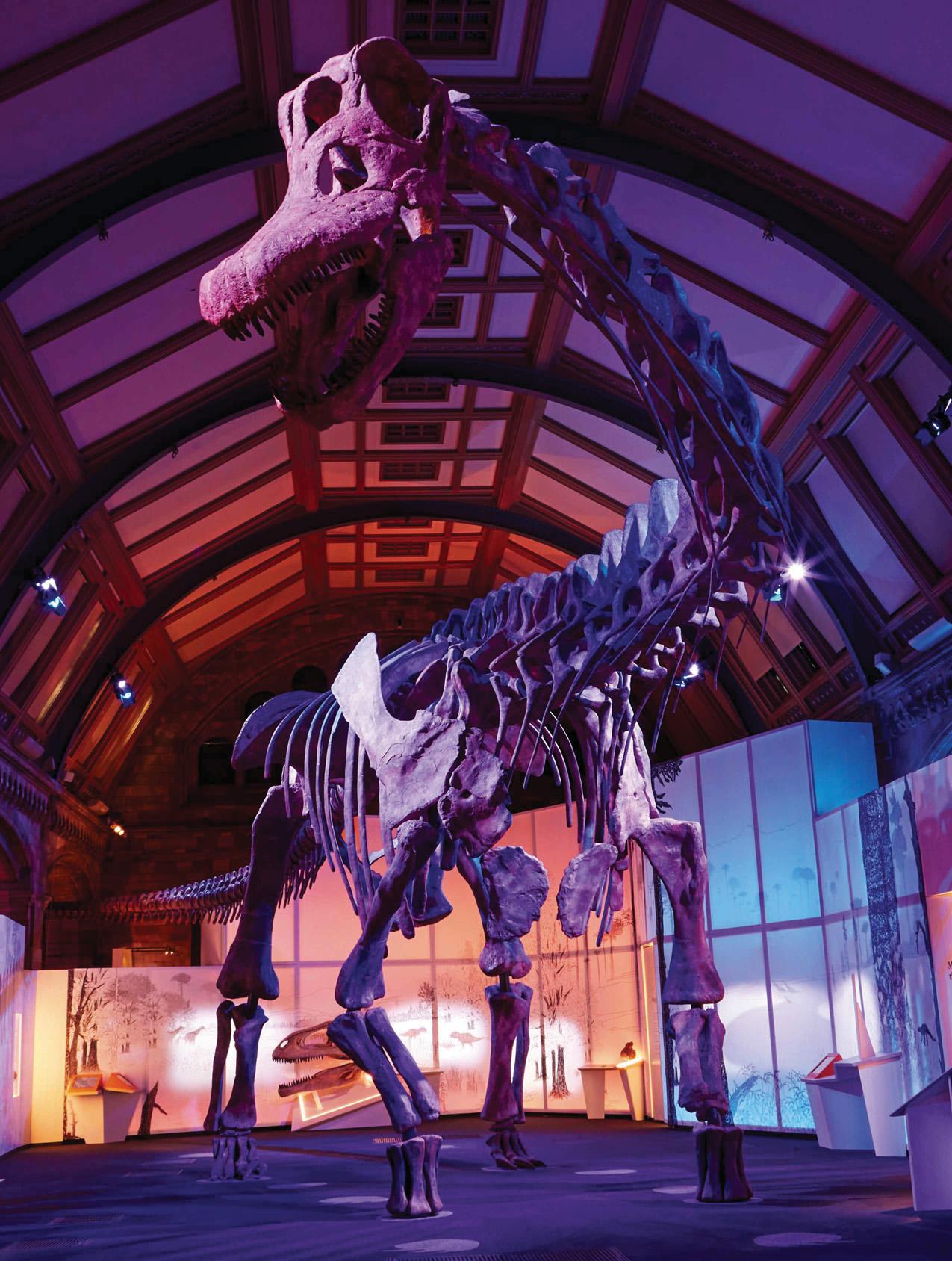
And there was one that was probably bigger than them all: the Cretaceous colossus that was Patagotitan mayorum, whose replica skeleton currently fills the Waterhouse Gallery at the Natural History Museum.
Clocking up some 57 tonnes in weight and measuring 37m from nose to tail, Patagotitan is the largest, most complete dinosaur currently known. It was a member of the titanosaur family, in turn part of the wider sauropod group known for their immensely long necks and thick, squat limbs. Diplodocus was a sauropod, as was Brachiosaurus - the gentle creature we see feeding from the canopy in that captivating scene in Jurassic Park. But while we've known about 'Dippy' and Brachiosaurus for more than a century, Patagotitan was only discovered in 2010, hot on the hefty heels of many other new titans, such as Puertasaurus (2001), Dreadnoughtus (2005) and Argentinosaurus (1987).
Indeed, we are currently experiencing something of a golden age of dinosaur discovery. An average of 50 new species are being added to the tally each year, with a current running total of about 700 (and counting). The boom has been driven by two main factors. "There are now many more people working on dinosaurs in countries in South America, Africa and Asia, which didn't have palaeontologists before," says Paul Barrett, dinosaur specialist at the Natural History Museum in London. "These locations are naturally rich in fossil remains, so the rate of discovery is going up. We're also finding new species by re-assessing existing collections. In my time at the Museum, we've discovered about 10 new species from material that hadn't yet been worked on or had been misidentified."

Denne historien er fra August 2023-utgaven av BBC Wildlife.
Abonner på Magzter GOLD for å få tilgang til tusenvis av kuraterte premiumhistorier og over 9000 magasiner og aviser.
Allerede abonnent? Logg på
FLERE HISTORIER FRA BBC Wildlife
BBC Wildlife
"I was terrified the elephant would ram us"
African elephant in Kenya

2 mins
January 2026
BBC Wildlife
ALL YOU EVER NEEDED TO KNOW ABOUT THE Fennec fox
THE FENNEC FOX IS THE SMALLEST fox in the world, with a body length that can be as little as 24cm.
3 mins
January 2026
BBC Wildlife
INTO THE PLASTISPHERE
A unique synthetic ecosystem is evolving in our oceans – welcome to the plastisphere
7 mins
January 2026
BBC Wildlife
“More than half of all animal life exists in a parasitic relationship, and all life lives in symbiosis”
Our survival depends on species evolving to live together - but some relationships take dark turns
7 mins
January 2026
BBC Wildlife
Are animals able to dream?
SLEEP IS A MYSTERIOUS THING. FOR A long time, we weren't sure why we do it.
1 mins
January 2026
BBC Wildlife
Does a cuckoo know it's a cuckoo?
ABSURD LITTLE BIRDS ACROSS THE world lay their eggs in the nests of other species, leaving the hapless parents to raise a changeling at the expense of their own offspring.
2 mins
January 2026
BBC Wildlife
Orcas killing young sharks
Juvenile great whites are easy prey for orca pod
1 mins
January 2026
BBC Wildlife
Ocean goes on tour
Acclaimed film touring the UK, backed by live orchestra and choir
1 min
January 2026
BBC Wildlife
Feisty bats hunt like lions
Winged mammals use a 'hang and wait' strategy to take down large prey
1 mins
January 2026
BBC Wildlife
SNAP-CHAT
Richard Birchett on magical merlins, wily coyotes and charging deer
2 mins
January 2026
Translate
Change font size