Versuchen GOLD - Frei
LIVING IT LARGE
BBC Wildlife
|August 2023
Patagotitan is likely the biggest dinosaur to have walked the Earth. Here's how it lived its supersized life.
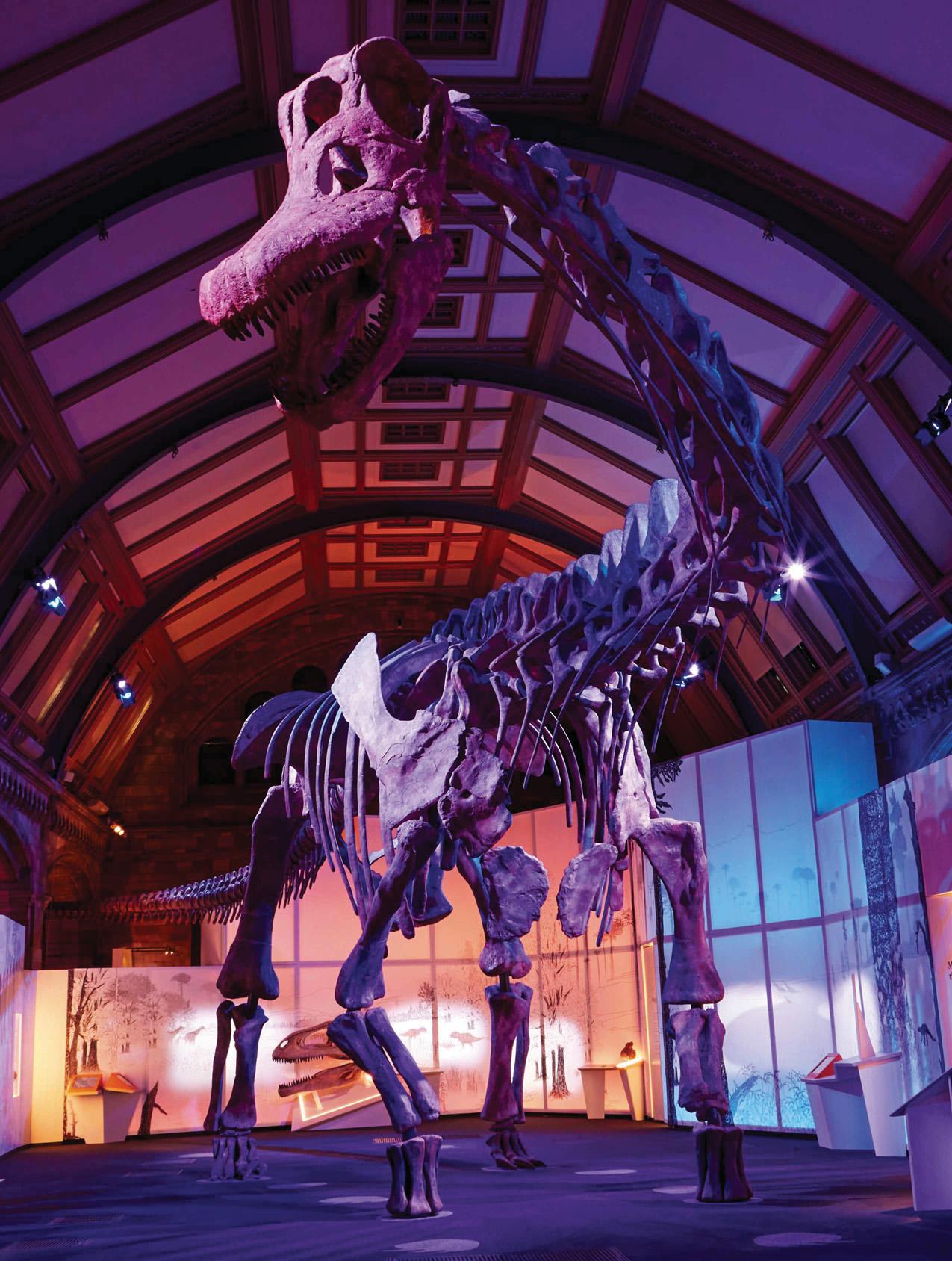
MILLIONS OF YEARS AGO, M Earth was ruled by giants. Pterosaurs with 12m wingspans darkened the skies, dragonflies the size of widescreen televisions buzzed among the undergrowth and sauropods the length of a jumbo jet browsed the treetops.
And there was one that was probably bigger than them all: the Cretaceous colossus that was Patagotitan mayorum, whose replica skeleton currently fills the Waterhouse Gallery at the Natural History Museum.
Clocking up some 57 tonnes in weight and measuring 37m from nose to tail, Patagotitan is the largest, most complete dinosaur currently known. It was a member of the titanosaur family, in turn part of the wider sauropod group known for their immensely long necks and thick, squat limbs. Diplodocus was a sauropod, as was Brachiosaurus - the gentle creature we see feeding from the canopy in that captivating scene in Jurassic Park. But while we've known about 'Dippy' and Brachiosaurus for more than a century, Patagotitan was only discovered in 2010, hot on the hefty heels of many other new titans, such as Puertasaurus (2001), Dreadnoughtus (2005) and Argentinosaurus (1987).
Indeed, we are currently experiencing something of a golden age of dinosaur discovery. An average of 50 new species are being added to the tally each year, with a current running total of about 700 (and counting). The boom has been driven by two main factors. "There are now many more people working on dinosaurs in countries in South America, Africa and Asia, which didn't have palaeontologists before," says Paul Barrett, dinosaur specialist at the Natural History Museum in London. "These locations are naturally rich in fossil remains, so the rate of discovery is going up. We're also finding new species by re-assessing existing collections. In my time at the Museum, we've discovered about 10 new species from material that hadn't yet been worked on or had been misidentified."

Diese Geschichte stammt aus der August 2023-Ausgabe von BBC Wildlife.
Abonnieren Sie Magzter GOLD, um auf Tausende kuratierter Premium-Geschichten und über 9.000 Zeitschriften und Zeitungen zuzugreifen.
Sie sind bereits Abonnent? Anmelden
WEITERE GESCHICHTEN VON BBC Wildlife

BBC Wildlife
SNAP-CHAT
Isaac Szabo talks hellbenders, chub nests and bears on the roof

3 mins
December 2025
BBC Wildlife
Why are the tropics so diverse?
AS YOU MOVE FROM THE POLES towards the equator, species richness increases.
1 mins
December 2025
BBC Wildlife
Magnificent frigatebird
ONE MIGHT BE FORGIVEN FOR thinking that pterodactyls had been de-extincted upon first sighting the silhouette of a magnificent frigatebird.
3 mins
December 2025
BBC Wildlife
YEAR OF THE CAT
Once a phantom of Chile's windswept peaks, this plucky feline is making a comeback
3 mins
December 2025
BBC Wildlife
KATE BRADBURY
“I feel I am part bird at this point at the year's end: I'm ready for spring”
2 mins
December 2025

BBC Wildlife
SNOW DAYS
High in the boreal forests of Colorado, the snowshoe hare lives a secretive life. But one photographer has gained a unique window into its world
3 mins
December 2025

BBC Wildlife
A journey into sound
Progressive hearing loss prompted a memorable quest to absorb nature's calls and choruses
7 mins
December 2025
BBC Wildlife
WILD IN THE CITY
A huge parliament of long-eared owls has made an unlikely home in a Serbian town square
2 mins
December 2025
BBC Wildlife
Birds follow the flames
In the Sierra Nevada of California, fire gives some birds a boost
1 mins
December 2025

BBC Wildlife
Remembering Jane
The ethologist, conservationist and humanitarian Dr Jane Goodall died in October. We reflect on the woman who gave the world hope
5 mins
December 2025
Translate
Change font size