
Gå ubegrenset med Magzter GOLD
Få ubegrenset tilgang til over 9000 magasiner, aviser og premiumhistorier for bare
Prøve GULL - Gratis
10 COMPONENTS OF THE FUTURE
PCQuest
|February 2020
It’s quite difficult to predict the future of urban mobility, both in India and across the world. Technology will play a large part in how the entire transportation industry plays out on land, water and air in the upcoming decades. A look at some of the factors that could decide how you commute in the future…

1. Smart vehicles: Electric vehicles are not the future. Smart vehicles are. The first person to realize this was billionaire genius Elon Musk. Tesla smart cars are expensive, but state of the art, sleek and sexy. If it was affordable, then everyone would buy a Tesla. A smart car is much like your smartphone using software with all its revolutionary over-the-air updates.That means even after you buy a car, it can keep learningnew tricks. Bugs are also fixed seamlessly. Apart from the now ubiquitous GPS navigation, there are also umpteen sensors and an autopilot functionality which is not exactly the same thing as a driverless car. Of course if petrol and diesel cars get smarter, they could also survive. While they may have limitations as compared to an electric car, a hydrogen car might prove to be better. Countries are trying to legislate out fossil fuel cars, but history has shown that such things aren’t easy. Especially because of the gigantic fossil fuel deposits that are still in existence. In the end it won’t be environmentalism or legislation that will dictate the future of urban mobility, but technology. The next big disruptor could well throw everyone’s plans out of the window.
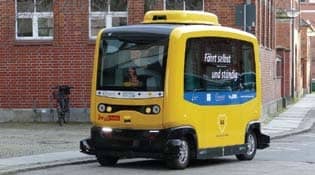
2. Mobile rooms: The moment a car becomes driverless, it ceases to have the driver’s seat. In fact it ceases to need kind any kind of seat and conventional travel as we know it is thrown out of the car window.
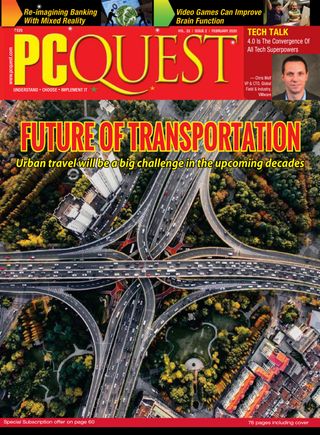

Denne historien er fra February 2020-utgaven av PCQuest.
Abonner på Magzter GOLD for å få tilgang til tusenvis av kuraterte premiumhistorier og over 9000 magasiner og aviser.
Allerede abonnent? Logg på
FLERE HISTORIER FRA PCQuest
PCQuest
When Software Drives the Machine Need for Enterprise-Grade Software
Cars used to fail because of broken parts.Now they fail because of broken code. As vehicles become rolling computers, enterprise-grade software, ruthless testing, and fail-safe architecture decide one thing: whether a car keeps moving safely at 100 km/h

2 mins
March 2026

PCQuest
AI on the ground Practical use cases of AI in large enterprise operations
AI isn't a side project anymore, it's the quiet operator inside global giants. It reads invoices, senses machine fatigue, tailors every customer moment, flags risk in real time, and feeds leaders sharper instincts. Scale just got smarter
3 mins
March 2026

PCQuest
From AI experiments in 2025 to enterprise scale in 2026: Why data foundations will decide the winners
Everyone's betting big on Al, but most are burning cash instead of building value. The hidden culprit? Dirty data, clunky processes, and missing context. What if fixing your foundation, not your algorithms, was the real AI game-changer?
4 mins
March 2026

PCQuest
How automation at the periphery is accelerating digital transformation
Digital transformation is not tearing down the core anymore. It is happening at the edges. With AI and automation layered onto existing systems, companies are cutting costs, boosting productivity by up to 40%, and scaling smarter without risking operational chaos
2 mins
March 2026
PCQuest
When AI moves from chips to racks
AI performance is no longer just about faster chips. It is about how racks, power, networking, and orchestration work together. As agentic AI grows, infrastructure must become predictable, open, and built for scale from day one
4 mins
March 2026

PCQuest
Designing enterprise AI systems that stay fair
In 2026, bias is no longer treated as a communications issue or a public relations headache.
6 mins
March 2026

PCQuest
HALO smart sensor
What if bathrooms, locker rooms, and isolated spaces could become safer without adding cameras?
2 mins
March 2026

PCQuest
Building enterprise AI that doesn't discriminate
Bias in enterprise AI is not a side issue. It starts in data pipelines, training systems, product design, and engineering workflows. As AI scales, fairness, transparency, and accessibility are becoming core software requirements
4 mins
March 2026

PCQuest
Bias travels faster than code
Bias in enterprise AI is not a surface issue. It enters through data, features, model training, APIs, and UI logic, then spreads across the stack. The technical response is shifting from audits to architecture, observability, and deployment controls
6 mins
March 2026

PCQuest
How hospitals can use AI without risking patient data
With the fast pace of adoption of Artificial Intelligence (AI) and digital health systems in Indian hospitals, issues related to the security of patient data are also increasing at an equal rate.
2 mins
March 2026
Translate
Change font size