Prøve GULL - Gratis
Bias travels faster than code
PCQuest
|March 2026
Bias in enterprise AI is not a surface issue. It enters through data, features, model training, APIs, and UI logic, then spreads across the stack. The technical response is shifting from audits to architecture, observability, and deployment controls
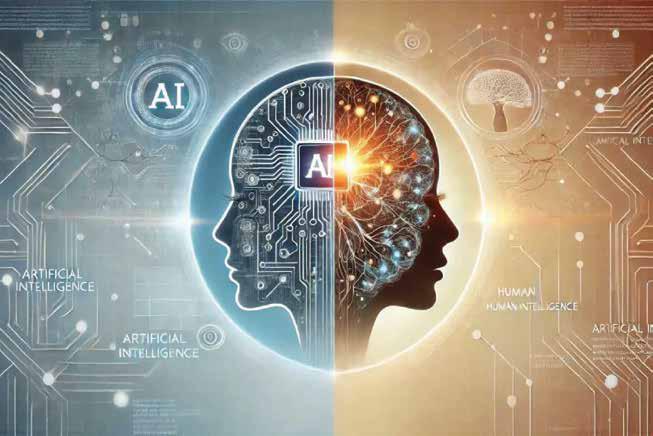
In enterprise systems, bias is rarely caused by one faulty model. It is introduced across multiple technical layers and then propagated through dependent services.
The first entry point is data ingestion. When systems train on historical enterprise data, they inherit historical imbalance. If representation is skewed at ingestion, that skew becomes the base state for the pipeline. Data lakes and feature pipelines then normalize that imbalance as usable input. Feature engineering amplifies the problem. Proxy variables can carry protected information without explicitly naming it. A field may look operationally harmless but still correlate with sensitive traits. Once such features are transformed into embeddings or stored in feature systems, exclusion becomes mathematically encoded and harder to isolate.
Training frameworks then lock bias into model behavior. If optimization targets reward global accuracy alone, the model can perform well overall while underperforming sharply on smaller groups. Standard loss functions and default hyperparameters do not automatically penalize uneven error distribution. So the model optimizes what it is asked to optimize, not what the organization assumes it should do.
The API layer makes the problem portable. Downstream teams consume model outputs as scores, labels, or rankings without full visibility into the assumptions behind them. If the API exposes only a score and not confidence, limitations, or decision metadata, hidden bias is passed forward into other systems.
The UI layer reinforces the result. Sorting logic, defaults, ranking rules, and recommendation layouts can create self-confirming feedback loops. If users are repeatedly shown only a narrow set of options, their behavior feeds the same pattern back into the system.
This is why bias behaves like a propagation bug. It enters upstream, survives transformation, gets validated by optimization, and scales through APIs and interfaces.


Denne historien er fra March 2026-utgaven av PCQuest.
Abonner på Magzter GOLD for å få tilgang til tusenvis av kuraterte premiumhistorier og over 9000 magasiner og aviser.
Allerede abonnent? Logg på
FLERE HISTORIER FRA PCQuest

PCQuest
AI on the ground Practical use cases of AI in large enterprise operations
AI isn't a side project anymore, it's the quiet operator inside global giants. It reads invoices, senses machine fatigue, tailors every customer moment, flags risk in real time, and feeds leaders sharper instincts. Scale just got smarter

3 mins
March 2026

PCQuest
From AI experiments in 2025 to enterprise scale in 2026: Why data foundations will decide the winners
Everyone's betting big on Al, but most are burning cash instead of building value. The hidden culprit? Dirty data, clunky processes, and missing context. What if fixing your foundation, not your algorithms, was the real AI game-changer?
4 mins
March 2026

PCQuest
How automation at the periphery is accelerating digital transformation
Digital transformation is not tearing down the core anymore. It is happening at the edges. With AI and automation layered onto existing systems, companies are cutting costs, boosting productivity by up to 40%, and scaling smarter without risking operational chaos
2 mins
March 2026

PCQuest
When AI moves from chips to racks
AI performance is no longer just about faster chips. It is about how racks, power, networking, and orchestration work together. As agentic AI grows, infrastructure must become predictable, open, and built for scale from day one
4 mins
March 2026

PCQuest
Designing enterprise AI systems that stay fair
In 2026, bias is no longer treated as a communications issue or a public relations headache.
6 mins
March 2026

PCQuest
HALO smart sensor
What if bathrooms, locker rooms, and isolated spaces could become safer without adding cameras?
2 mins
March 2026

PCQuest
Building enterprise AI that doesn't discriminate
Bias in enterprise AI is not a side issue. It starts in data pipelines, training systems, product design, and engineering workflows. As AI scales, fairness, transparency, and accessibility are becoming core software requirements
4 mins
March 2026

PCQuest
Bias travels faster than code
Bias in enterprise AI is not a surface issue. It enters through data, features, model training, APIs, and UI logic, then spreads across the stack. The technical response is shifting from audits to architecture, observability, and deployment controls
6 mins
March 2026

PCQuest
How hospitals can use AI without risking patient data
With the fast pace of adoption of Artificial Intelligence (AI) and digital health systems in Indian hospitals, issues related to the security of patient data are also increasing at an equal rate.
2 mins
March 2026

PCQuest
DeFi in 2026: The rise of liquidity, privacy and decentralized exchanges
DeFi's teenage years are over. Liquidity now behaves like infrastructure, privacy is baked in with zero-knowledge math, and DEXS hum like borderless trading engines. What once felt scrappy now resembles parallel financial system-without gatekeepers
3 mins
March 2026
Listen
Translate
Change font size