Prøve GULL - Gratis
OUT IN THE OPEN
Down To Earth
|August 01, 2021
Contrary to the government's claim of India being open defecation free, 15 per cent of Indians still go out to relieve themselves, says a WHO-UNICEF report

ON OCTOBER 2, 2019, Prime Minister Narendra Modi declared India open defecation-free (ODF). A long-pursued target of successive governments, the milestone was celebrated with much fanfare on Mahatma Gandhi's 150th birth anniversary. With India's achievement, the world made great strides in meeting the sixth Sustainable Development Goal (SDG-6) that ensures availability and sustainable management of water and sanitation for all by 2030. Before 2014, the country was responsible for 60 percent of the world's open defecation burden with over 550 million people not having access to toilets, as per the Union Ministry of Jal Shakti.
However, a report titled Progress on Household Drinking Water, Sanitation and Hygiene 2000-2020 by the World Health Organization (who) and the United Nations Children's International Emergency Fund (UNICEF) released on July 1, 2021, raises doubts about India's claim. The Joint Monitoring Programme (JMP) report assesses the progress the world has made on household drinking water, sanitation and hygiene between 2000 and 2020 to measure the progress made towards achieving SDG-6. It acknowledges that India is responsible for the largest drop in open defecation since 2015, in terms of absolute numbers. Open defecation had dropped by 16 per cent points over the 10 years since 2000. The pace of reduction picked up after 2016, with open defecation dropping by 14 per cent points in only five years, notes the report.

Denne historien er fra August 01, 2021-utgaven av Down To Earth.
Abonner på Magzter GOLD for å få tilgang til tusenvis av kuraterte premiumhistorier og over 9000 magasiner og aviser.
Allerede abonnent? Logg på
FLERE HISTORIER FRA Down To Earth

Down To Earth
Bitter pill
THE WEB SERIES PHARMA EXPOSES HARSH TRUTHS OF THE PHARMACEUTICAL INDUSTRY, WHERE PROFIT OFTEN BECOMES MORE IMPORTANT THAN HUMAN HEALTH

3 mins
January 16, 2026
Down To Earth
CHAOS IN-DEFINITION
The Aravallis are perhaps India's most litigated hill range. More than 4,000 court cases have failed to arrest their destruction. The latest dispute concerns a narrow legal definition of this geological antiquity, much of which has been obliterated by mining and urban sprawl. While the Supreme Court has stayed its own judgement accepting that definition, it must see the underlying reality and help reconcile development and national security with conservation.
19 mins
January 16, 2026

Down To Earth
BITS: INDIA
Indore has recorded 16 deaths and more than 1,600 hospitalisations between December 24 and January 6.
1 min
January 16, 2026
Down To Earth
GUARANTEE EXPIRES
India's rural employment guarantee law is replaced with a centrally controlled, budget-capped scheme. Is this an attack on the right to work?
3 mins
January 16, 2026
Down To Earth
BLOOM OR BANE
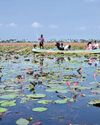
Surge of vibrant pink water lilies in Kuttanad, Kerala, provides socio-economic benefits, but the plant's ecological impacts must be understood
4 mins
January 16, 2026
Down To Earth
INVISIBLE EMPLOYER
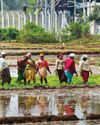
Field and academic evidence shows sharp falls in casual agricultural employment at places where groundwater access declines
3 mins
January 16, 2026
Down To Earth
Schemed for erasure
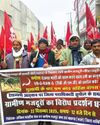
Does the VB-G RAMG Act address structural weaknesses long observed in MGNREGA's implementation?
10 mins
January 16, 2026

Down To Earth
School of change
An open school in Panagar, Madhya Pradesh, aims to protect children of tribal settlements from falling into the trap of addiction
2 mins
January 16, 2026

Down To Earth
PULSE OF RESILIENCE
As a climate-ready crop, cowpea shows potential for widespread use in India
3 mins
January 16, 2026
Down To Earth
BITS GLOBAL
Britain recorded its hottest and sunniest year ever in 2025, the country's meteorological office said on January 2.
1 min
January 16, 2026
Translate
Change font size