Prøve GULL - Gratis
Jamdani, Naturally
Down To Earth
|January 16, 2019
How the women of Burdwan and Nadia districts in West Bengal weave magic, turning raw cotton into niche and `climate-friendly' Jamdani

A COUPLE OF years ago 30-year-old Lokkhimoni Das, from Bagila village of West Bengal’s Burdwan district, was a content homemaker. While her husband toiled in their 1-1.5 bighe (0.12-0.16 hectare) agricultural plot, she leisurely caught fish from community ponds, chased domestic cattle, and did some weaving on the family loom. But climate change has reshaped the lives of the people of Burdwan and Nadia districts. “I am able to sustain my family with my traditional knowledge of weaving,” says Das.
Ponds have silted and shrunk in size, causing native fish to disappear. “Rains have become erratic—they get delayed, are insufficient or in excess. Agriculture is also getting uncertain. So my husband has to scout to distant states for work,” she says. Other farmers have resorted to chemical-intensive farming of high-yielding paddy. This is ruining the biodiversity of agricultural fields and ponds that provided food to cattle.
Like Das, about 60 women from at least a dozen neighbouring villages have started weaving “climate-friendly” cotton to earn their living. “The cotton they weave is short stapled, which can flourish only with natural fertilisers and pesticides,” says Rubi Rakshit, co-founder of non-profit M G Gram Udyog Seva Sansthan (MGGSS).
The non-profit mentors the 60 women to make eco-friendly fabric. Their work needs no electricity, and very little natural resources. Even the raw cotton they use is grown, processed and dyed naturally. In their own small way, they contribute to mitigate the impact of climate change, and leave no or minimum carbon footprints.
Making of the yarn
MGGSS began its own story in 2010 at Kolkata by collaborating with different organisations across the country to hand-hold women weavers.
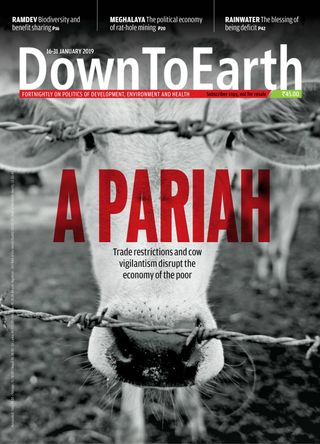

Denne historien er fra January 16, 2019-utgaven av Down To Earth.
Abonner på Magzter GOLD for å få tilgang til tusenvis av kuraterte premiumhistorier og over 9000 magasiner og aviser.
Allerede abonnent? Logg på
FLERE HISTORIER FRA Down To Earth
Down To Earth
THINK TWICE BEFORE FELLING SAL TREES
Many trees considered to be affected by sal borer in the 1990s are still alive today

1 mins
February 16, 2026

Down To Earth
EDGE OF SURVIVAL
Caste divides deny marginalised communities land, resources and essential aid, leaving them more vulnerable to climate disasters
6 mins
February 16, 2026

Down To Earth
A WISH LIST?
Union Budget for 2026-27 conveys the impression of a roll-call of intentions and ambitious proposals, with little detail on their formulation
6 mins
February 16, 2026
Down To Earth
Break down the gender wall
THE RULING National Democratic Alliance (NDA) government has been heavily invested in the goal to make India a developed economy by 2047.
2 mins
February 16, 2026

Down To Earth
MENSTRUAL HEALTH, NOW A FUNDAMENTAL RIGHT
In a landmark judgement, the Supreme Court has recognised menstrual health and hygiene as a fundamental right under Article 21 of the Constitution of India, which guarantees the right to life and dignity.
8 mins
February 16, 2026

Down To Earth
Of devolution and new disasters
The 16th Finance Commission pushes for changes in view of new fiscal and climatic conditions
11 mins
February 16, 2026
Down To Earth
Rising risks of plastics
NEGATIVE IMPACTS on human health due to emissions linked to the plastic lifecycle could double by 2040, according to a study published in The Lancet Planetary Health in January.
1 min
February 16, 2026
Down To Earth
GAP BETWEEN EPIDEMICS NARROWING
A watershed-based and landscape-level approach is needed to address forest degradation
2 mins
February 16, 2026
Down To Earth
WAITING TO STRIKE
Sal heartwood borer is considered the biggest threat to forestry in India, especially to the sal tree, where it lives and breeds.
11 mins
February 16, 2026
Down To Earth
A SPRING DELIGHT
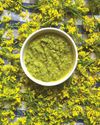
Mustard flowers are not meant only for the eyes. Invite them to your plate once in a while
3 mins
February 16, 2026
Translate
Change font size