
Gå ubegrenset med Magzter GOLD
Få ubegrenset tilgang til over 9000 magasiner, aviser og premiumhistorier for bare
Prøve GULL - Gratis
Water, Water, Everywhere?
BBC Sky at Night Magazine
|December 2023
Penny Wozniakiewicz investigates why astronomers are so concerned with finding water in the Solar System, and why it is vital to our exploration of space

Staring up at the Moon with the naked eye, we can forgive early astronomers for assuming the dark patches spread out over its surface were seas - or 'maria' as they were named, after the Latin word for seas. Informed by centuries of ever-improving observations and over 60 years of space exploration, we now know the maria are not seas but rather vast expanses of volcanic basalt that erupted over the lunar surface several billion years ago.
The Moon is in fact very dry: more so than any desert on Earth. Yet despite that, on 23 August 2023 the Indian Space Research Organisation's Chandrayaan-3 mission successfully deployed its lander and rover near the lunar south pole in search of water.
So why search for water in such a dry location? Although there is no liquid water on the Moon, water is present in the form of ice trapped between grains in the lunar soil and incorporated into minerals and glassy beads produced by impacts. The potential for such hidden water was first suggested by remote observations of the surface, and later confirmed by NASA's LCROSS mission, which in 2009 fired an empty rocket stage into a crater on the lunar surface and identified ice in the plume of material flung up from the crash site. Further observations of the surface by the likes of the NASA and German Aerospace Center's SOFIA telescope have since suggested the south polar region of the Moon in particular may host far more water than we ever imagined. As much as 100-400mg of water (about one raindrop) may be present in each kilo of soil.
While this may seem a small amount, it has prompted several space agencies to propose lunar surface missions and instruments to find and characterise lunar water over the next decade.
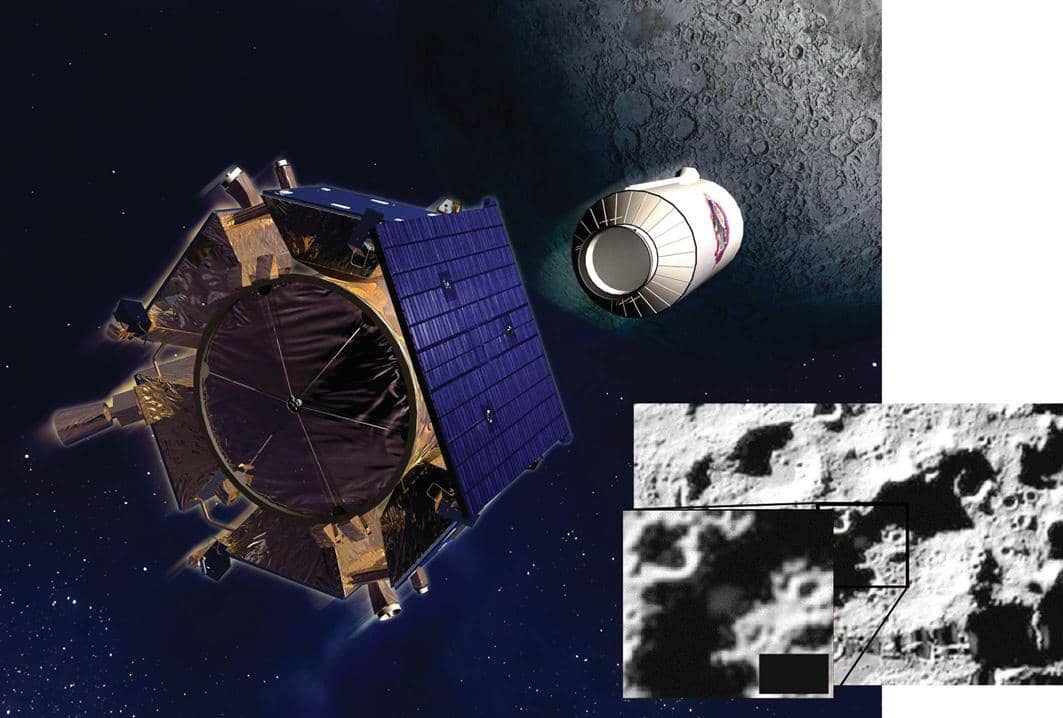
PROSPECTing for water

Denne historien er fra December 2023-utgaven av BBC Sky at Night Magazine.
Abonner på Magzter GOLD for å få tilgang til tusenvis av kuraterte premiumhistorier og over 9000 magasiner og aviser.
Allerede abonnent? Logg på
FLERE HISTORIER FRA BBC Sky at Night Magazine
BBC Sky at Night Magazine
The Giant Leap: Why Space is the Next Frontier in the Evolution of Life
“Earth is the cradle of humanity, but one cannot live in the cradle forever,” wrote Konstantin Tsiolkovsky in 1911.

1 mins
February 2026
BBC Sky at Night Magazine
Tele Vue Nagler Type-7 series eyepieces
These premium optics were inspired by Apollo - and deliver a giant leap to your views
4 mins
February 2026
BBC Sky at Night Magazine
Once Upon a Time in Space
While the Space Race of the Cold War years was ultimately a geopolitical contest between the USA and the Soviet Union, the rivalry sparked rapid innovation and inspired multiple generations to look skyward.
1 mins
February 2026
BBC Sky at Night Magazine
The Multiverse: When One Universe Isn't Enough
The concept of a 'multiverse' – the idea that our Universe may be just one of many – is widespread in science fiction and a common thread of online discussions.
1 mins
February 2026
BBC Sky at Night Magazine
Q&A WITH A GAMMA RAY SPECIALIST
In 2025, astronomers detected a blast from space that lasted seven hours. Now they're uncovering the strange processes behind the exceptional outburst
3 mins
February 2026

BBC Sky at Night Magazine
Astronomy Photographer of the Year
The world-leading astrophotography competition returns. Could your image take the top prize of £10,000?
2 mins
February 2026
BBC Sky at Night Magazine
MOONWATCH
February's top lunar feature to observe
2 mins
February 2026
BBC Sky at Night Magazine
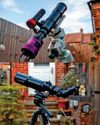
NOVAStar Scarlet A62Q 62mm f/8.4 quadruplet achromatic refractor
Well-built and capable, this beginner scope punches well above its bargain price
4 mins
February 2026
BBC Sky at Night Magazine
STAR OF THE MONTH
Rasalas, Leo the Lion's metal-rich crown
1 min
February 2026
BBC Sky at Night Magazine
Comet 24P/Schaumasse
Having reached perihelion on 8 January, comet 24P/ Schaumasse is now fading. Starting the month at a small-telescope-friendly mag. +10.5, it dims throughout February to below 12th magnitude.
1 min
February 2026
Translate
Change font size