Prøve GULL - Gratis
PALs With The Poor
THE WEEK
|October 27, 2019
What Abhijit Banerjee and Esther Duflo have seeded is more than just a methodology

More than a decade ago, I met Abhijit Banerjee and Esther Duflo to discuss joining a small centre they had started at the Massachusetts Institute of Technology (MIT) called PAL, or the Poverty Action Lab. It was subsequently renamed J-PAL to recognise a generous endowment by an alumnus. After my master’s at the Delhi School of Economics, I had joined the IAS, attracted by the idea of working in development policy in the field. But I was often puzzled to see how so many of our key decisions were not based on any semblance of rigorous evidence. After a few years of working in the private sector, I was itching to go back to my roots. Talking to them in J-PAL’s three-room office, I was drawn to the huge potential of their very simple vision: What if policymakers in governments, NGOs, and foundations could base their decisions on scientific evidence rather than instincts, ideology or inertia?
Even though J-PAL was then only five years old, pioneers like Abhijit, Esther, Michael Kremer and Rohini Pande had already launched a number of field research studies in India and Kenya. Their studies would cement the role of randomised evaluations, or RCTs, as an important tool in the field of economics to understand what poverty alleviation programmes work or not, and why. And J-PAL, along with our partner organisation, Innovations for Poverty Action (IPA), had begun to work with a number of other economists to run their research in many countries to expand the knowledge base of what works or not in global development. The dilemma they faced when I met them was even more challenging: How do we make sure that the results of this research do not just stay in academic journals but actually make their way to the policymakers who need it most in their decision making? How could such evidence inform programmes that could be scaled up to reach millions?


Denne historien er fra October 27, 2019-utgaven av THE WEEK.
Abonner på Magzter GOLD for å få tilgang til tusenvis av kuraterte premiumhistorier og over 9000 magasiner og aviser.
Allerede abonnent? Logg på
FLERE HISTORIER FRA THE WEEK

THE WEEK India
Midnight musings
It is always in the witching hours that the ghosts of the past assemble, crowding around me as regrets to torment my sleepless mind.

3 mins
March 15, 2026

THE WEEK India
PRESSURES AND PERILS
The Iran war has Pakistan stuck in a 'devil and the deep blue sea' situation
3 mins
March 15, 2026
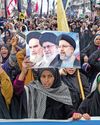
THE WEEK India
THE WEIGHT OF RESTRAINT
Modi's silence on the Iran war seems strategic, shaped by ties with key Gulf Arab states and the demographic makeup of India's Muslim population
5 mins
March 15, 2026
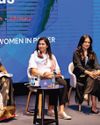
THE WEEK India
POWERPUFF GIRLS
Ambition is only the minimum requirement for women to become leaders
3 mins
March 15, 2026

THE WEEK India
VOICE NOTES
In the first episode of CEAT Beyond The Scoreboard, Jatin Sapru talks commentary and takes fans inside the booth
3 mins
March 15, 2026

THE WEEK India
BEFORE THE LEAP
Support systems are crucial, as are backup plans, says Olympian Anju Bobby George
2 mins
March 15, 2026
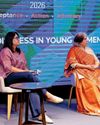
THE WEEK India
TWO INDIAS
When it comes to the mental health of young women in the country, it seems there is a stark dichotomy
3 mins
March 15, 2026

THE WEEK India
YOURS UNAPOLOGETICALLY
In his memoir Walk Like a Girl, celebrated fashion designer Prabal Gurung explores identity, vulnerability and resilience
4 mins
March 15, 2026

THE WEEK India
Mental health checks should be embedded in the community health programme
At a recent conference in Delhi, two strangers walked up to Neerja Birla, founder and chairperson of the Aditya Birla Education Trust, with a confession.
7 mins
March 15, 2026
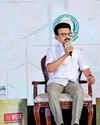
THE WEEK India
GROWTH STORY
The Tamil Nadu Leadership Summit, organised by THE WEEK, highlighted the Stalin government's vision for the future
4 mins
March 15, 2026
Translate
Change font size